Who freed Goa? The story behind Goa’s liberation from Portuguese rule

&imwidth=600&imheight=450&format=webp&quality=medium "Who freed Goa? The story behind Goa’s liberation from Portuguese rule")
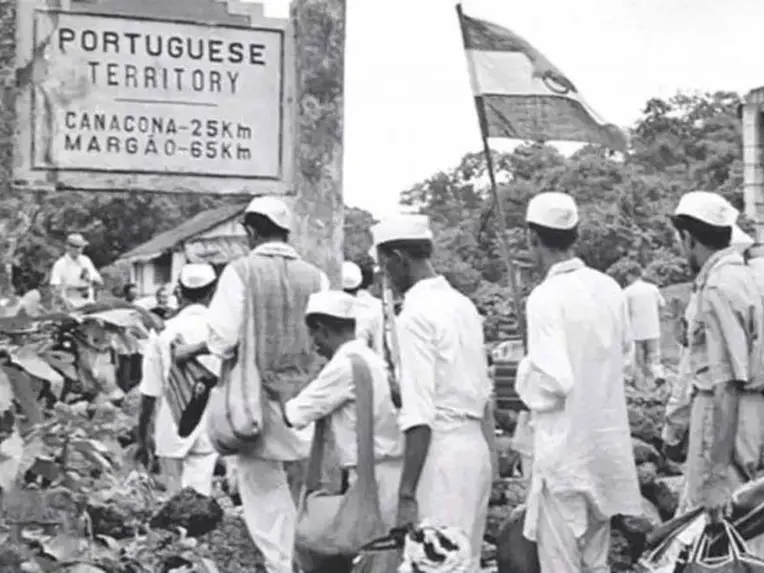
Civil disobedience in Goa Photograph: (creative commons)
From T.B. Cunha and Ram Manohar Lohia to Operation Vijay, here’s how Goa was liberated from 451 years of Portuguese rule in 1961.
On December 19, 2025, after 451 years of Portuguese rule, Goa achieved independence. It was a culmination of decades of resistance, diplomacy and military action. Following India's Independence, Portugal retained control of Goa, claiming it as an overseas province. India tried to diplomatically negotiate, but in vain, as India initiated military operations, Portugal sought the help of the United Nations. In the United Nations Security Council, Britain, France, and the United States supported a resolution critical of India until the Soviet Union vetoed it, blocking any UN action against India. India, under Jawaharlal Nehru, launched Operation Vijay and swiftly liberated Goa within 36 hours. On December 19, 1961, Portuguese Governor-General Manuel António Vassalo e Silva surrendered unconditionally.
Key figures and their role in Goa's liberation
Tristão de Bragança Cunha
Also known as the “Father of Goan Nationalism”. He initiated the liberation struggle of Goa in 1926 with the launch of the Goa Congress Committee. At first Indian National Congress offered it recognition, but soon withdrew it, calling Goa an “alien territory”. As Goa, Daman and Diu were outside the jurisdiction of the Imperial British. Cunha, a committed nationalist and communist, sought to integrate Goa with India. He made a series of publications like Four Hundred Years of Foreign Rule and The Denationalisation of Goans, which led to his isolation, arrests, and exile. The rationale of INC and Gandhi was that they wanted non-interference in Portuguese territory, to avoid uniting the British and the Portuguese, but in 1947, the INC-led Indian Government declared Goa an important part of India and recognised the Goan Satyagrahis, and ultimately launched a military operation.
Dr Julião Menezes
He was a medical practitioner who invited Dr Ram Manohar Lohia to Goa at a time when the Indian National Congress was not involved in the Goan struggle. He founded Gomantak Praja Mandal to inculcate the spirit of nationalism among Goans. He kept the spirit of liberation alive within the Goans through publications and gatherings.
Trending Stories
&imwidth=280&imheight=210&format=webp&quality=medium)
&imwidth=280&imheight=210&format=webp&quality=medium)
&imwidth=280&imheight=210&format=webp&quality=medium)
&imwidth=280&imheight=210&format=webp&quality=medium)
&imwidth=280&imheight=210&format=webp&quality=medium)
&imwidth=280&imheight=210&format=webp&quality=medium)
&imwidth=280&imheight=210&format=webp&quality=medium)
&imwidth=280&imheight=210&format=webp&quality=medium)
&imwidth=280&imheight=210&format=webp&quality=medium)
&imwidth=280&imheight=210&format=webp&quality=medium)
&imwidth=280&imheight=210&format=webp&quality=medium)
&imwidth=280&imheight=210&format=webp&quality=medium)
&imwidth=280&imheight=210&format=webp&quality=medium)
&im=FitAndFill=(700,400)&imwidth=280&imheight=210&format=webp&quality=medium)
&imwidth=280&imheight=210&format=webp&quality=medium)
&imwidth=280&imheight=210&format=webp&quality=medium)
&imwidth=280&imheight=210&format=webp&quality=medium)
&imwidth=280&imheight=210&format=webp&quality=medium)
&imwidth=280&imheight=210&format=webp&quality=medium)
&imwidth=280&imheight=210&format=webp&quality=medium)
&imwidth=280&imheight=210&format=webp&quality=medium)
&im=FitAndFill=(700,400)&imwidth=280&imheight=210&format=webp&quality=medium)
&imwidth=280&imheight=210&format=webp&quality=medium)
&imwidth=280&imheight=210&format=webp&quality=medium)
&imwidth=280&imheight=210&format=webp&quality=medium)
&imwidth=280&imheight=210&format=webp&quality=medium)
&imwidth=280&imheight=210&format=webp&quality=medium)
&imwidth=280&imheight=210&format=webp&quality=medium)
&imwidth=280&imheight=210&format=webp&quality=medium)
&imwidth=280&imheight=210&format=webp&quality=medium)
&imwidth=280&imheight=210&format=webp&quality=medium)
&imwidth=280&imheight=210&format=webp&quality=medium)
Dr Ram Manohar Lohia
Dr Ram Manohar Lohia was part of the Congress Socialist Party, which was often seen as a rogue fragment of the Indian National Congress. He visited Goa with Dr Julião Menezes in 1946, when Goa was not central to the mainstream nationalist agenda. He launched civil disobedience in Goa in 1946, with Dr Julião Menezes and was arrested by the Portuguese police.
Purushottam Kakodkar, Libia Lobo Sardesai, Vaman Sardesai
Purushottam Kakodkar was one of the ordinary Goans who, along with Libia Lobo Sardesai, Vaman Sardesai, kept the dream of the Goan liberation alive with resistance, publications, and radio after Indian Independence. The strengthen the anti-colonial consciousness of the ordinary Goan.