

&imwidth=800&imheight=600&format=webp&quality=medium "'We don't need to experiment on animals anymore for spaceflight': Shubhanshu Shukla opens up on ISRO's humanoid robot Vyomitra")
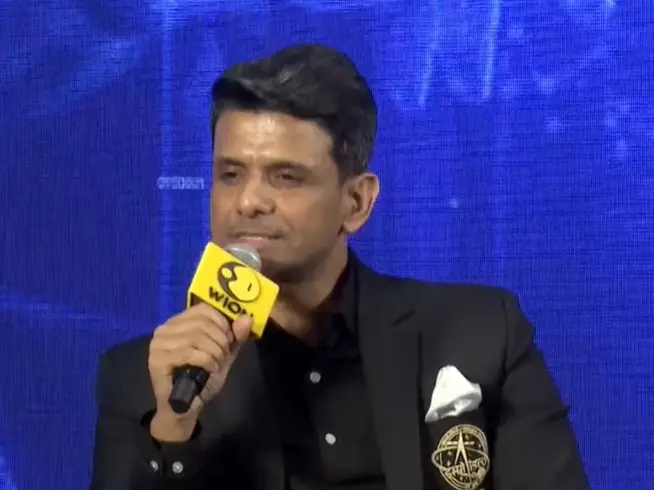
In a wide-ranging discussion about India's first human spaceflight ambitions, Gaganyaan astronaut Group Captain Shubhanshu Shukla opened up about the role of ISRO's humanoid robot, Vyomitra, which is being prepared for India's first crewed space missions. During the conversation, Shukla explained how far technology has advanced since the 1960s and drew comparisons to the early Soviet space program, where animals were sent to space ahead of humans.
Shukla pointed out that the processing power in a modern mobile phone has become far better and more efficient as compared to the Apollo missions' computers, which carried astronauts to the Moon and back. He said the technology that we possess today was not available then.
Speaking about the Soviet space program, where animals were sent to space ahead of humans, Shukla said that at the moment, ISRO doesn't need to rely on animal testing the way earlier space programs did. Instead, that role will be filled by Vyomitra, a heavily instrumented humanoid robot.
"The technology that we have today was not available then. Actually, to highlight, you know, the kind of processing power your mobile phone holds today is more than what the mission computer for the Apollo mission had, which took humans around the moon and brought them back. You know, so that is where we stand today. So that is the kind of difference in what we can achieve today. And you are familiar with Moore's law: every two years, the size of chips will keep reducing over a period of time. So I think that today we don't need to experiment on animals to understand what is happening in space," Shukla said.
"The Vyomitra, the humanoid robot that he is talking about, in the initial test missions will carry a humanoid robot which is very heavily instrumented. Instrumented to collect data, to collect the temperature, the pressure, the vibrations, the sound- all of that it is going to collect and give us a very good idea of what the internal environment of the capsule is going to be like. So that, if required, we can make some changes, and we have very good information, or, you know, the introductory talk or the presentation talked about data being intelligible, you know, data being refined so that you can use it effectively. So this is what Vyomitra is going to do. It is going to give us good, solid data which we can use to refine our further missions and have very good confidence in the systems when actual missions are going to space," Shukla added.
Trending Stories
&imwidth=180&imheight=135&format=webp&quality=medium)
France protests: How a Gen Z school movement turned into a political war | The Verdict
&imwidth=180&imheight=135&format=webp&quality=medium)
Nana Patekar's #MeToo controversy: From Tanushree Dutta’s allegations to court ruling
&imwidth=180&imheight=135&format=webp&quality=medium)
Shia LaBeouf and Mia Goth head for divorce after nearly 10 years
&imwidth=180&imheight=135&format=webp&quality=medium)
Captain Smit Machchhar on feet again, walks 10 steps as recovery continues after Flydubai flight attack
&imwidth=180&imheight=135&format=webp&quality=medium)
Mall of America attack: FBI arrests man over alleged ISIS-inspired mass shooting plot with AK-47 and 200 rounds
&imwidth=180&imheight=135&format=webp&quality=medium)
Isaias becomes a hurricane within 20 hours of forming, could spawn tornadoes
&imwidth=180&imheight=135&format=webp&quality=medium)
Texas man executed by lethal injection; first US execution since botched Christa Pike execution
&im=FitAndFill=(700,400)&imwidth=180&imheight=135&format=webp&quality=medium)
World’s top vehicle producers: Top 10 countries making the most cars. Check where India stands
&imwidth=180&imheight=135&format=webp&quality=medium)
Poland: 19-year-old stabs several at Polish vocational school
&imwidth=180&imheight=135&format=webp&quality=medium)
Trump distances himself from senior political advisers over work for pro-Russian government
&im=FitAndFill=(700,400)&imwidth=180&imheight=135&format=webp&quality=medium)
US midterms 2026: 10 leaders and candidates to watch in the battle for Congress
&imwidth=180&imheight=135&format=webp&quality=medium)
US readying to strike Iran? Report suggests Trump preparing to put on show of strength ahead of US midterms
&imwidth=180&imheight=135&format=webp&quality=medium)
Musk alleges ‘oligarchs’ blocking Starlink in India, here is what we know so far
&imwidth=180&imheight=135&format=webp&quality=medium)
Nana Patekar: Remembering a legend of the Indian cinema
&imwidth=180&imheight=135&format=webp&quality=medium)
'They came in, they hit us': New videos show Iranian attacks on US Camp Buehring in Kuwait | Watch
&imwidth=180&imheight=135&format=webp&quality=medium)
'We don't think so': Trump says Russian plague lab worker's death not linked to bio-weapon
&imwidth=180&imheight=135&format=webp&quality=medium)
Narendra Modi Stadium bomb threat declared hoax; India & Australia U19 squads safe
&imwidth=180&imheight=135&format=webp&quality=medium)
France holds talks with Taliban government amid diplomatic outreach
&imwidth=180&imheight=135&format=webp&quality=medium)
‘Team first and team ahead’: India coach Gambhir pens heartfelt wish for chief selector Ajit Agarkar
&imwidth=180&imheight=135&format=webp&quality=medium)
Veteran actor Nana Patekar dies at 75 after suffering cardiac arrest
&imwidth=180&imheight=135&format=webp&quality=medium)
Ronaldo sends 'a hug' after Messi says he misses 'wearing the blue and white'
&imwidth=180&imheight=135&format=webp&quality=medium)
Lightning strikes IndiGo Patna-Lucknow flight at 17,000 feet, damages nose; all 110 safe
&imwidth=180&imheight=135&format=webp&quality=medium)
Nigerian President Bola Ahmed Tinubu hails Modi’s 25-year leadership milestone, calls for deeper Nigeria-India strategic ties
&imwidth=180&imheight=135&format=webp&quality=medium)
US midterms 2026: Why the Latino vote could shape control of Congress
&imwidth=180&imheight=135&format=webp&quality=medium)
BTS agency HYBE announces first-ever Weverse Con Festival in India
&imwidth=180&imheight=135&format=webp&quality=medium)
Trump to honour Elon Musk, Sergey Brin and Jensen Huang with top science honour at White House. Check the full list here
&imwidth=180&imheight=135&format=webp&quality=medium)
Thai Actors Fourth Nattawat, Gemini Norawit face racism accusations from Indian fans over viral Bollywood act
&imwidth=180&imheight=135&format=webp&quality=medium)
Nicolas Maduro, wife likely to face new charges over alleged torture of US citizens: Report
&imwidth=180&imheight=135&format=webp&quality=medium)
Trump's naked 23-karat gold statue unveiled near European Parliament
&imwidth=180&imheight=135&format=webp&quality=medium)
A Love Other Than Yours: The temptation to cheat and what pushes people over the edge
&imwidth=180&imheight=135&format=webp&quality=medium)
Sri Lankan Tamil worker gets death sentence in Saudi Arabia over blasphemy, calls for pardon intensify
&imwidth=180&imheight=135&format=webp&quality=medium)
US Midterms 2026: Barack Obama hits campaign trail to boost Democratic candidates
&imwidth=180&imheight=135&format=webp&quality=medium)
'Baseless and misconceived': India issues statement after Elon Musk's 'oligarchs' claim over Starlink delay
&imwidth=180&imheight=135&format=webp&quality=medium)
Christa Pike 'angry' and 'confused' after failed execution; judge orders to preserve evidence
&imwidth=180&imheight=135&format=webp&quality=medium)
Christa Pike wakes after failed execution, asks 'Where am I and who are you?'
&imwidth=180&imheight=135&format=webp&quality=medium)
IndiGo flight struck by lightning at 17,000 feet, nose of Patna-Lucknow flight damaged
Three uncrewed missions before any astronaut flies
The interviewer clarified Vyomitra's role further, describing her as a humanoid robot in female form, developed across various ISRO centres. According to the plan outlined, ISRO intends to fly three uncrewed Gaganyaan missions, with no astronauts on board, before any Gaganyatri, including Shukla himself, is cleared to fly. "A robot will go to space inside the capsule, and the robot will do all the testing. And once all of those go flawlessly, only then will we put our astronauts... in space," the interviewer explained, describing it as ISRO's methodical approach to human spaceflight.
The conversation then turned to the training journey that transforms a fighter pilot into an astronaut, a path Shukla has walked, training across Star City in Russia, as well as facilities in the US, Europe, and Japan. Asked what it takes, Shukla didn't mince words about the scale of the undertaking.
Shubhanshu Shukla said, "On an average, if I have to say, it takes about five years for any astronaut to fly to space, not just from India, whether it is from Russia, whether it is from US. This is the kind of time period that it takes to prepare an astronaut to go to Space. And the reason it takes so much of time is once you are up there, you are by yourself. There is no help available, you are trying to create and sustain life in an environment wherein it should not exist, you know, there is no reason to support life out there. It really widens your horizon to understand how things are happening, how things are being done in different domains, in different disciplines and many times what happens is that you learn something from another discipline and you find that it is suitably applied to some other discipline that you were very used to. So that is the reason that it takes a lot of time to prepare as astronauts. It took us also about five years before we flew and it will be the same story for any future astronauts who are going to fly. It will take this much of time."

