No 'Dark Ages' in South Asia? 2800-year-old settlement discovered in PM Modi's hometown Vadnagar

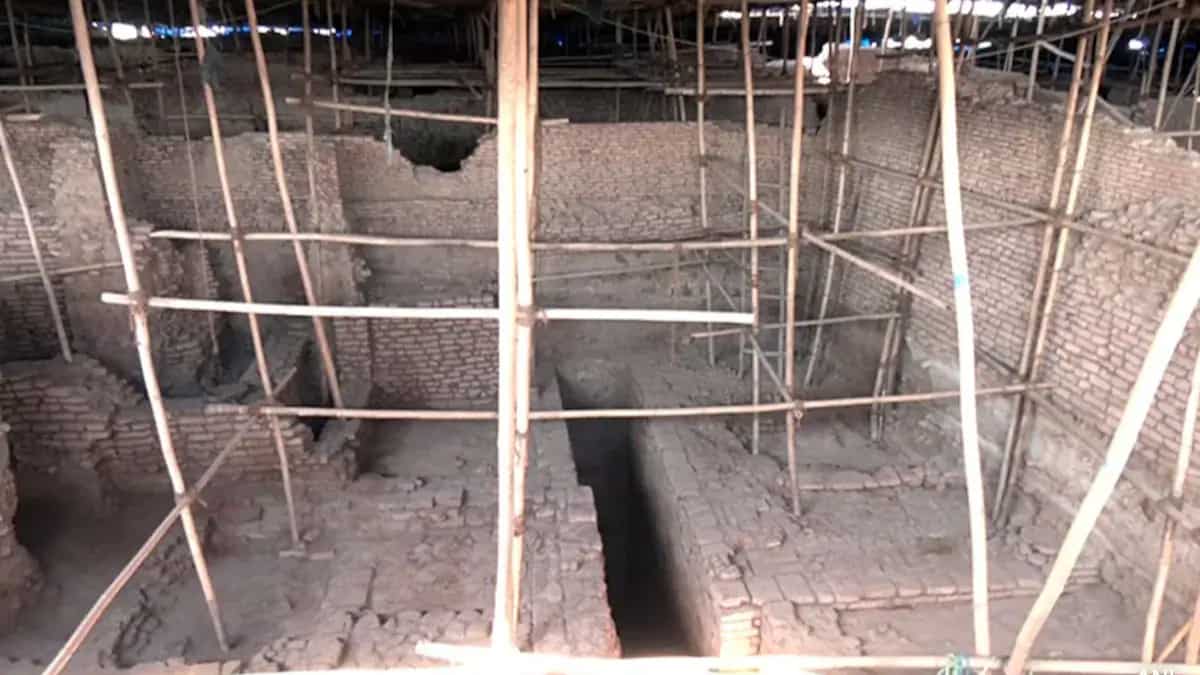
Vadnagar has been a multi-cultural and multi-religious settlement
Nearly 900 km southwest of New Delhi, an excavation in Gujarat's Vadnagar unveiled evidence of cultural continuity in the Indian subcontinent since 800 BCE. Vadnagar is the hometown of Indian Prime Minister Modi. The findings thus imply that the "Dark Age" was a myth and that cultures continuously existed in the region without total annihilation during the last 5,500 years.
Conducted by a team of experts from IIT Kharagpur, the Archaeological Survey of India (ASI), the Physical Research Laboratory (PRL), Jawaharlal Nehru University (JNU), and Deccan College, the study unearthed traces of a human settlement dating back to 800 BCE in the Gujarat town.
"From deep archaeological excavation at Vadnagar, a consortium of scientists from IIT Kharagpur, Archaeological Survey of India (ASI), Physical Research Laboratory (PRL), Jawaharlal Nehru University (JNU), and Deccan College has now found evidence of a human settlement that is as old as 800 BCE contemporary to late-Vedic/pre-Buddhist Mahajanapadas or oligarchic republics," the institute said in a press release.

"The study also indicates that the rise and fall of different kingdoms during the 3,000-year period and recurrent invasions of India by central Asian warriors were driven by severe change in climate like rainfall or droughts. The findings [have been] just published in a paper titled 'Climate, human settlement, and migration in South Asia from early historic to medieval period: evidence from new archaeological excavation at Vadnagar, Western India' in the prestigious Elsevier journal Quaternary Science Reviews," it said.
Vadnagar andevidence of subcontinent's civilisational continuity
)
Did India risk its US trade deal despite softer stance at BRICS?
)
Pakistan puts Pak Rs 70 lakh bounty on UN terrorist Masood Azhar; move draws skepticism in Delhi
)
First naval drone battle? Ukraine says Sargan 3000 sank Russian unmanned boat
)
Practical Magic 2 breaks Spidey spell over North American box office
)
'Huge destructive power': North Korea calls its latest missile launches 'live-fire drill' even as US dismisses 'immediate threat'
)
‘Let’s go’: Newly declassified videos show dramatic rescue of US Air Force officers downed in Iran
)
Delhi’s balancing act: BRICS serves as a stage for West Asia diplomacy
&im=FitAndFill=(700,400))
Why European Meteor missiles use ramjet engines compared to standard US solid rockets
)
‘India did extremely well’: South African President Cyril Ramaphosa praises BRICS leadership
)
Iran, India agree to deepen humanitarian and political ties, President Pezeshkian says
)
‘Want to reset ties with India, have engagement based on mutual interests,’ says Bangladesh minister
)
Trump says Canada eager to reach a deal, it could come ‘fairly soon’ if Ottawa treats US farmers better
)
Turkish Airlines plane flies through a storm three times, triggering severe turbulence
&im=FitAndFill=(700,400))
Why Chinese PL-15 air-to-air missiles use dual-pulse motors compared to European interceptors
)
China thinned Himalayan troop presence in 2025, India defence report says; terms border situation 'stable'
)
800 million years old - Scientists discover 'fingerprints' of supercontinent Gondwana in ancient rocks
)
Russia proposes to build 360 kmph Ivolga FG trains in India: What happened on sidelines of BRICS
)
Israeli minister calls to strip Gaza film directors of citizenship
)
China discovers vast gold and silver 'mine' in the Pacific with unheard-of deposits
)
Russian drone hits Warsaw-bound train near Polish border, Zelensky accuses Moscow of ‘deliberate’ targeting
)
War is making Russia stronger? How Ukraine is shaping Moscow’s next generation of weapons
)
Plane carrying prominent figure crashes at Libya’s Misrata airport: Report
)
Veteran Bollywood actress Nafisa Ali shares health update as Stage 4 cancer progresses, starts targeted therapy
)
NEET-UG to move to computer-based test soon, NTA DG says ‘CBT is the future’
)
Woman removes all her clothes on American Airlines flight, performs 'indecent acts'; arrested
)
Liam Neeson sparks romance rumours after holding hands with Stella Stocker at TIFF 2026
&im=FitAndFill=(700,400))
New OTT releases this week (September 14-20, 2026): Lust Stories 3, Waiting Hai, Irumudi- 5 new titles coming on Netflix, Prime Video and more
)
Indian importers urge Bangladesh to lift export ban on 'Hilsa' fish ahead of Durga Puja
)
Video of Pakistani lawmaker struggling to read English tribute to Jinnah goes viral - WATCH
)
Did China give Iran intel before US base strike that killed 3 troops? Trump says, 'You’re right...'
)
Meghan Markle shares first glimpse of family life with Prince Harry and children in UK
)
Crude oil prices jump more than $107 per barrel following Houthi attacks on Saudi
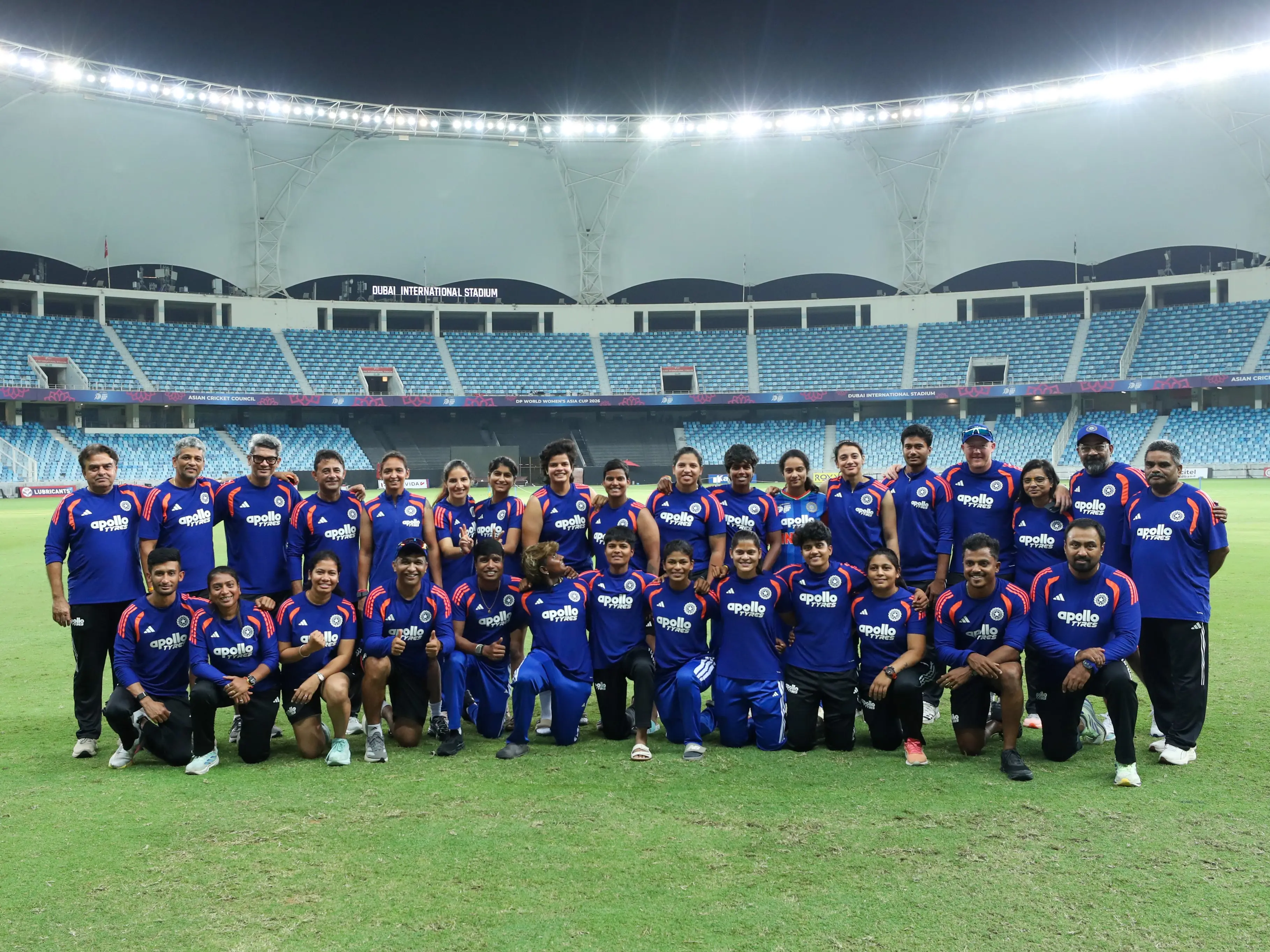)
Women's Asia Cup 2026: India denied trophy once again despite winning the title
)
Humans may lose control of AI: Anthropic CEO calls for slowdown, Altman, Musk back him
"Vadnagar was a multicultural and multireligious (Buddhist, Hindu, Jain and Islamic) settlement. Excavation in several deep trenches revealed the presence of seven cultural stages (periods) namely, Mauryan, Indo-Greek, Indo-Scythian or Shaka-Kshatrapas (AKA ‘Satraps’, descendants of provincial governors of ancient Achaemenid Empires, Hindu-Solankis, Sultanate-Mughal (Islamic) to Gaekwad-British colonial rule and the city endures even today. One of the oldest Buddhist monasteries has been discovered during our excavation. We found characteristic archaeological artefacts, potteries, copper, gold, silver and iron objects and intricately designed bangles. We also found coin moulds of the Greek king Appollodatus during the Indo-Greek rule at Vadnagar," said ASI archaeologist Dr. Abhijit Ambekar, co-author of the paper, said in an official statement.
What is the 'Dark Age'?
The period between the collapse of the Indus Valley Civilisation and the appearance of the Iron Age and cities such as Gandhar in present-day Afghanistan and Koshal in present-day Uttar Pradesh in India is known as the Dark Age.
“Archaeological records are rare, the earliest one being the rock-inscription of Emperor Ashoka during the Mauryan period (320-185 BCE) at Sudarsana Lake, Girnar hill, Gujarat. Our evidence makes Vadnagar the oldest living city within a single fortification unearthed so far in India... Some of our recent unpublished radiocarbon dates suggest that the settlement could be as old as 1400 BCE contemporary to very late phase of post-urban Harappan period. If true, then it suggests a cultural continuity in India for the last 5500 years and the so-called Dark Age may be a myth,” said Prof. Anindya Sarkar of IIT Kharagpur, who is the lead author of the paper.
India's Prime Minister Narendra Modi has referred to the ancient relevance of his hometown in the past as well. In 2017, while addressing a gathering at Vadnagar, Modi said that his ancestral village had a special place in history and a unique connection with Chinese President Xi Jinping's hometown, Xian.
PM Modi said, "When President of China Xi Jinping visited Gujarat, he told me, your birthplace has a special connection with my birthplace in China."
Also watch |South Asia Diary | Mohenjo Daro: Historic site threatened by Pakistan floods
"Chinese traveller Hiuen Tsang stayed at Vadnagar during his India visit and when he returned to China, he stayed in Xian, the hometown of Jinping," Modi had said.
The study was reportedly funded by the Directorate of Archaeology and Museums (Government of Gujarat). According to the institute, the research at Vadnagar was also supported by “generous funding” from Sudha Murthy (former chairperson of Infosys Foundation) since 2018.
(With inputs from agencies)