Kashmir's tourism boom comes at a cost: Forests shrink, illegal hotels rise

&imwidth=600&imheight=450&format=webp&quality=medium "Kashmir's tourism boom comes at a cost: Forests shrink, illegal hotels rise")
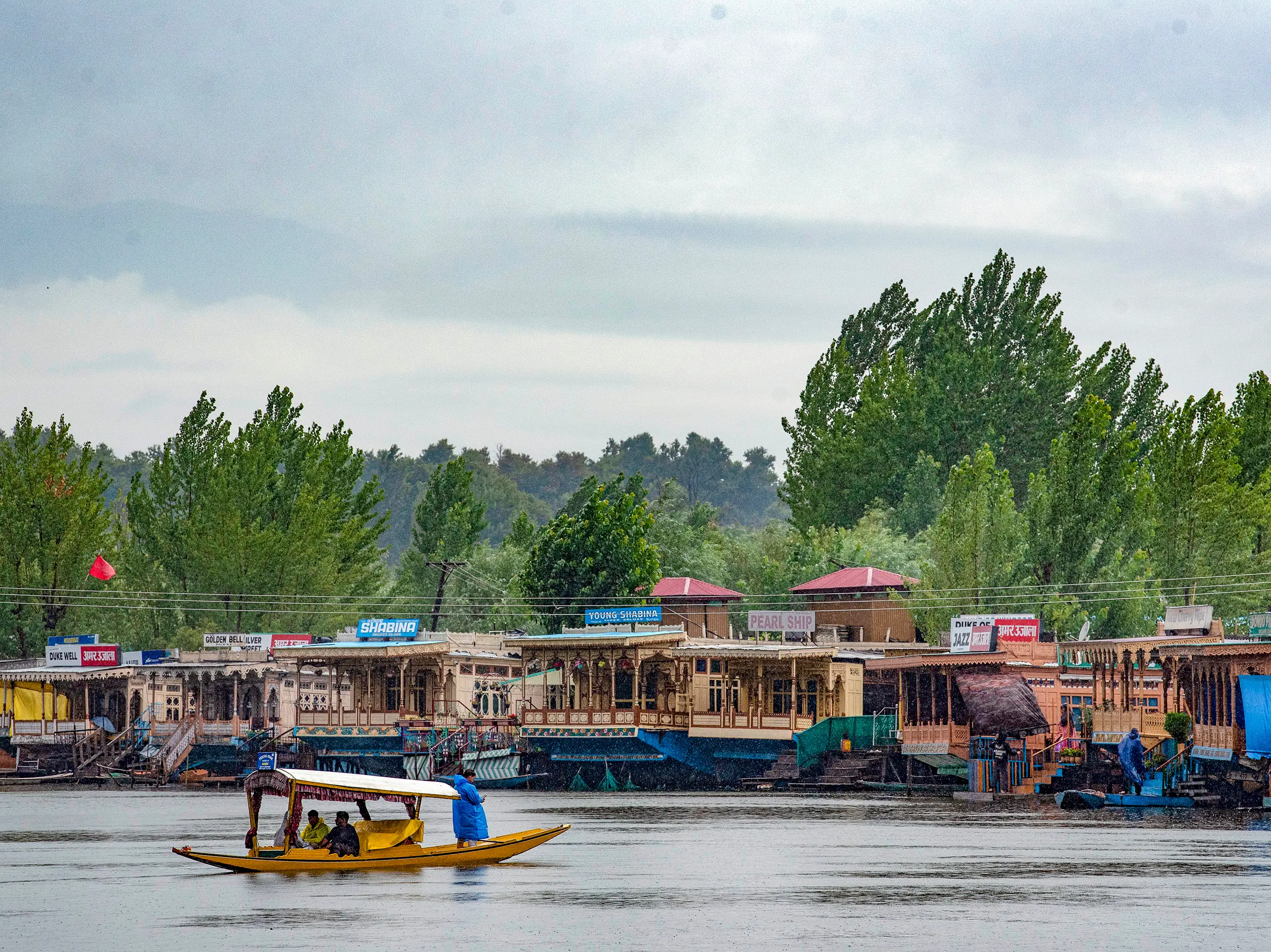
Tourists take a shikara ride on the waters of Dal Lake after a fresh spell of rainfall, in Srinagar on July 20. Photograph: (ANI)
Kashmir's rapid and largely unregulated tourism-driven construction boom, including a high number of illegal hotels and homestays, is putting forests, water resources and fragile ecosystems at growing risk of irreversible environmental damage.
Unchecked construction across Kashmir's premier tourist destinations is raising serious concerns among environmentalists, who warn that the Valley could face devastating ecological consequences if authorities fail to curb the rapid expansion of hotels, homestays, and other commercial structures.
Hill resorts such as Pahalgam, Gulmarg, and Sonmarg, along with once-pristine destinations like Gurez and Doodhpathri, have witnessed an unprecedented construction boom in recent years. Experts caution that continued unregulated development in these ecologically sensitive areas could trigger major environmental disasters in the future.
The concerns gained further significance after the Jammu and Kashmir government recently acknowledged that nearly 90 per cent of hotels constructed over the past six years across various tourist destinations in the Kashmir Valley are illegal. Based on official figures, an average of 833 hotels have been built annually during this period, with the overwhelming majority lacking the required approvals.
Among the worst-affected destinations are Pahalgam and Sonmarg, where large-scale commercial construction has transformed the landscape. The construction boom has also spread to remote areas such as Gurez, where hotels and homestays are rapidly replacing previously untouched natural landscapes. Doodhpathri in central Kashmir's Budgam district, which has emerged as a popular tourist destination in recent years, is also witnessing a sharp rise in construction activity.
"If I give you the figures, since 2021 the Valley has seen the construction of more than 5,000 hotels. Around 90% of them are illegal, while only 10% have been built legally," said LG Manoj Sinha.
Environmentalists argue that the rapid growth of tourism infrastructure has far outpaced the development of civic amenities and environmental safeguards. They warn that waste management systems, water resources, road infrastructure, and other essential services are struggling to cope with the increasing tourist influx. There are virtually no effective checks and balances on the number of visitors entering many tourist destinations. According to the experts, Tourist footfall must be regulated according to the ecological carrying capacity of each destination if sustainable tourism is to be ensured.
Trending Stories
)
&im=FitAndFill=(700,400))
&im=FitAndFill=(700,400))
)
)
&im=FitAndFill=(700,400))
)
)
&im=FitAndFill=(700,400))
)
)
)
)
)
)
)
)
&im=FitAndFill=(700,400))
)
)
)
)
)
)
)
)
)
)
)
)
)
)
)
)
)
)
"There has definitely been an impact on our forests—we've lost nearly 10% of our forest cover over the past decade. While we still have substantial forests, conservation and afforestation efforts have not kept pace. A tree cut today takes around 20 years to regenerate, so every tree felled should be replaced with several more.
The growing pressure from tourism has also led to illegal construction in forest areas, with guesthouses, hotels, and huts encroaching on ecologically sensitive land. Such land-use changes destabilise topsoil, increase erosion, and clog rivers and tributaries. Kashmir is an ecologically fragile region, and any disturbance to its natural balance has serious consequences. We're already seeing the effects of climate change. Cloudbursts, once rare and mostly confined to higher altitudes, have become far more frequent and intense across both Kashmir and Jammu," said Ajaz Rasool, an environmentalist.
Experts believe that without strict enforcement of building regulations, effective land-use planning, and scientific assessment of carrying capacity, Kashmir's scenic landscapes could face irreversible environmental degradation.