Indian posing as fraud prevention specialist dupes many US elderly, gets 33 months prison term


Indian posing as fraud prevention specialist dupes many US elderly, gets 33 months prison term
An Indian national who posed as a fraud prevention specialist and defrauded senior citizens in the United States was given a 33-month prison term and was charged $2.4 million in fines, as per media reports citing US Department of Justice.
A 29-year-old man Ashish Bajaj on 4August 2022pleadedguilty to the complaint charging him with conspiracy to conduct wire fraud before District Judge Kevin McNulty in Newark federal court.
Also Read | Judge, who presided over Trump's arraignment, receives multiple threats

The Department of Justice said Thursday that he was sentenced to 33 months in prison and two years of supervised release. It also charged USD 2.4 million in restitution for his involvement in a global conspiracy that preyed on elderly victims in New Jersey and around the US.
According to documents, Bajaj and his cohorts preyed on senior victims throughout the US between April 2020 and August 2021 by posing as fraud prevention specialists for different banks, online shops, and online payment businesses.
Falsely claiming to be fraud protection specialists employed by respected businesses, they phoned victims and informed them that their bank accounts and online payment accounts were being targeted for fraud.
)
Did India risk its US trade deal despite softer stance at BRICS?
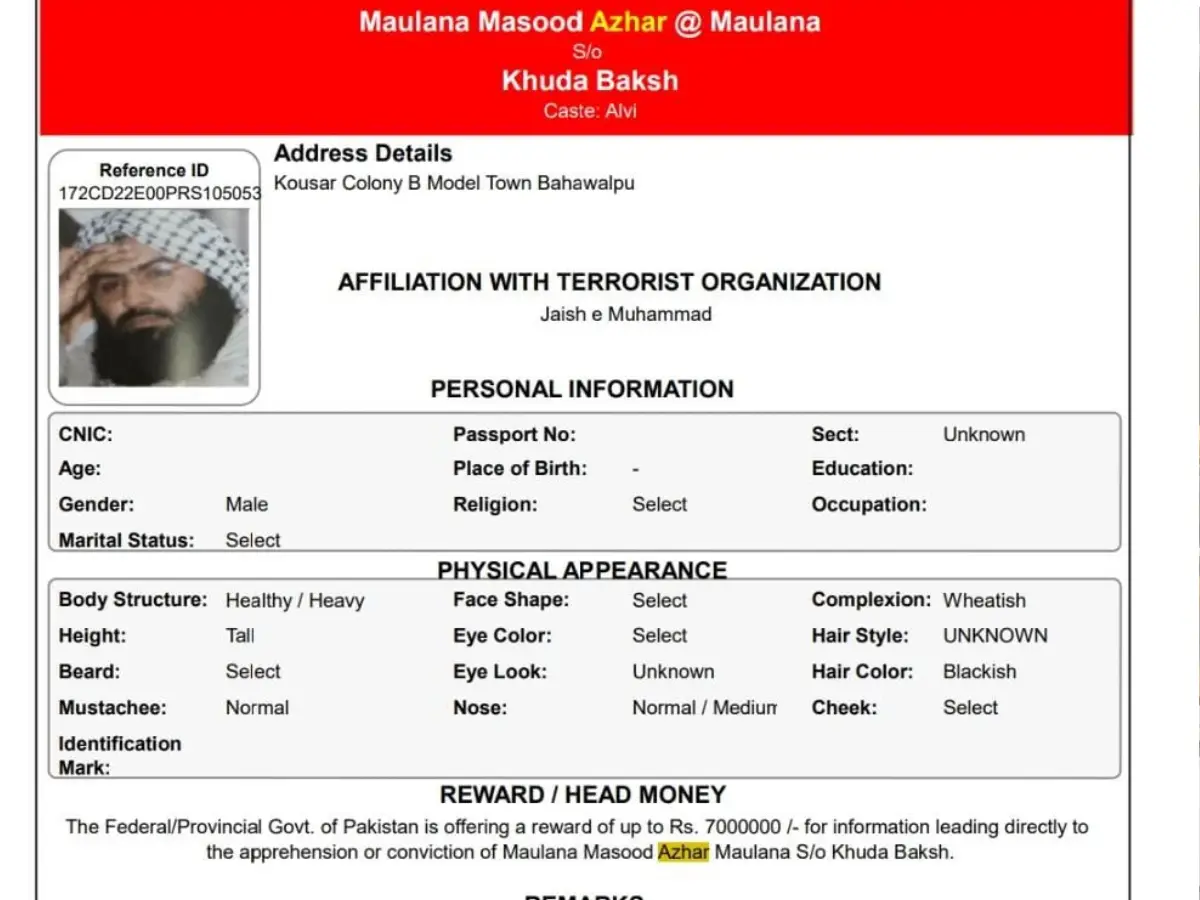)
Pakistan puts Pak Rs 70 lakh bounty on UN terrorist Masood Azhar; move draws skepticism in Delhi
)
First naval drone battle? Ukraine says Sargan 3000 sank Russian unmanned boat
)
Practical Magic 2 breaks Spidey spell over North American box office
)
'Huge destructive power': North Korea calls its latest missile launches 'live-fire drill' even as US dismisses 'immediate threat'
&im=FitAndFill=(700,400))
Meet top 5 batters fastest to 3000 runs in T20Is
)
‘Let’s go’: Newly declassified videos show dramatic rescue of US Air Force officers downed in Iran
)
Delhi’s balancing act: BRICS serves as a stage for West Asia diplomacy
&im=FitAndFill=(700,400))
Why European Meteor missiles use ramjet engines compared to standard US solid rockets
)
Iran, India agree to deepen humanitarian and political ties, President Pezeshkian says
)
‘Want to reset ties with India, have engagement based on mutual interests,’ says Bangladesh minister
)
Trump says Canada eager to reach a deal, it could come ‘fairly soon’ if Ottawa treats US farmers better
)
Turkish Airlines plane flies through a storm three times, triggering severe turbulence
&im=FitAndFill=(700,400))
Why Chinese PL-15 air-to-air missiles use dual-pulse motors compared to European interceptors
)
China thinned Himalayan troop presence in 2025, India defence report says; terms border situation 'stable'
)
800 million years old - Scientists discover 'fingerprints' of supercontinent Gondwana in ancient rocks
)
Russia proposes to build 360 kmph Ivolga FG trains in India: What happened on sidelines of BRICS
)
Israeli minister calls to strip Gaza film directors of citizenship
)
China discovers vast gold and silver 'mine' in the Pacific with unheard-of deposits
)
Russian drone hits Warsaw-bound train near Polish border, Zelensky accuses Moscow of ‘deliberate’ targeting
)
War is making Russia stronger? How Ukraine is shaping Moscow’s next generation of weapons
)
Plane carrying prominent figure crashes at Libya’s Misrata airport: Report
)
NEET-UG to move to computer-based test soon, NTA DG says ‘CBT is the future’
)
Woman removes all her clothes on American Airlines flight, performs 'indecent acts'; arrested
)
Liam Neeson sparks romance rumours after holding hands with Stella Stocker at TIFF 2026
&im=FitAndFill=(700,400))
New OTT releases this week (September 14-20, 2026): Lust Stories 3, Waiting Hai, Irumudi- 5 new titles coming on Netflix, Prime Video and more
)
Indian importers urge Bangladesh to lift export ban on 'Hilsa' fish ahead of Durga Puja
)
Did China give Iran intel before US base strike that killed 3 troops? Trump says, 'You’re right...'
)
Meghan Markle shares first glimpse of family life with Prince Harry and children in UK
)
Crude oil prices jump more than $107 per barrel following Houthi attacks on Saudi
&im=FitAndFill=(700,400))
From Rinku Singh to Mayank Yadav, 5 players dropped from India’s squad for Afghanistan T20Is
)
PM Modi and China's Xi offered to help resolve Russia-Ukraine war: Kremlin
)
Women's Asia Cup 2026: India denied trophy once again despite winning the title
)
Humans may lose control of AI: Anthropic CEO calls for slowdown, Altman, Musk back him
Also Read | Israeli army strikes Lebanon as promised retaliatory measure
Prosecutors claim that Bajaj and his accomplices then misled the victims into believing that they were needed as part of a sting operation to apprehend the fraudsters.
Firstly, they urged the elderly to transfer funds from their bank accounts to the accounts they controlled. Later, they fraudulently promised to repay the elderly victims' money within a few days following the alleged sting operation.
Watch | Rivals Iran and Saudi Arabia hold first high-level talks in seven years
The victims were also misled into believing that the sting operation would result in the arrest of the alleged offenders after they submitted the money. The elderly sent money to several banks in India, China, Singapore, and the United Arab Emirates as international wire transactions, according to court records.
Also, the victims sent funds to Bajaj's American bank accounts with the help of an online application. In addition to that, the elderly victims sent cash and cheques to Bajaj at a Californian location. The records state that the plan caused losses of more than USD 250,000.
WATCH WION LIVE HERE
You can now write for wionews.com and be a part of the community. Share your stories and opinions with us here.