India strengthens naval fleet with triple warship handover; commissioning soon

&imwidth=600&imheight=450&format=webp&quality=medium "India strengthens naval fleet with triple warship handover; commissioning soon")
Photograph: (WION)
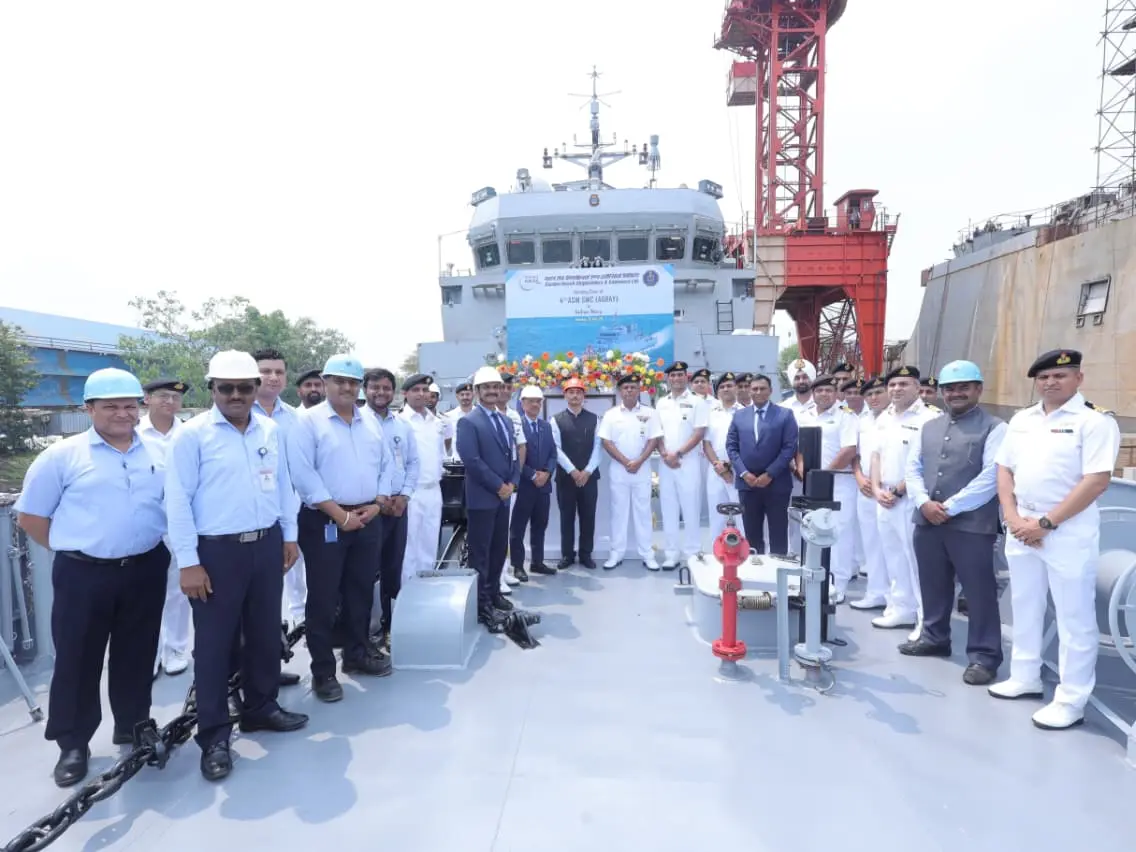
The key handover was the stealth guided-missile frigate Dunagiri (Yard 3023), the fifth Nilgiri-class (Project 17A) ship and the second built at GRSE, marking a major technological leap for the Navy.
In Kolkata on Monday, India's Garden Reach Shipbuilders & Engineers (GRSE) delivered three new warships to the Indian Navy in a single day, a rare "triple delivery" that shows the country's accelerating push for self-reliance in defence manufacturing.
The most significant handover was the stealth guided-missile frigate Dunagiri (Yard 3023), the fifth ship of the advanced Nilgiri-class (Project 17A) and the second built at GRSE. Named after a Leander-class frigate that served the Navy for 33 years until 2010, the new Dunagiri represents a major technological leap.
At around 6,670 tonnes, these multi-mission frigates feature enhanced stealth design, improved survivability and a sophisticated weapons suite including BrahMos supersonic missiles, the MFSTAR radar, MRSAM air defence system, a 76mm gun and anti-submarine torpedoes and rockets.
Powered by a Combined Diesel or Gas (CODOG) propulsion system, they offer greater automation and combat capability than their Shivalik-class predecessors. GRSE delivered Dunagiri in just 80 months, down from 93 months for the lead ship Nilgiri, thanks to lessons learned from earlier vessels in the programme. With 75% indigenous content, the project has supported over 200 MSMEs and generated thousands of jobs.
The same day saw the delivery of Sanshodhak, the fourth and final Survey Vessel (Large) in a class contracted in 2018. Displacing about 3,400 tonnes and measuring 110 metres, Sanshodhak is equipped with state-of-the-art hydrographic tools, including autonomous underwater vehicles, remotely operated vehicles, side-scan sonar and advanced data processing systems.
Trending Stories
&imwidth=280&imheight=210&format=webp&quality=medium)
&imwidth=280&imheight=210&format=webp&quality=medium)
&imwidth=280&imheight=210&format=webp&quality=medium)
&imwidth=280&imheight=210&format=webp&quality=medium)
&imwidth=280&imheight=210&format=webp&quality=medium)
&imwidth=280&imheight=210&format=webp&quality=medium)
&im=FitAndFill=(700,400)&imwidth=280&imheight=210&format=webp&quality=medium)
&imwidth=280&imheight=210&format=webp&quality=medium)
&imwidth=280&imheight=210&format=webp&quality=medium)
&imwidth=280&imheight=210&format=webp&quality=medium)
&imwidth=280&imheight=210&format=webp&quality=medium)
&imwidth=280&imheight=210&format=webp&quality=medium)
&imwidth=280&imheight=210&format=webp&quality=medium)
&imwidth=280&imheight=210&format=webp&quality=medium)
&imwidth=280&imheight=210&format=webp&quality=medium)
&imwidth=280&imheight=210&format=webp&quality=medium)
&imwidth=280&imheight=210&format=webp&quality=medium)
&imwidth=280&imheight=210&format=webp&quality=medium)
&imwidth=280&imheight=210&format=webp&quality=medium)
&imwidth=280&imheight=210&format=webp&quality=medium)
&imwidth=280&imheight=210&format=webp&quality=medium)
&imwidth=280&imheight=210&format=webp&quality=medium)
&imwidth=280&imheight=210&format=webp&quality=medium)
&imwidth=280&imheight=210&format=webp&quality=medium)
&imwidth=280&imheight=210&format=webp&quality=medium)
&imwidth=280&imheight=210&format=webp&quality=medium)
&imwidth=280&imheight=210&format=webp&quality=medium)
&imwidth=280&imheight=210&format=webp&quality=medium)
&imwidth=280&imheight=210&format=webp&quality=medium)
It will conduct coastal and deep-water surveys, mapping navigational channels and gathering oceanographic data for both military and civilian use. Powered by diesel engines, it can exceed 18 knots. Its indigenous content exceeds 80%. Previous ships in the class, Sandhayak, Nirdeshak and Ikshak, were commissioned between 2024 and 2025.
Completing the trio was Agray, the fourth of eight Arnala-class Anti-Submarine Warfare Shallow Water Craft (ASW SWC). Roughly 77 metres long, these are the largest Indian Navy warships propelled by waterjets. They carry lightweight torpedoes, indigenous rocket launchers and shallow-water sonar for detecting and engaging underwater threats in coastal waters, bolstering mine-warfare and surveillance capabilities. Agray revives the name of a decommissioned 1241 PE-class patrol vessel. Like its sister ships, it boasts over 80% indigenous content.
GRSE has now built 118 warships, including 80 for the Indian Navy. The new platforms will strengthen the Navy's blue-water capabilities, hydrographic expertise and coastal defence as it expands its presence in the Indian Ocean Region. Commissioning ceremonies are expected in the coming months.