From Tehran's royal past to Delhi: Pezeshkian visits Iranian Hall at Rashtrapati Bhavan | WATCH

&imwidth=600&imheight=450&format=webp&quality=medium "From Tehran's royal past to Delhi: Pezeshkian visits Iranian Hall at Rashtrapati Bhavan | WATCH")
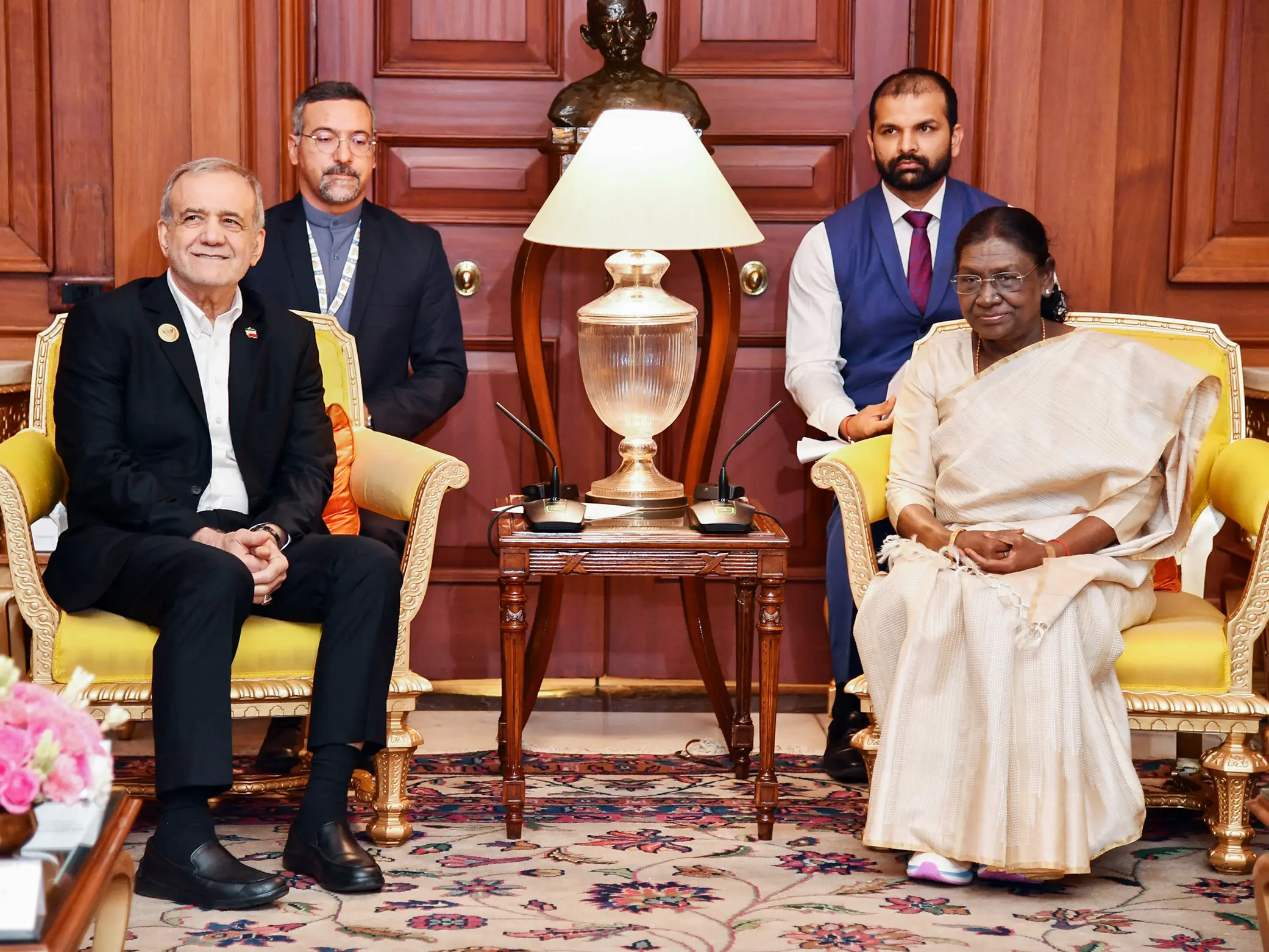
President Droupadi Murmu meets President of the Islamic Republic of Iran, Dr Masoud Pezeshkian, on the sidelines of the 18th BRICS Summit, in New Delhi on Saturday. Photograph: (ANI)
Iranian President Masoud Pezeshkian explored Rashtrapati Bhavan's Iranian Hall during his BRICS visit, where he saw a striking portrait of Qajar ruler Fath-Ali Shah.
Iranian President Masoud Pezeshkian got a glimpse of Iran's royal past during his visit to Rashtrapati Bhavan, where an imposing portrait of Fath-Ali Shah Qajar dominates the ceiling of Ashok Hall.
Pezeshkian was in New Delhi for the 18th BRICS Summit and visited the Presidential Palace, where he also held an official meeting with President Droupadi Murmu. His visit to the heritage spaces of Rashtrapati Bhavan offered an unusual connection between his diplomatic trip and Iran's centuries-old artistic history.
The Iranian king on India's ceiling
At the centre of Ashok Hall is a huge oil-on-canvas painting titled Fath-Ali Shah at the Hunt. The work was painted around 1810 by Mihr 'Ali, a celebrated court artist during the reign of Fath-Ali Shah Qajar.
Fath-Ali Shah ruled Iran from 1797 to 1834 and was the second ruler of the Qajar dynasty. His reign became closely associated with elaborate royal art, architecture and court culture.
His image was repeatedly used to project the power of the Qajar monarchy. In royal portraits, he was typically shown with his long black beard, ornate clothing, jewellery and the distinctive Kayanid crown.
Trending Stories
)
)
)
)
)
)
)
)
)
)
)
)
)
)
)
)
)
)
)
)
)
)
)
)
)
)
)
&im=FitAndFill=(700,400))
)
)
)
)
)
)
A piece of Iran in Rashtrapati Bhavan
The Iranian Hall at Rashtrapati Bhavan further reflects the country's artistic traditions. Its displays span carpets, calligraphy, architecture, craftsmanship and decorative arts, offering visitors a look at Iran's cultural evolution.The Qajar period is particularly significant because Persian artistic traditions increasingly absorbed European influences while retaining established motifs and techniques.

