Explained: All you need to know about the Delhi liquor policy case

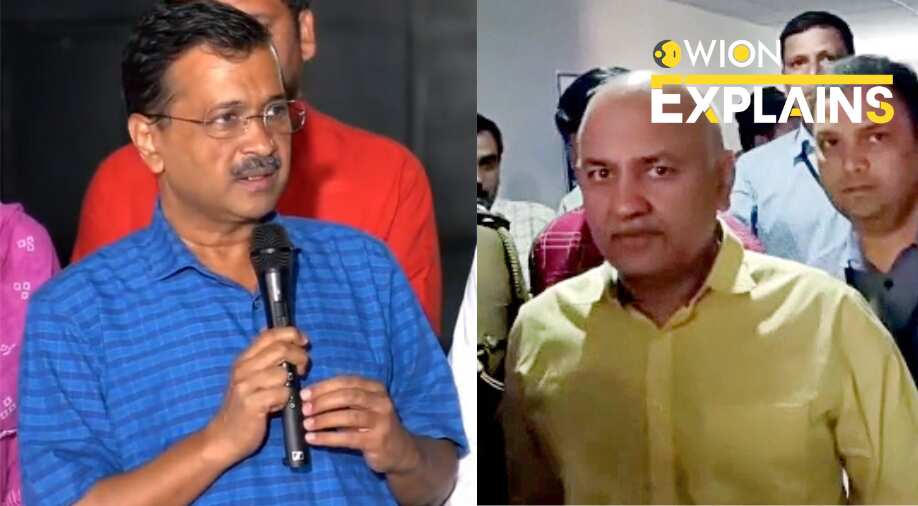
Kejriwal-Sisodia
The Central Bureau of Investigation came knocking on Delhi Chief Minister Arvind Kejriwal's door in the liquor policy case that has ravaged the Delhi government for months now. Former Deputy Chief Minister Manish Sisodia was arrested in February in the excise case over allegations of corruption in the formulation and implementation of the liquor policy for 2021-22. Sisodia held the excise portfolio and several other ministries in the Delhi government. Kejriwal was questioned by the CBI for over nine hours on Sunday. He was accompanied by Punjab Chief Minister Bhagwant Mann and other party leaders. After the questioning got over, Kejriwal said that the probe agency does not have any bit of evidence against the Aam Aadmi Party government that "it has committed any wrong in the framing of now scrapped new excise policy."
What is the Delhi Excise policy case?
The Excise policy was framed on the recommendations of an expert committee and came into force on November 17, 2021. The policy was aimed at increasing government revenues and also ending the liquor mafia’s influence and black marketing. Under the new policy, open bidding was conducted for 849 liquor vends which were awarded to private companies. The city was divided into 32 zones, each allotted a maximum of 27 vends. There were no individual licences and the bidding was done zone-by-zone.

The city government's role in the liquor business ended with the new excise policy. The government was left with no control over the sale of liquor in the capital. While the government said the policy would lead to equal distribution of liquor vends in the city, several social, educational and religious groups weren't happy with it. That it was implemented in the middle of the second Covid wave made things worse for the Delhi government. The policy was rolled back in July 2022 and the old liquor policy came into force once again.
What is the controversy?
The controversy over the liquor policy started when allegations started swirling that the AAP government used the policy to extend undue financial favours to the liquor licensees, much after the tenders had been awarded, thus causing huge losses to the exchequer. The CBI is probing allegations that the liquor policy gave undue advantages to private retailers. The CBI also says that corruption in the matter goes to the "highest levels" in Kejriwal's government. It has claimed crores in kickbacks were paid for favours in the policy and the funds were used by the AAP for its election campaign in Goa last year.
)
2,200 people donate Rs 1.5 crore for 'docile' Georgia donkey 'HeeHaw' shot dead by police officer
)
Los Angeles helicopter crash: At least three dead, several injured; NTSB to investigate
)
Ex-CIA officer caught with gold bars worth $40 million seeks plea deal | Gravitas
)
Sydney Sweeney defends provocative ad choice, the internet is still not impressed
)
Trump's name cannot return to Kennedy Center, US judge rules
)
India summons top Pakistan diplomat after Pak Navy ship collides with Indian warship at high seas
)
India’s imports from Russia jump 57% in five months; China remains top import source
)
1,200 Indian and US troops begin high-altitude and desert drills
)
Salman Khan gives The Revolutionaries a shoutout, watches series with Bhuvan Bam, Nikkhil Advani at Galaxy
)
Messi set to play in farewell match on October 6 in Argentina vs Benin friendly
)
China's property crisis deepens as investment plunges nearly 20%
)
Space mines, lasers & robotic arms: Lt Gen Pannu decodes US disclosure of weapons in space
)
‘US military task force aiding Saudi Arabia forces with intel, planning support’: Official
)
Top military commanders from US, Israel, and 7 Arab nations held secret meeting on Iran War
)
US fires up to 70 interceptors against Iran attack on Jordan, putting supplies under pressure
)
Ex-India all-rounder Yuvraj Singh wants India to avoid 'massive changes' before ODI World Cup 2027
)
Saudi turns to Israel for intelligence help as Houthi attacks intensify: Report
)
Water equivalent to two Pacific Oceans could be stashed 2,900 km inside Earth
)
Saudi Arabia accuses Houthis of drone attack on Mecca, first-ever red alert in Islam's holiest site sparks panic
)
Saudi Arabia discovers 110 million tonnes of Uranium-rich ore in Madinah region
)
‘Kill all in the name of...’: FBI arrests 21-year-old over alleged ISIS-inspired mass-casualty attack plot
)
US Treasury yields cross 5% as Scott Bessent warns of ‘global issues’ impacting bonds
)
'Now Trump is copying us': Shivakumar links US $5,000 plan to Congress guarantees
)
Who is Kalyan Bainsla, accused in the Gurugram hit-and-run case involving woman biker?
)
OpenAI boss Sam Altman repeats AI 'slow down' call, says world 'right to be afraid'
)
Ed Sheeran’s US tour loses all support acts after Macklemore’s removal | Controversy explained
)
'Definitely feel bad for yourself': Kuldeep Yadav opens up on India Test snubs
)
Trump's Iran war faces fresh House rebuke; 7 Republicans join Democrats in push to end conflict ahead of midterms
)
'Like a thug you are using agency to go after..': Kash Patel grilled by Senate Democrats over FBI firings, journalist investigations and hiring policy
)
Putin-linked Russian oligarch, Melania links: Why Trump skipped his son’s Bahamas wedding bash?
)
Bitter Zelensky snubs Trump for playing politics with Ukraine war | Gravitas
&im=FitAndFill=(700,400))
New OTT releases this week (September 14-20, 2026): Lust Stories 3, Waiting Hai, Irumudi- 5 new titles coming on Netflix, Prime Video and more
)
West Bengal IPS officer Bushra Bano transferred after objections to ‘Assalamualaikum’, ‘Inshallah’
)
Spanish officer sent home from NATO base over affair with 'Russian spy' | Gravitas
)
800 million years old - Scientists discover 'fingerprints' of supercontinent Gondwana in ancient rocks
A July 8 report by the Chief Secretary of Delhi last year also showed prima facie violations of the GNCTD Act 1991, Transaction of Business Rules (ToBR) 1993, Delhi Excise Act 2009 and Delhi Excise Rules 2010.
Following the report, Delhi Lieutenant Governor VK Saxena ordered a probe into the Delhi Excise Policy 2021-22. He recommended a CBI probe on July 22, 2022, into the alleged rule violations and other wrongdoings in the implementation of the excise policy.
Manish Sisodia's arrest
The above report alleged that “Minister In-charge of the Excise Department, Manish Sisodia, took and got executed, major decisions/actions”, which were “in violation of the statutory provisions and the notified Excise Policy that had huge financial implications.”
“It was done so with the sole aim of benefitting private liquor barons in lieu of financial benefits to individuals at the highest echelons of the government leading up to the Minister-in-charge of Excise & Finance, Manish Sisodia,” the report said.
In August, the CBI registered an FIR in a special court that mentioned crores were allegedly paid to close associates of Sisodia by Sameer Mahendru, the owner of Indospirits. The liquor trader had been actively involved in irregularities in the framing and implementation of the excise policy.
Former Deputy CM Manish Sisodia's arrest has been the most high-profile arrest in the matter to date. His judicial custody was extended till May 1 on Monday in the now-scrapped excise policy. Sisodia was produced physically on Monday before the Court from Tihar Jail after the end of his judicial custody period. Earlier on April 3, the same court extended Sisodia`s judicial custody till April 17. Sisodia was arrested on February 26 by the CBI which is probing alleged irregularities in the framing and implementation of the excise policy of the Government of the National Capital Territory of Delhi. The following month, Sisodia was arrested while still in jail by the Enforcement Directorate which is probing allegations of money laundering in the case.
Kejriwal's questioning
The CBI recorded Kejriwal's statement in connection with the Excise policy case on Sunday and will verify and collate it with the "available evidence". A statement by the CBI said that the Chief Minister of Delhi was issued a notice under section 160 Cr.P.C for his examination in this case. The agency said that is had uncovered fresh evidence in the matter and there are grounds for the CM to be questioned.
"The entire alleged liquor scam is false and is out of bad politics. AAP is 'kattar imaandaar party'. They want to finish AAP but the country's people are with us," Kejriwal said after the questioning.
The Chief Minister added that he has not been summoned again.
(With inputs from agencies)
WATCH WION LIVE HERE
You can now write for wionews.com and be a part of the community. Share your stories and opinions with us here.

