Budget 2026: Railways receive highest-ever allocation, 7 high-speed corridors announced – check full details

&imwidth=600&imheight=450&format=webp&quality=medium "Budget 2026: Railways receive highest-ever allocation, 7 high-speed corridors announced – check full details")
Photograph: (X)
One of the main focus areas for this year has been the safety of passengers as the government proposed to install the indigenious buit anti-collision system Kavach 4.0 across 18,000 km of high-traffic tracks in the country.
The Ministry of Railways received its highest-ever outlay in the Union Budget 2026, with the Union Government putting aside Rs 2,78,030 crores for Indian Railways along with a capital expenditure (capex) of Rs 2,93,030 crores for the financial year 2026-27. In a major step towards high-speed rail connectivity in the country, Finance Minister Nirmala Sitharaman announced seven new high-speed rail corridors across the country. At present, India does not have any functional high-speed or bullet train corridor. The first bullet train is currently under construction between Ahmedabad and Mumbai.
"To promote environmentally sustainable passenger systems, we will develop seven high-speed rail corridors between cities as growth collectors," she said.
The proposed routes under the high-speed network are:
1. Mumbai-Pune
2. Pune-Hyderabad
3 . Hyderabad-Bengaluru
Trending Stories
&imwidth=280&imheight=210&format=webp&quality=medium)
&imwidth=280&imheight=210&format=webp&quality=medium)
&imwidth=280&imheight=210&format=webp&quality=medium)
&imwidth=280&imheight=210&format=webp&quality=medium)
&imwidth=280&imheight=210&format=webp&quality=medium)
&imwidth=280&imheight=210&format=webp&quality=medium)
&imwidth=280&imheight=210&format=webp&quality=medium)
&imwidth=280&imheight=210&format=webp&quality=medium)
&imwidth=280&imheight=210&format=webp&quality=medium)
&imwidth=280&imheight=210&format=webp&quality=medium)
&imwidth=280&imheight=210&format=webp&quality=medium)
&imwidth=280&imheight=210&format=webp&quality=medium)
&imwidth=280&imheight=210&format=webp&quality=medium)
&imwidth=280&imheight=210&format=webp&quality=medium)
&imwidth=280&imheight=210&format=webp&quality=medium)
&imwidth=280&imheight=210&format=webp&quality=medium)
&imwidth=280&imheight=210&format=webp&quality=medium)
&imwidth=280&imheight=210&format=webp&quality=medium)
&imwidth=280&imheight=210&format=webp&quality=medium)
&im=FitAndFill=(700,400)&imwidth=280&imheight=210&format=webp&quality=medium)
&imwidth=280&imheight=210&format=webp&quality=medium)
&imwidth=280&imheight=210&format=webp&quality=medium)
&imwidth=280&imheight=210&format=webp&quality=medium)
&imwidth=280&imheight=210&format=webp&quality=medium)
&imwidth=280&imheight=210&format=webp&quality=medium)
&imwidth=280&imheight=210&format=webp&quality=medium)
&imwidth=280&imheight=210&format=webp&quality=medium)
&imwidth=280&imheight=210&format=webp&quality=medium)
4. Hyderabad-Chennai
5 . Chennai-Bengaluru
6. Bengaluru-Varanasi
7. Varanasi-Siliguri
Along with the enhanced and faster connectivity between major financial centres in India, Sitharaman said to promote environmentally-sustainable movement of cargo, she proposed to establish a new dedicated freight corridor connecting Dankuni in the east to Surat in the west.
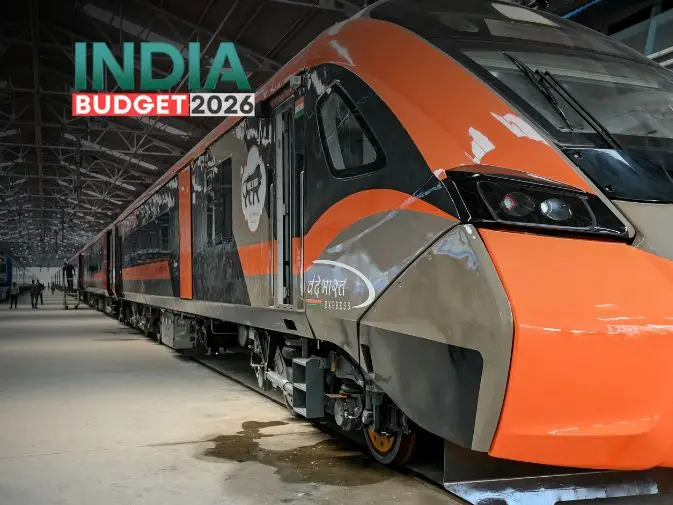
The Budget also announced the expansion of Vande Bharat Sleeper trains to replace existing premium long-distance trains such as the Rajdhani Express.
Also Read: Union Budget 2026 | 'Ambitious and aspirational': PM Modi hails FM Sitharaman's 'futuristic' budget
One of the main focus areas for this year has been the safety of passengers as the government proposed to install the indigenious buit anti-collision system Kavach 4.0 across 18,000 km of high-traffic tracks in the country.
To facilitate the rail travel for common passenger the government committed to manufacturing 17,500 new general and sleeper coaches to reduce overcrowding and ensure comfortable travel.
Railway Budget breakup
The budget breakup includes Rs 65,496 crore for rolling stock to support the mass production of Vande Bharat sleeper and Amrit Bharat trains. Another Rs 74,471 crore has been allocated for new railway lines and track doubling.
Safety remains a key focus, with Rs 7,500 crore set aside for the accelerated deployment of the Kavach 4.0 anti-collision system across 18,000 km of track. In addition, Rs 11,971 crore has been earmarked for station redevelopment under the Amrit Bharat scheme.