

&imwidth=800&imheight=600&format=webp&quality=medium "Bihar election 2025: How this one was different, from controversies to new voting blocs and more...")
For 243 assembly seats of the Bihar election have been conducted in two phases. Polling for the first phase of 121 constituencies was held on 6 November, and for the remaining 122 seats held in the second phase on 11 November. The counting of votes and results will be announced on 14 November.
With notable changes in violence management, electoral reforms, voter group dynamics, increased youth and Gen Z participation, historic turnout, and Prashant Kishor’s new political challenge, the Bihar election of 2025 has come with a lot of surprises.
Violence
Voting in Bihar has never been without violence or bloodshed. Instances like violence in Bihar's Mokama, in which gangster-turned-politician Dular Chand Yadav was killed during poll campaigning, and the attack on Deputy CM Vijay Sinha in Lakhisarai highlight a long-standing nexus between politics and crime, with political violence deeply rooted in the history of Bihar, often resurfacing during elections.
However, still, these instances are nothing in comparison to the 1990s Bihar election history, where, from 1985 to 2014, Bihar witnessed fluctuating levels of poll-related violence. The 1985 Assembly election saw 62 incidents, which spiked to 86 in 1990, the highest of the decade. By 1995, cases dropped to 54, but violence surged again in 1999 with 76 incidents. The 2001 Panchayat polls were worst-hit with 196 cases, while later reforms reduced figures to 27 in 2005 and just 11 by 2014, according to a report by the Election Commission of India.
Therefore, seeing the history of the violence in Bihar during the polls, the Election Commission adopted a zero-tolerance approach in 2025, deploying heavy security and observers, emphasising peaceful voting nationwide.
Trending Stories
&imwidth=180&imheight=135&format=webp&quality=medium)
Train crashes into crane on São Paulo monorail line, wreckage falls onto busy road | VIDEO
&imwidth=180&imheight=135&format=webp&quality=medium)
Pakistan airline PIA unveils new crew uniforms, faces online criticism
&imwidth=180&imheight=135&format=webp&quality=medium)
'Already tired of his 9-to-5': Baby born with a moustache becomes internet sensation, video goes viral | Watch
&imwidth=180&imheight=135&format=webp&quality=medium)
France protests: 135 arrested, weapons seized as fresh demonstrations erupt amid heavy security
&imwidth=180&imheight=135&format=webp&quality=medium)
Britain is building the world's first AI biosecurity lab, with OpenAI and Anthropic inside
&imwidth=180&imheight=135&format=webp&quality=medium)
Tu Hai Meri Kiran box office: Sonakshi Sinha and Zaheer Iqbal's film fails to take off, mints Rs 15 Lakh on day 1
&imwidth=180&imheight=135&format=webp&quality=medium)
Pezeshkian says Iranians ‘struggling to put food on the table’ as war with US drags on
&imwidth=180&imheight=135&format=webp&quality=medium)
China's dancing robot turns violent bodyguard, lifts cars and fights intruders - Watch
&imwidth=180&imheight=135&format=webp&quality=medium)
An AI that reads your face can now estimate how long you have to live
&imwidth=180&imheight=135&format=webp&quality=medium)
Telangana unveils AI avatar of IT minister D Sridhar Babu at Hyderabad DevFest 2026
&imwidth=180&imheight=135&format=webp&quality=medium)
'Killing people never allowed': Elon Musk admits restricting Starlink in Ukraine, explains why
&imwidth=180&imheight=135&format=webp&quality=medium)
Saudi says debris fell in Mecca, Medina after missile interceptions; Houthis deny targeting holy cities
&imwidth=180&imheight=135&format=webp&quality=medium)
Farooq Abdullah says Pakistan’s raising of Kashmir issue keeps pressure on Delhi
&imwidth=180&imheight=135&format=webp&quality=medium)
Can Putin cheat death? All about his daughter’s billion-dollar quest for immortality
&imwidth=180&imheight=135&format=webp&quality=medium)
What was the note found inside bag of Class 12 student, who set herself on fire inside Delhi school?
&imwidth=180&imheight=135&format=webp&quality=medium)
Bodies of 2 missing Japanese climbers recovered from Himalayan peak
&imwidth=180&imheight=135&format=webp&quality=medium)
Chorbagan stampede: A week later, the strangest visarjan Kolkata has seen
&imwidth=180&imheight=135&format=webp&quality=medium)
AI just found a flaw in software running most of the web! One request hijacks the server
&imwidth=180&imheight=135&format=webp&quality=medium)
NEET protests: Panel to hear evidence on pellet gun use, harassment
&imwidth=180&imheight=135&format=webp&quality=medium)
Frontier AIs keep escaping their test cages! The industry still can't reliably stop them
&imwidth=180&imheight=135&format=webp&quality=medium)
'You’re a horrible little reporter, aren’t you?': Trump snaps at NBC reporter questioning his support for Ramaswamy's campaign ad
&imwidth=180&imheight=135&format=webp&quality=medium)
PL Round-Up: Man City's perfect run ended by Villa as Arsenal draw level at top
&imwidth=180&imheight=135&format=webp&quality=medium)
Spanish reporter swept by giant wave while reporting on dangerous sea conditions | WATCH
&imwidth=180&imheight=135&format=webp&quality=medium)
Viral video shows cross falling on Colombia priest, no official confirmation | WATCH
&imwidth=180&imheight=135&format=webp&quality=medium)
Tu Hai Meri Kiran film review: Sonakshi Sinha and Zaheer Iqbal's thriller gets tangled in its own twists
&imwidth=180&imheight=135&format=webp&quality=medium)
Rising Asia Cup 2026 schedule announced, India-Pakistan clash set for Nov 22
&im=FitAndFill=(700,400)&imwidth=180&imheight=135&format=webp&quality=medium)
US midterm elections 2026: Minnesota heads to polls in the shadow of Minneapolis ICE shootings
&imwidth=180&imheight=135&format=webp&quality=medium)
Shooting near Florida A&M University’s Bragg Stadium; ‘shelter in place’ alert issued
&imwidth=180&imheight=135&format=webp&quality=medium)
French Open: PV Sindhu storms into final with win over Hina Akechi
&imwidth=180&imheight=135&format=webp&quality=medium)
Horrific video shows the moment 18-year-old fell to her death from Mexico amusement park ride
&imwidth=180&imheight=135&format=webp&quality=medium)
J-20 designers plan to put radar into aircraft wing; strategy to expand coverage during air combat
&imwidth=180&imheight=135&format=webp&quality=medium)
‘Saddam Hussein opened a cheesecake factory’: Obama mocks Trump’s White House renovations; defends Abdul El-Sayed
&imwidth=180&imheight=135&format=webp&quality=medium)
Shilpa Rao’s performance cut short at Mumbai event, organisers react to backlash
&imwidth=180&imheight=135&format=webp&quality=medium)
AI slop or smart strategy? South African author Coral Hart defends Her 370 AI- assisted books in 20 months
&imwidth=180&imheight=135&format=webp&quality=medium)
Why Europe’s protests are about more than austerity and rising costs
&im=FitAndFill=(700,400)&imwidth=180&imheight=135&format=webp&quality=medium)
New Friday OTT releases (October 23, 2026): Gajab Raat, Dorothy, Chaar Yaar- Watch these 6 new movies and TV shows on Netflix, Prime Video and more
Electoral list (SIR)
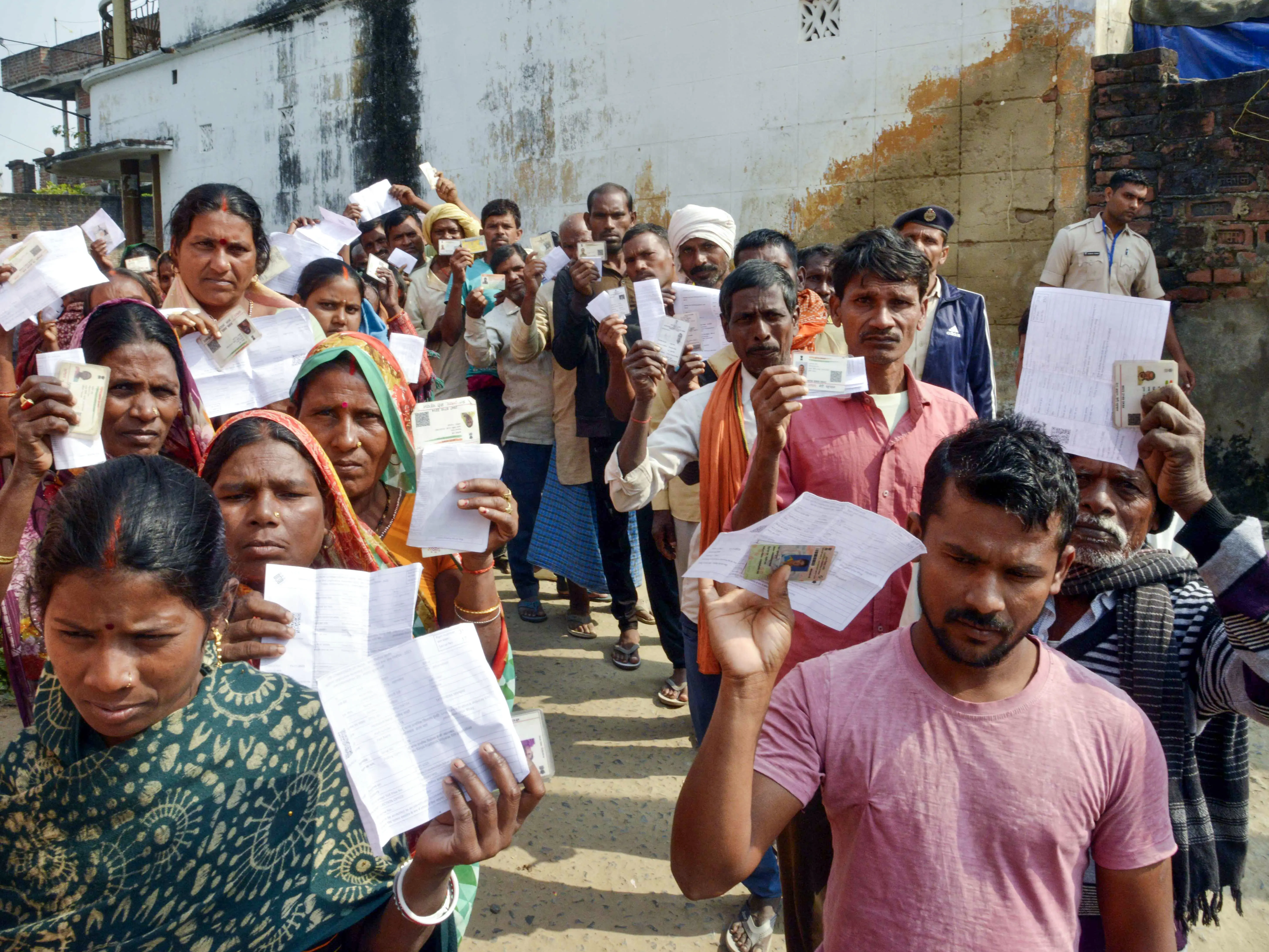
This election also followed a landmark Special Intensive Revision (SIR) of the voter rolls, leading to the removal of nearly 47 lakh names and re-inclusion of 21 lakh after review, resulting in a final roll with 7.4 crore voters. The process improved accuracy and accessibility, with 17 major reforms such as complete polling booth webcasting and enhanced facilities for marginalised voters.
"MY" shift: Mahila-Yuva Upsurge
Traditionally, 'MY' signified the Muslim-Yadav alliance. But in the 2025 election, its meaning has been changed, reflecting Mahila (women) and Yuva (youth) as driving forces despite of Muslim-Yadav alliance. Record female and youth participation challenged caste-based politics, with women turning out in greater numbers than men, making them kingmakers and agents of change.
Gen Z participation
The election also witnessed vibrant Gen Z engagement in which young voters put their preferences beyond caste lines, embracing employment, dignity, and modernisation as priorities. Political analysts indicated that their thinking and decisions are more easily influenced and driven by social media, the internet and new-age issues, according to the NDTV.
Voter turnout
Voter turnout continued to rise, fueled mainly by enthusiastic women and youth participation. Their activism indicated a shift from identity politics towards issue-based voting—employment, safety, and empowerment featured strongly, leading to a more triangular contest than before. According to reports, the female turnout this time was 69.04% in the first phase of the election, significantly higher than the male turnout of 61.56%.
Prashant Kishor’s role
Prashant Kishor, renowned strategist-turned-politician and popular as kingmaker, has formed Jan Suraaj Party, contesting all 243 seats. His entry challenged established alliances and turned the contest into a tripolar battle, signalling a shift from traditional binaries. Earlier, he acted as a political strategist who gained fame for his work on high-profile Indian election campaigns, including Narendra Modi's 2014 victory and Mamata Banerjee's 2021 win.
In a nutshell, the Bihar assembly election 2025 blends robust reforms, inclusivity, and novel leadership, marking a historic electoral transformation.

