‘360-degree attack on organised crime soon,’ says Amit Shah, lauds terror probes

&imwidth=600&imheight=450&format=webp&quality=medium "‘360-degree attack on organised crime soon,’ says Amit Shah, lauds terror probes")
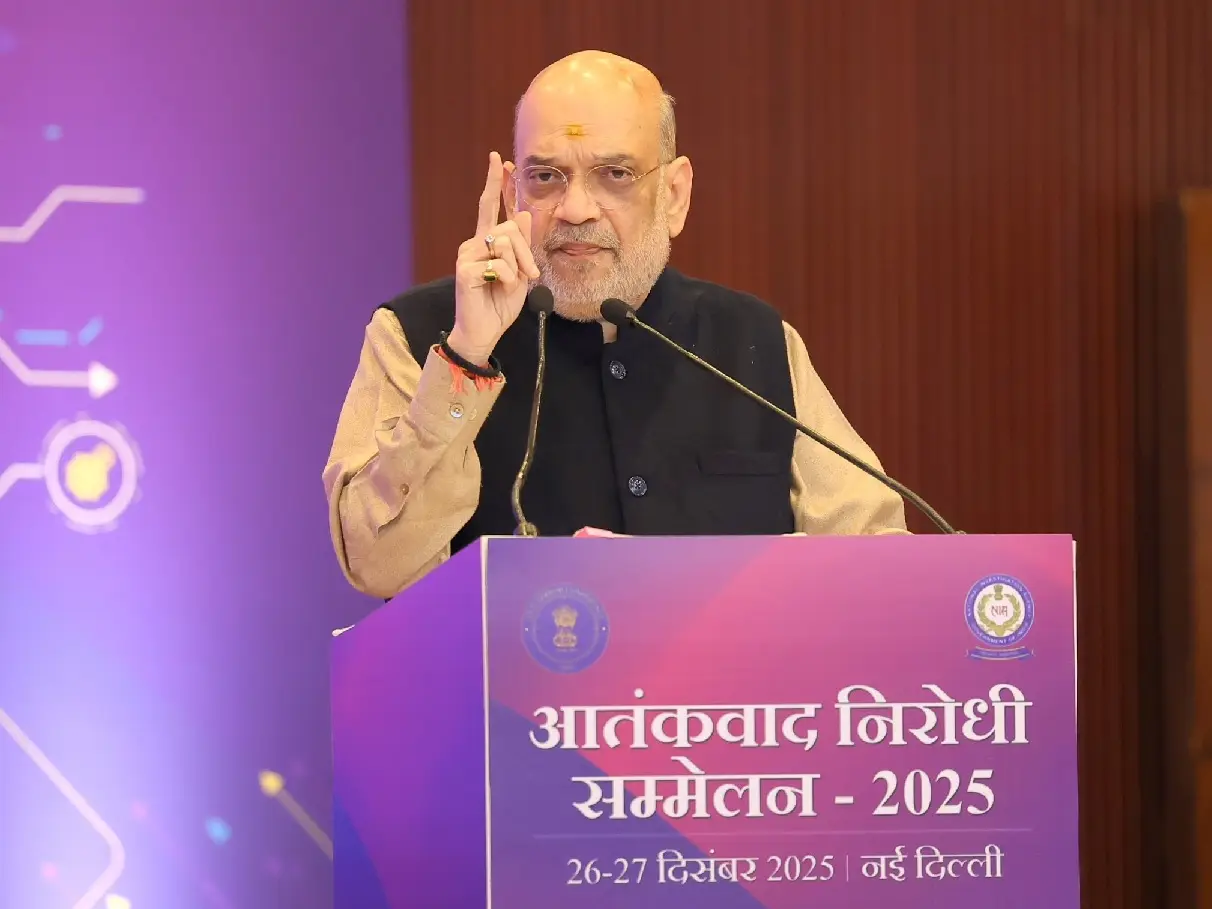
Union Home Minister Amit Shah at the two-day anti-terrorism conference organised by NIA. Photograph: (X\@AmitShah)
Union Home Minister Amit Shah said the NIA conducted a “complete and successful” investigation into the Pahalgam terror attack, which will become a case study for agencies around the world and put Pakistan in the dock at the international platforms.
Union Home Minister Amit Shah on Friday said that a new plan to launch “a 360-degree attack on organised crime” would be introduced in the coming days. Speaking at the inauguration of the two-day anti-terrorism conference organised by the National Investigation Agency (NIA), Shah said when the heads of organised crime networks flee abroad to settle, they automatically come into contact with terrorist organisations and then help spread terrorism within the country.
“Organised crime networks initially operate for the purpose of ransom and extortion, but when their leaders flee abroad and settle there, they automatically come into contact with terrorist organisations and then use the proceeds from ransom and extortion to spread terrorism within the country,” he said.
The home minister also praised the security agencies for successful probes into the April 22 Pahalgam terrorist attack and the Delhi blast case.
Also Read: Delhi blast: Terror suspect taken to Al Falah University, reveals where explosives were refined
‘Pahalgam attack, Delhi blast probes outstanding instances of watertight investigations’
Shah said the NIA conducted a “complete and successful” investigation into the Pahalgam terror attack, which will become a case study for agencies around the world and put Pakistan in the dock at the international platforms.
Trending Stories
&imwidth=280&imheight=210&format=webp&quality=medium)
&imwidth=280&imheight=210&format=webp&quality=medium)
&imwidth=280&imheight=210&format=webp&quality=medium)
&imwidth=280&imheight=210&format=webp&quality=medium)
&imwidth=280&imheight=210&format=webp&quality=medium)
&imwidth=280&imheight=210&format=webp&quality=medium)
&imwidth=280&imheight=210&format=webp&quality=medium)
&imwidth=280&imheight=210&format=webp&quality=medium)
&imwidth=280&imheight=210&format=webp&quality=medium)
&imwidth=280&imheight=210&format=webp&quality=medium)
&imwidth=280&imheight=210&format=webp&quality=medium)
&imwidth=280&imheight=210&format=webp&quality=medium)
&imwidth=280&imheight=210&format=webp&quality=medium)
&imwidth=280&imheight=210&format=webp&quality=medium)
&imwidth=280&imheight=210&format=webp&quality=medium)
&imwidth=280&imheight=210&format=webp&quality=medium)
&imwidth=280&imheight=210&format=webp&quality=medium)
&imwidth=280&imheight=210&format=webp&quality=medium)
&imwidth=280&imheight=210&format=webp&quality=medium)
&im=FitAndFill=(700,400)&imwidth=280&imheight=210&format=webp&quality=medium)
&imwidth=280&imheight=210&format=webp&quality=medium)
&imwidth=280&imheight=210&format=webp&quality=medium)
&imwidth=280&imheight=210&format=webp&quality=medium)
&imwidth=280&imheight=210&format=webp&quality=medium)
&imwidth=280&imheight=210&format=webp&quality=medium)
&imwidth=280&imheight=210&format=webp&quality=medium)
&imwidth=280&imheight=210&format=webp&quality=medium)
&imwidth=280&imheight=210&format=webp&quality=medium)
He also lauded the investigation into the November 10 Red Fort blast, saying three tonnes of explosives were recovered before terrorists could use them, and underlined that the probes carried out by agencies in the Pahalgam and Delhi attacks were not examples of routine policing but outstanding instances of “watertight investigations”.
Speaking on the Pahalgam terror attack, Shah said, “Through this attack, the terrorists wanted to disrupt communal harmony in the country and deliver a blow to the new era of development and tourism that has begun in Kashmir. Based on extremely precise intelligence, our forces neutralised all three terrorists, delivering a stern message to Pakistan.”
The three terrorists involved in the Pahalgam attack were killed in an encounter with security forces on July 28.
Shah said the probes into the terror attacks in Pahalgam and Delhi serve as “significant example of how a constantly vigilant officer can save the country from such a massive crisis”.
‘Landscape of terrorism in the world is changing’
He also emphasised that the landscape of terrorism in the world is changing due to the use of technology in terror incidents.
“It is the national responsibility of this conference to anticipate invisible future challenges, and to prevent them,” he said.
The home minister also inaugurated two databases; one on organised crime networks and another on looted/lost or recovered weapons which can be accessed by state and central agencies to obtain ready information on organised criminals, their modus operandi, past cases, weapons, etc.
The home minister said that NIA has prepared a common structure for anti-terrorist squads (ATS) and sent it to state police forces.
“When we establish a common ATS structure across the entire country, it provides us an opportunity for uniform preparation at every level. A common ATS structure for the police across the country is extremely important, and all DGPs from the states should implement it as soon as possible,” Shah said.
He emphasised that the use of the National Intelligence Grid (NATGRID) should be made mandatory in certain types of investigations and stressed that the database of terrorists and criminals should be made a core asset of the zero-terror policy.

