

&imwidth=800&imheight=600&format=webp&quality=medium "Yearender 2025: The year dissent and angst triggered mass protests worldwide")
The year 2025 witnessed a powerful resurgence of mass protests and popular movements across the globe as millions of people hit the streets to vent their anger over economic hardships, political instability, governance failures, social injustice, and breakdown of democratic rights. The protests marked a global pattern of civic unrest shaped by inflation, unemployment, and inequality.
Why did protests intensify globally in 2025?
Several common factors fuelled protests worldwide, including economic pressure amid rising prices of food, fuel, and housing. Besides, political discontent amid declining trust in political institutions and leaders and mobilisation of youth also sparked demonstrations.
Gen Z-led protests in Nepal brought 1st female PM in power
Trending Stories
&imwidth=180&imheight=135&format=webp&quality=medium)
Asian Games 2026: India face Afghanistan in quarterfinal on Sep 28; Pakistan clash with Hong Kong
&imwidth=180&imheight=135&format=webp&quality=medium)
Myanmar training camp case: US national, 6 Ukrainians allowed to meet their families abroad
&imwidth=180&imheight=135&format=webp&quality=medium)
Bigg Boss 20: Salman Khan schools Rhiti Tiwari over Qazi Touqeer clash, compares her to Dolly Bindra
&imwidth=180&imheight=135&format=webp&quality=medium)
Mushtaq Khan dies at 56: When Welcome actor opened up about his salary for iconic role Ballu
&imwidth=180&imheight=135&format=webp&quality=medium)
LPU students go on rampage, vandalise campus amid widespread protest: What's happening
&imwidth=180&imheight=135&format=webp&quality=medium)
'FIRST LOOK from inside Noah’s Ark': Researchers share video from inside mysterious mound in Turkey
&imwidth=180&imheight=135&format=webp&quality=medium)
‘Attack on Mecca a red line for Pakistan’: Shehbaz Sharif warns Houthis at UN
&imwidth=180&imheight=135&format=webp&quality=medium)
Pakistan deploys over 20,000 security personnel as PTI vows march for Imran Khan's release
&imwidth=180&imheight=135&format=webp&quality=medium)
OpenAI AI Agents hacked 4 websites before Hugging Face, researchers reveal
&imwidth=180&imheight=135&format=webp&quality=medium)
'A terrorist country is asking me that question?': Jaishankar hits back at Pakistani journalist at UN; flags attacks on commercial shipping
&imwidth=180&imheight=135&format=webp&quality=medium)
Trump-Xi summit wrap: Big pageantry, Iran talks, few major developments and more meetings planned
&imwidth=180&imheight=135&format=webp&quality=medium)
Did Hitler kill his niece Geli Raubal? Newly found records reopen a 95-year-old mystery
&imwidth=180&imheight=135&format=webp&quality=medium)
Hawaii braces for Hurricane Nolo: NOAA warns of flash flooding and mudslides
&imwidth=180&imheight=135&format=webp&quality=medium)
'What kind of confession is this?': Pakistan PM Shehbaz Sharif’s 'terrorists would be roaming New York' remark goes viral, raises alarm online. Watch
&imwidth=180&imheight=135&format=webp&quality=medium)
US-Iran war: Trump rejects Iran's Hormuz proposal, reports suggest talks expected next week
&imwidth=180&imheight=135&format=webp&quality=medium)
Bollywood x K-pop crossover! LE SSERAFIM’s Kazuha charms fans with Shah Rukh Khan’s ‘Chammak Challo’ steps
&imwidth=180&imheight=135&format=webp&quality=medium)
Gaza's war turned environmental damage into second crisis
&imwidth=180&imheight=135&format=webp&quality=medium)
‘Serial practitioner of terrorism’: Jaishankar calls out Pakistan’s ‘state-sponsored’ terror at UNGA
&imwidth=180&imheight=135&format=webp&quality=medium)
‘It is all possible’: Putin weighs next steps on Ukraine talks, rules out Europe conflict
&imwidth=180&imheight=135&format=webp&quality=medium)
Prince Harry offers rare glimpse into Archie and Lilibet’s life after UK move
&imwidth=180&imheight=135&format=webp&quality=medium)
Nigeria Navy moves to boost oil security, tackle crude theft and infrastructure threats
&imwidth=180&imheight=135&format=webp&quality=medium)
Donald Trump shares image of Xi's arrival in Washington, carries signs of AI
&imwidth=180&imheight=135&format=webp&quality=medium)
Pentagon quietly adds 37 wounded troops to Iran war tally without explaining when or how
&imwidth=180&imheight=135&format=webp&quality=medium)
US court backs Pentagon's decision to exclude Anthropic over Claude AI restrictions
&imwidth=180&imheight=135&format=webp&quality=medium)
US Supreme Court backs Trump administration's use of SAVE database to check voter citizenship
&imwidth=180&imheight=135&format=webp&quality=medium)
‘Could kill billions...’: Bill Gates backs calls to slow AI development amid fears of catastrophe
&imwidth=180&imheight=135&format=webp&quality=medium)
'Countries far from conflict are penalised': Jaishankar calls for Gulf peace, seafarer safety at UN
&imwidth=180&imheight=135&format=webp&quality=medium)
WATCH | As Shehbaz Sharif claims Pakistan’s ‘victory’ during 2025 conflict, Indian diplomat R Srinivas laughs at UN
&imwidth=180&imheight=135&format=webp&quality=medium)
Outrage erupts after 3-year-old is married to 60-year-old man in Pakistan, link to her sister's murder being probed
&im=FitAndFill=(700,400)&imwidth=180&imheight=135&format=webp&quality=medium)
New Friday OTT releases (September 25, 2026): Don’t Be Shy, Hunkkaar: The Roar, Mango Pachcha- 6 movies and TV shows on Netflix, Prime Video and more
&imwidth=180&imheight=135&format=webp&quality=medium)
Global community 'absent' in Gulf crisis: Saudi at UN calls for freedom of navigation, pre war status for Hormuz
&imwidth=180&imheight=135&format=webp&quality=medium)
Farhan, who went viral for AK47 celebration vs India in Asia Cup, hopes to lead Pakistan beyond Asian Games
&imwidth=180&imheight=135&format=webp&quality=medium)
‘I rejected it’: Trump confirms turning down Iran’s proposal to reopen Hormuz, claims Tehran is losing ‘badly’
&imwidth=180&imheight=135&format=webp&quality=medium)
Russia will achieve Ukraine war aims; Europe doing everything to block peace talks: Lavrov at UN
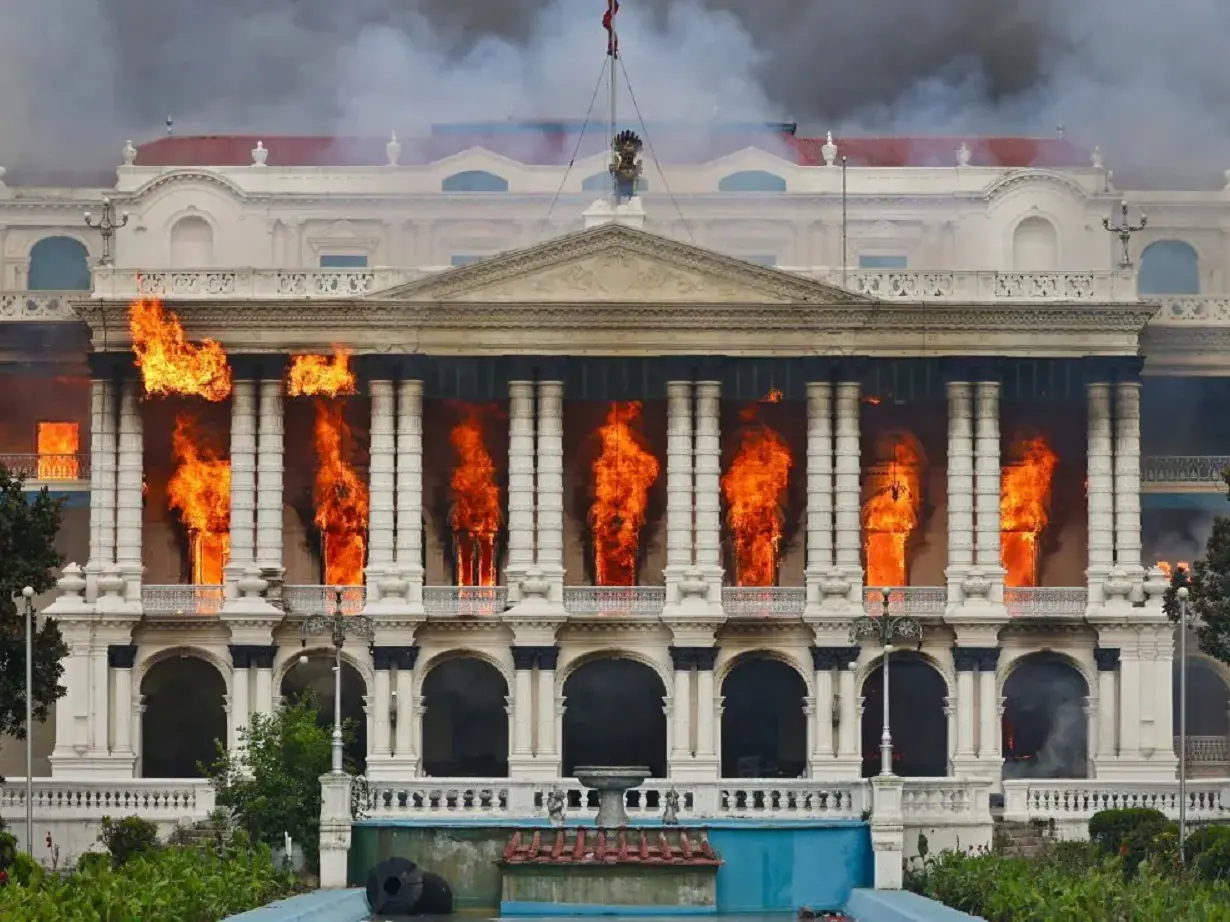
The protests in Nepal turned out to be the most significant, as tens of thousands of citizens, mostly Gen Z youths, fed up by political instability since the 2008 abolition of the monarchy, staged mass demonstrations demanding political reform, accountability, and economic justice. The simmering anger and public frustration reached a tipping point after a ban on social media, and protests erupted in Kathmandu and other major cities. The protests by students, workers, professionals, and civil society groupswere largely peaceful but massive, demanding an end to corruption, electoral reforms, better employment opportunities, and accountability from political leaders.
In less than 48 hours, protesters forced the overthrow of the government.
Prime Minister KP Oli resigned on Sept. 9. Nepal got its first female prime minister in Sushila Karki, who was also the country’s first female chief justice. Her appointment came after online polls on the chat portal Discord saw thousands supporting her, citing her record of taking on the corrupt and elite.
Also Read: ‘Targeted for criticising Asim Munir’: Imran Khan’s aide assaulted in UK; nose and jaw broken
Mass anti-corruption protests forced Bulgaria PM to resign
Bulgaria’s Prime Minister Rosen Zhelyazkov resigned after mass street protests over the government’s economic policies and failure to tackle corruption. Tens of thousands of Bulgarians had rallied in the capital, Sofia, and dozens of other towns and cities across the country in the latest in a series of rolling demonstrations giving vent to the public’s growing frustration.
Protesters chanted “Resign” and held up “I’m fed up!” signs featuring caricatures of politicians.
Millions join mass ‘No Kings’ anti-Trump protests
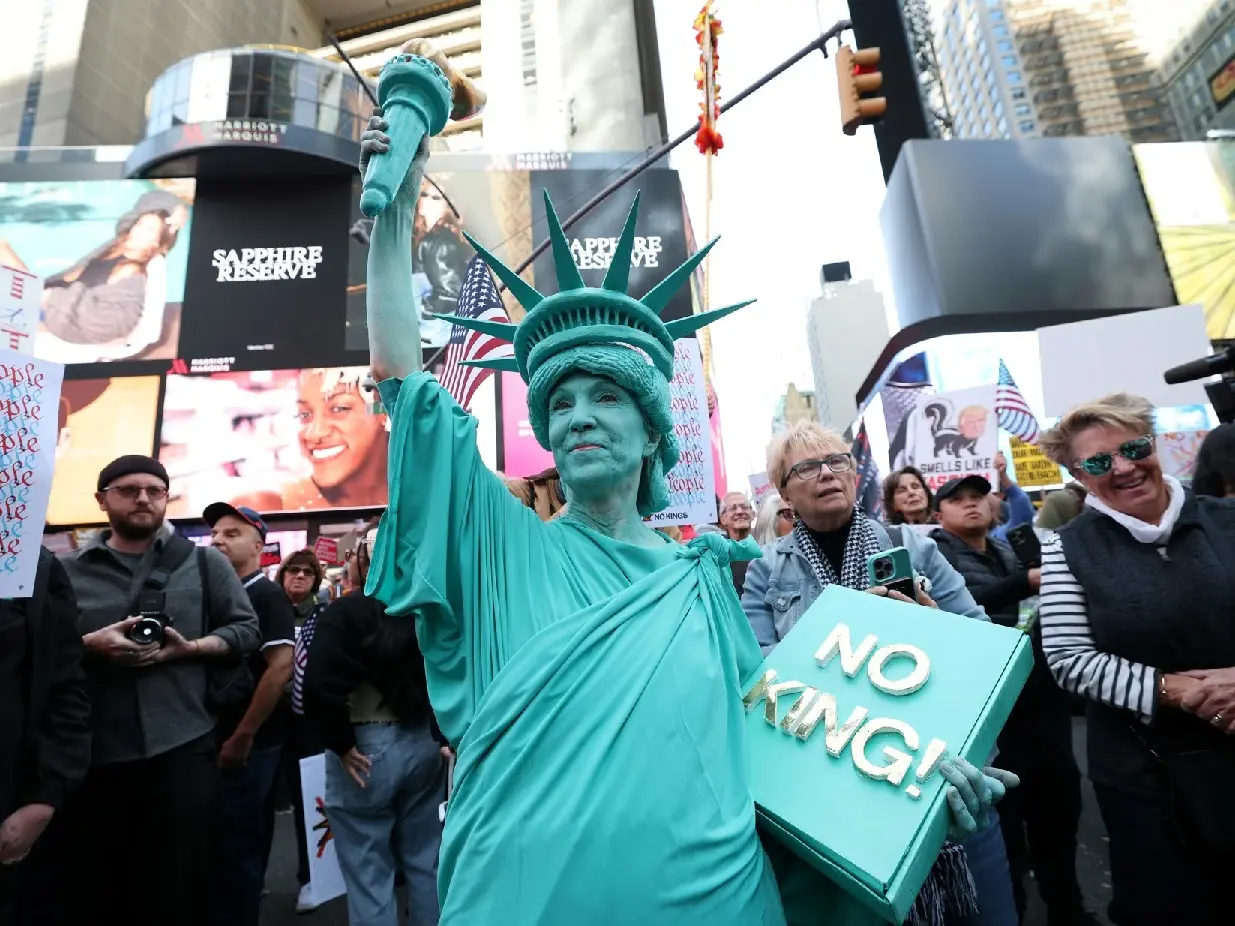)
A person dressed in a Statue of Liberty costume participates in a “No Kings” national day of protest in New York Photograph: (AFP)
‘No Kings’ protests took place across the US opposing President Donald Trump’s alleged one-man rule and accusations that the president is behaving more like a monarch than an elected official. Millions joined more than 2,500 demonstrations calling for limits to presidential power as protesters accused the Trump administration of authoritarian policies like immigration crackdowns and mass firings of federal workers, besides attacks on the media and judicial independence. Protesters carried signs that read, “No crowns, No kings.”
The protesters decried immigration detentions carried out by Immigration and Customs Enforcement agents and the Trump administration’s aggressive slashing of federal education resources and environmental protections, among other concerns.
Republicans dismissed the protests as ‘Hate America’ rallies.
‘Unite the Kingdom’ protesters flood London streets
UK’s far-right activist Tommy Robinson drew a massive crowd, said to be in six figures, in his anti-immigrant ‘Unite the Kingdom’ rally, marking the discontent against the government on the immigrants and asylum issues in the country. Tens of thousands of people marched, leading to sporadic clashes with police. The marchers came for what was called a “festival of free speech”, but the speeches at the event were largely racist conspiracy theories and anti-Muslim comments. Robinson told the crowd that migrants had more rights in court than the “British public, the people that built this nation.”
Some speakers, including far-right politicians from Europe, also addressed the rally. French politician Eric Zemmour said, “We are both subject to the same process of the great replacement of our European people by peoples coming from the south and of Muslim culture, you and we are being colonised by our former colonies.”
Elon Musk also joined by video and criticised the UK government. “What I see happening here is a destruction of Britain, initially a slow erosion, but rapidly increasing erosion of Britain with massive uncontrolled migration,” he said.
Participants in the march carried St George’s flags and the union jack and chanted, “We want our country back.” Some protesters held placards saying “stop the boats,” “send them home,” and “enough is enough, save our children.”
Counter-protesters carried signs that read “Refugees welcome” and “Smash the far right,” while chanting “Stand up, fight back.”
Peeved locals hit the streets against ‘overtourism’
Thousands of citizens took to the streets of cities in southern Europe to demonstrate against ‘overtourism’, firing water pistols at shop windows and setting off smoke in Barcelona, where the main protest took place.
“Your holidays, my misery,” protesters chanted in the streets of Barcelona while holding up banners emblazoned with slogans such as “mass tourism kills the city” and “their greed brings us ruin”.
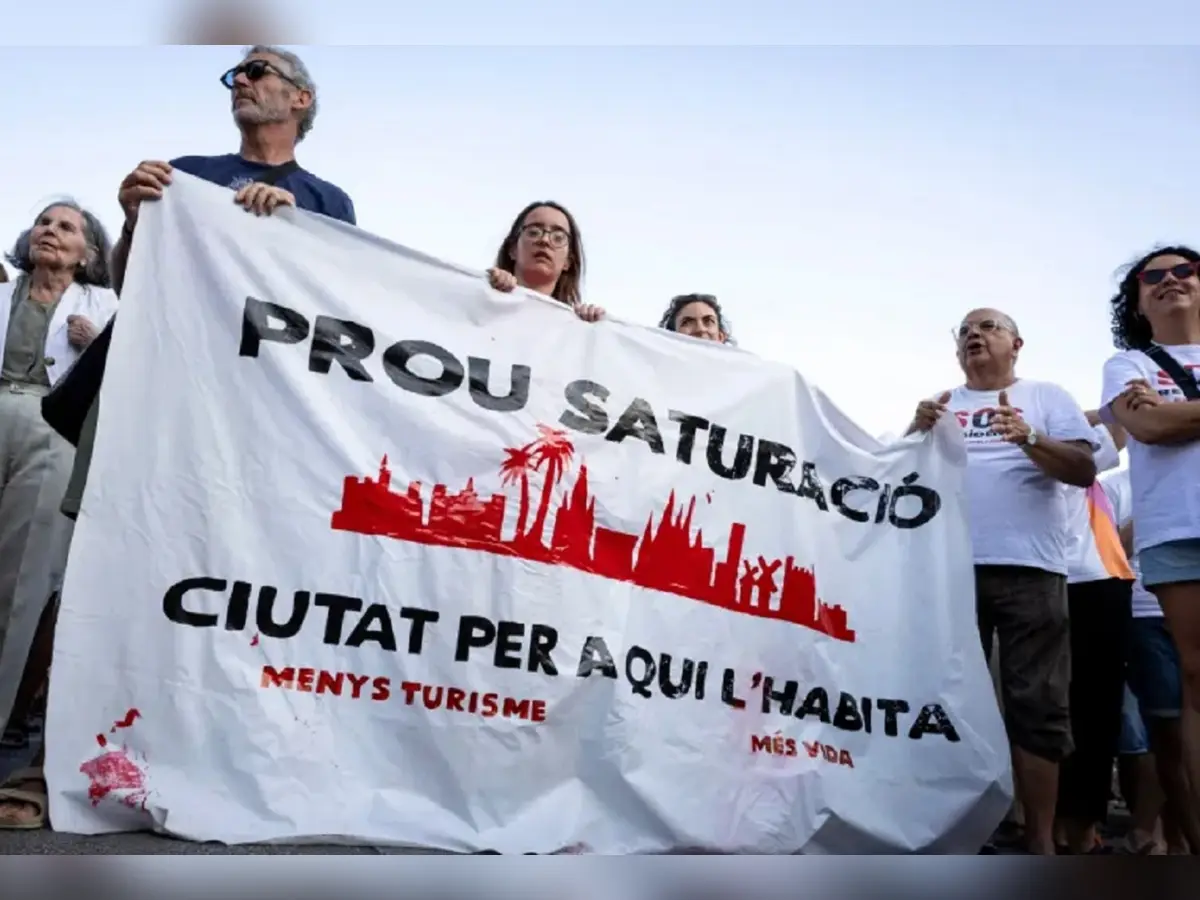)
Locals hold a banner reading, ‘Enough saturation, the city for those who live in it’ during protest against overtourism Photograph: (AFP)
Protesters in Portugal and Italy also argued that uncontrolled tourism was sending housing prices soaring and forcing people out of their neighbourhoods.
Barcelona, a city of 1.6 million, drew 26 million tourists last year.
Around 600 people joined the demonstration, firing water pistols or setting off coloured smoke and putting stickers saying ‘Neighbourhood self-defence, tourist go home’ on shop windows and hotels.
Farmers’ protests in India
India, the world’s largest democracy, also witnessed some waves of protests, reflecting the diversity of its society.
Farmers continued their protests demanding Minimum Support Price (MSP) guarantees and turned up in large numbers near Delhi borders and in agricultural states of Punjab and Haryana.
Protests in India highlighted strong democratic participation and a vibrant society.
Protests over Gaza conflict
Mass protests were held across the world against the Gaza War and the hardships faced by Palestinians amid a shortage of food, essentials and medicines, but ended after the ceasefire came into effect.
How social media and technology changed protests
Technology and social media played a major role in most mass protests across the globe. They helped in online mobilisation, livestreaming of demonstrations and citizen journalism as digital platforms reduced reliance on traditional leadership.

