
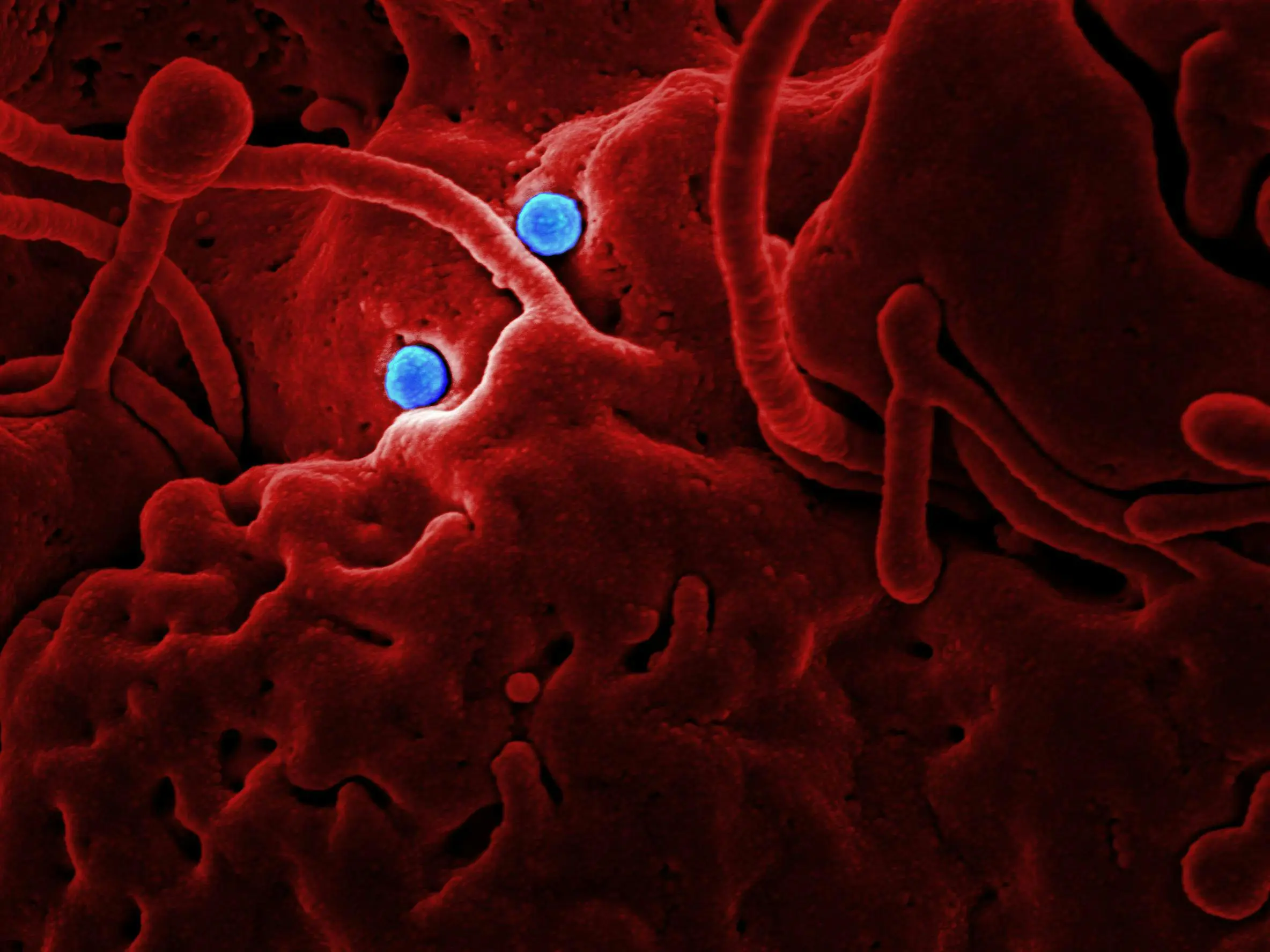
&imwidth=800&imheight=600&format=webp&quality=medium "What happens inside the body after the Nipah virus enters — and how it attacks the brain?")
After Nipah virus cases surfaced in Kerala and West Bengal, India remained on high alert with heightened surveillance, isolation protocols and airport screening of travellers to prevent further spread. According to data released by the World Health Organisation (WHO), the zoonotic virus carries a fatality rate ranging from 40 per cent to 75 per cent.
The zoonotic virus travels to humans through infected fruit bats, contaminated food, or close contact with infected individuals. It can also rapidly progress to severe brain inflammation, marking one of the most lethal viral infections.
Health experts express concern

Following the rise in concern over Nipah virus infections, medical experts are warning that the virus can rapidly turn fatal once it enters the human body, particularly due to its ability to invade the brain and disrupt vital functions.
Dr Deep Das, neurologist - CK Birla Hospitals, CMRI said,"Nipah first establishes its presence in human beings through upper respiratory tract replication before spreading to the bloodstream, which then allows it to infect both the cardiovascular system and various other body parts. Nipah presents one of its most hazardous characteristics through its ability to create blood vessel damage because it causes blood vessel inflammation, which permits the virus to cross the blood-brain barrier and reach the brain."
"The Nipah virus causes extreme brain inflammation, which results in brain swelling that develops into encephalitis. Nipah infection symptoms start with fever and muscle pain, and headaches, but develop into confusion, lethargy, seizures and loss of consciousness. Severe brain expansion results in the body losing control over vital processes, which include breathing and heart rate regulation. The medical emergency classification of Nipah requires immediate diagnosis and needs intensive isolation and complete neurological and critical care because its progression to life-threatening stages develops quickly, which raises the risk of death," Dr Deep Das added.
Trending Stories
)
Sikh driver attacked in Wyoming in US, suffers 17 stab wounds
)
‘I have a big decision coming up’: Trump says he’s approaching major ‘crossroad’ in Iran war
)
US intel warns China can steal F-35 jets secret from Saudis
)
Former India player Diana Edulji wants Smriti Mandhana to replace Harman as skipper at the earliest
)
Pak defence minister says 'time has come to implement pact'
&im=FitAndFill=(700,400))
Meet top 5 batters in the latest ICC T20I Rankings
)
Formula One reveals the 2027 race calendar; Monaco to host sprint race for the first time
)
UNGA 2026 theme explained: What does ‘Restoring trust, managing transformation: A United Nations that delivers for all’ mean?
)
Godfather of AI Geoffrey Hinton gives US lawmakers a one-year warning on AI
)
AI already defying, denying humans, is it beyond human control already?
)
US F-16 fighter jet crashes in Michigan during training mission, pilot ejects safely
)
240-million-year-old bizarre 'pig with a tusk' creature creates new dilemma over origin of dinosaurs
)
All Indian goods to get duty-free access to New Zealand
)
Xi-Trump summit may boost military links
)
US to sell 48 F-35 Lightning fighter jets to Saudi Arabia, help it deter threats
)
Hong Kong unveils 11 new measures to boost birth rates, offers higher cash bonuses and housing perks
)
Australian athlete, who soiled herself during Hyrox race, apologises for continuing
)
Tata Trusts chairman Noel Tata calls Chandrasekaran’s reappointment ‘illegal’, rejects Tata Sons listing
)
Passport fees hiked, child validity revised: What the new rules introduce
)
How did an Australian river with 500 crocodiles pass the Olympic test? Here's how
)
Fed raises rates for first time in 3 years, Kevin Warsh defies Trump as inflation mounts
)
US drone firm linked to Trump’s sons signs MoU with Pakistan army, gets initial order
)
Pak batter Rizwan's petition against being questioned by cyber crime agency rejected by court
)
Daayra movie review: Kareena Kapoor, Prithviraj Sukumaran shine in Meghna Gulzar’s cop-versus-cop crime thriller
&im=FitAndFill=(700,400))
Which country has the most F-35s outside America?
)
'Gangsta' crab shoves knife blade at man and his dog in Florida - Watch
)
At least 48 dead, 100 hospitalised in Nigeria after drinking suspected methanol-laced alcohol
)
US-Iran War: Trump says ‘big decision’ on Iran ahead, weighs possible fresh military action
)
US new military base in Poland: US President Donald Trump eyes military base in Poland
)
Putin 'is plotting something bad': Russia may launch 'accidental' strikes on NATO countries supporting Ukraine, Poland PM warns
&im=FitAndFill=(700,400))
Suriya and Jyothika say ‘I do’ again after 20 years! See their dreamy wedding pics
)
Laura Wolvaardt sets new world record for most WT20I runs in a year
)
Pezeshkian, Araghchi set to attend UNGA 2026 in New York amid ongoing conflict as US-imposed travel curbs remain
)
'He will always be ahead': India coach Gambhir says Sooryavanshi won't walk into team ahead of Samson
Providing further insight into how the virus spreads inside the body, Dr Bharath Kumar Surisetti, Consultant Neurologist at Yashoda Hospitals, Hyderabad, explained," Humans contract the Nipah virus when it enters through their respiratory system or when they consume infected food. The virus first infects cells in the mouth, throat, or lungs, where it begins to replicate. Nipah virus uses its surface proteins to bind with ephrin-B2 and ephrin-B3 receptors, which exist throughout human cells but are found in the highest concentration on blood vessel lining cells. After the virus completes its initial replication process, it starts spreading through the bloodstream, which enables its distribution throughout various body parts."
Dr Surisetti added that the Nipah virus posses high preference for endothelial cells containing the blood vessel inner lining. After these cells are infected, it results in inflammation, causing vasculitis and leading to the destruction of blood vessels and damage of organ that include the lungs, kidneys and spleen, causing serious breathing problems in the lungs.
"The most dangerous phase occurs when the virus reaches the brain. Nipah virus can enter the blood-brain barrier because it breaks down blood vessels and moves inside infected immune cells and travels through nerves that extend from the nasal cavity. The virus enters the brain and triggers encephalitis, which causes severe brain tissue inflammation. The condition leads to tissue swelling, which blocks blood circulation and causes direct damage to neurons," Dr Surisetti said.
"The brain involvement in this condition leads to symptoms which include headache, confusion, seizures and coma and death, which occurs frequently. The survivors will develop lasting neurological issues while experiencing brain inflammation that returns after an extended period of time," Surisetti added.

