Heart attack risk factors: Expert reveals how gender plays a role

Leading risk factors for heart disease
Before the late 20th century, heart disease-related deaths were more common among men due to biological and lifestyle differences, such as higher smoking rates and alcohol consumption. Today, both men and women have similar rates of death from heart disease, including heart attacks.
Both men and women may experience heart attacks due to various causes, including coronary artery disease, plaque rupture, blood clots, and spasms in the coronary arteries. Coronary artery disease (CAD) is the most common cause of heart attacks in both men and women. CAD involves the build-up of plaque in the arteries that supply the heart with blood, leading to narrowing and potential blockages. When a blockage occurs, it can cause a heart attack.
Women with CAD have higher mortality rates and face more challenges in their health outcomes after heart attacks. Unfortunately, there is often an underestimation of cardiovascular disease risk in women, with a mistaken belief that they are more "protected" against CAD and heart attacks.

Recent research presented at a scientific congress of the European Society of Cardiology (ESC) highlighted that women are more than twice as likely to die after a CAD-caused heart attack compared to men.
To get an expert opinion onthe research, WION spoke toDr Saritha Sekhar, Associate Professor and Consultant Interventional Cardiologist at Amrita HospitalKochi. The medical expert emphasised the urgent need to address gender disparities in cardiovascular care and outcomes related to CAD and heart attacks. She also shared a list of leading risk factorsfor heart disease, especially heart attack, in women. Scroll to read!
Risk factors:
&imwidth=180&imheight=135&format=webp&quality=medium)
'Nidal Hasan's firing-squad execution to be livestreamed', says Pentagon; first US military execution since 1961
&imwidth=180&imheight=135&format=webp&quality=medium)
Trump's naked 23-karat gold statue unveiled near European Parliament
&imwidth=180&imheight=135&format=webp&quality=medium)
Musk doubles down on Starlink India licence allegations; Rahul Gandhi says ‘wait till...’
&imwidth=180&imheight=135&format=webp&quality=medium)
Thai Actors Fourth Nattawat, Gemini Norawit face racism accusations from Indian fans over viral Bollywood act
&imwidth=180&imheight=135&format=webp&quality=medium)
Nigeria govt rolls out 30-day NNPC petrol discount, insists it is not a subsidy
&imwidth=180&imheight=135&format=webp&quality=medium)
Captain Smit Machchhar on feet again, walks 10 steps as recovery continues after Flydubai flight attack
&imwidth=180&imheight=135&format=webp&quality=medium)
‘Battlespace has expanded’: Wg Cdr Priti Ojha (Retd) reflects on changing face of air power on IAF Day
&imwidth=180&imheight=135&format=webp&quality=medium)
24-year-old Sri Lankan man sentenced to death for blasphemy in Saudi Arabia
&imwidth=180&imheight=135&format=webp&quality=medium)
A Love Other Than Yours: The temptation to cheat and what pushes people over the edge
&imwidth=180&imheight=135&format=webp&quality=medium)
Russia president Putin promises to 'do everything' to help settle Middle East conflict as US-Iran negotiations stall
&imwidth=180&imheight=135&format=webp&quality=medium)
BTS agency HYBE announces first-ever Weverse Con Festival in India
&imwidth=180&imheight=135&format=webp&quality=medium)
Trump has a new 'enemy': Anyone who calls it 'artificial intelligence'. Here's what we wants instead
&imwidth=180&imheight=135&format=webp&quality=medium)
Paxton in leaked audio says Trump hurting his election chances
&imwidth=180&imheight=135&format=webp&quality=medium)
India at UN: Pak allows terror groups to operate from its soil
&imwidth=180&imheight=135&format=webp&quality=medium)
Air India, Air India Express increase fuel surcharge on domestic, international flights amid rising ATF costs
&im=FitAndFill=(700,400)&imwidth=180&imheight=135&format=webp&quality=medium)
Nana Patekar’s upcoming big-screen films: From Shakti Shalini to Eetha
&imwidth=180&imheight=135&format=webp&quality=medium)
Nobel Peace Prize 2026: Trump to Carney, who are the top contenders? Why the ISS is a surprise contender
&imwidth=180&imheight=135&format=webp&quality=medium)
42 ex-judges write open letter, express concern over allegations against Election Commission
&im=FitAndFill=(700,400)&imwidth=180&imheight=135&format=webp&quality=medium)
US midterms 2026: 10 leaders and candidates to watch in the battle for Congress
&im=FitAndFill=(700,400)&imwidth=180&imheight=135&format=webp&quality=medium)
From Kramatorsk buses to Yandex fire: Russia-Ukraine war in the last 48 hours
&imwidth=180&imheight=135&format=webp&quality=medium)
Pakistan denies reports of PAF jets being used in attacks against Iran-backed Houthis in Yemen
&imwidth=180&imheight=135&format=webp&quality=medium)
New York ICE shooting sparks protests as Mamdani to call on Trump to halt ICE operations
&imwidth=180&imheight=135&format=webp&quality=medium)
Atlantic hurricane Isaias could make landfall as a strong Category 2 storm, tornado warnings issued
&imwidth=180&imheight=135&format=webp&quality=medium)
Nana Patekar's #MeToo controversy: From Tanushree Dutta’s allegations to court ruling
&imwidth=180&imheight=135&format=webp&quality=medium)
Who is Nana Patekar's wife Neelakanti? The bank officer who earned Rs 2,500 when he earned Rs 50
&imwidth=180&imheight=135&format=webp&quality=medium)
France student protests: Over 500 arrested, govt promises 3,000 substitute teachers
&imwidth=180&imheight=135&format=webp&quality=medium)
French students light European bonfire, protests erupt in Belgium, Italy & Greece | Gravitas
&imwidth=180&imheight=135&format=webp&quality=medium)
Arizona congressional candidate claims she was sexually assaulted while repairing signs
&imwidth=180&imheight=135&format=webp&quality=medium)
New Cold War: Why is China buying more gold? Explained
&imwidth=180&imheight=135&format=webp&quality=medium)
'Understood consequences of a few mistakes': Ishan Kishan reflects on journey back to India team
&imwidth=180&imheight=135&format=webp&quality=medium)
Sri Lankan Tamil worker gets death sentence in Saudi Arabia over blasphemy, calls for pardon intensify
&imwidth=180&imheight=135&format=webp&quality=medium)
Zendaya gives The Odyssey white lace jacket a stylish twist at Paris Fashion Week 2026
&imwidth=180&imheight=135&format=webp&quality=medium)
SC asks Centre to frame mechanism against unethical pharma marketing practices
&imwidth=180&imheight=135&format=webp&quality=medium)
US suspends Microsoft, Infosys, Tata, Wipro from green card programme over alleged H-1B abuse
&imwidth=180&imheight=135&format=webp&quality=medium)
Trump honours Microsoft CEO Satya Nadella with top technology honour amid immigration scrutiny
&imwidth=180&imheight=135&format=webp&quality=medium)
Flydubai flight attack: Indian pilot Smit Machchhar to receive Israel's highest civilian bravery award for saving 174 lives
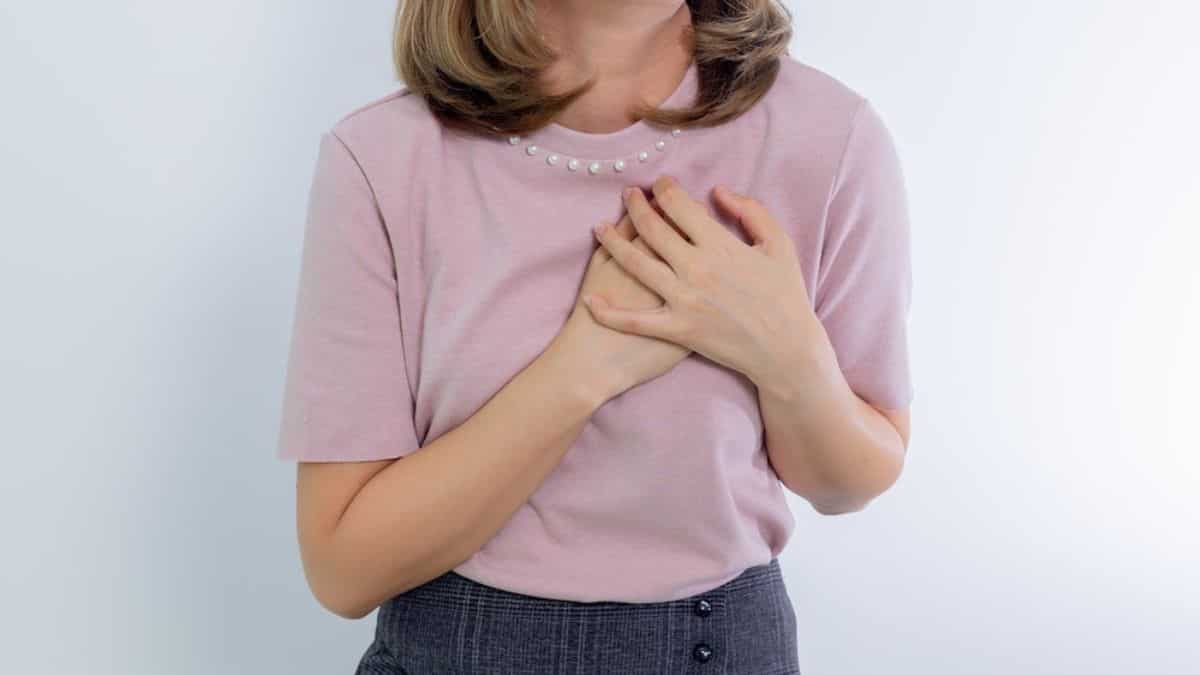
Women face unique risk factors for coronary artery disease (CAD) compared to men, according to the medical expert. In addition to common risk factors like diabetes, smoking, and high blood pressure, women may have specific factors affecting their heart health, such as hormonal changes, autoimmune diseases, and pregnancy complications. Obesity, high blood pressure, and high cholesterol are shared risk factors for both genders, but certain factors may have a greater impact on women's heart health.
1. High Blood Pressure: High blood pressure is a significant risk factor for heart disease. The prevalence of high blood pressure is similar for men and women until around 45 years of age. However, after 65 years of age, women tend to have higher rates of hypertension than men. Factors unique to women, such as gestational hypertension and preeclampsia during pregnancy, can increase the risk of high blood pressure in the long term. Hormonal factors like hormone replacement therapy and oral contraceptives can also affect blood pressure in women. In summary, while high blood pressure can affect both men and women, there are differences in prevalence and risk factors depending on age and specific situations. Women with high blood pressure during pregnancy have a twofold higher risk of developing heart disease later in life compared to women without this condition.
2. Diabetes: Diabetes increases the risk of heart disease more in women than in men. It can also affect how women perceive pain, potentially increasing the chances of a symptomless heart attack. In women, diabetes raises the risk of coronary heart disease by three to seven times compared to two to three times in men. Women with diabetes do face an increased risk of cardiovascular complications.
3. Ageing: Age is a significant factor in cardiovascular disease, but its impact varies by gender. In men, the risk profile for cardiovascular disease increases steadily over time, with atherosclerosis progressing continuously. However, during their reproductive years, women are somewhat protected from atherosclerosis due to the positive effect of estrogen on the cardiovascular system. However, postmenopausal women experience a notable increase in the incidence of stroke, and women over the age of 75 have a higher prevalence of hypertension compared to men.
4. Emotional Stress and Depression: Stress and depression have a more pronounced effect on women's hearts as compared to men. Depression can make it challenging to maintain a healthy lifestyle and adhere to treatment for other health conditions.
5. Smoking and Drinking: Smoking and excessive alcohol consumption are risk factors for heart disease in both women and men. They can damage the heart and blood vessels, leading to atherosclerosis or plaque buildup in the arteries. Smoking raises the heart rate and blood pressure, reduces oxygen supply, promotes blood clotting, lowers good cholesterol (HDL), increases bad cholesterol (LDL), reduces tolerance for physical activity, and significantly increases the risk of heart disease. Some studies suggest that women who smoke may have a higher relative risk of developing heart disease compared to men who smoke. Alcohol can affect heart rhythm, raise blood pressure and triglyceride levels, weaken the heart muscle, and interact with other risk factors to increase the risk of heart disease. Excessive drinking can harm the heart and increase the risk of a heart attack.
6. Inactivity: Lack of physical activity is a major risk factor for heart disease.
7. Menopause: Low estrogen levels after menopause increase the risk of developing disease in smaller blood vessels.
8. Pregnancy Complications: High blood pressure or diabetes during pregnancy can increase the long-term risk of these conditions for the mother and make women more susceptible to heart disease.
9. Other Factors: Other risk factors for heart disease in women include a family history of early heart disease, inflammatory diseases like rheumatoid arthritis and lupus, and body weight. Studies have shown a relationship between body weight and cardiovascular disease, with similar associations between body mass index (BMI) and coronary heart disease for both men and women.
Dr Saritha concludes, "Women should be aware that they often experience heart disease symptoms differently from men. Nausea, vomiting, and shortness of breath are more common in women, while chest pain may be less severe compared to men. Symptoms like shortness of breath, fatigue, palpitations, or pain in the neck, jaw, throat, upper abdomen, or back may indicate heart disease in women."
WATCH WION LIVE HERE
You can now write for wionews.com and be a part of the community. Share your stories and opinions with us here.