Why did the Fed spend whopping $2.5 billion for revamp?

&imwidth=600&imheight=450&format=webp&quality=medium "Why did the Fed spend whopping $2.5 billion for revamp?")
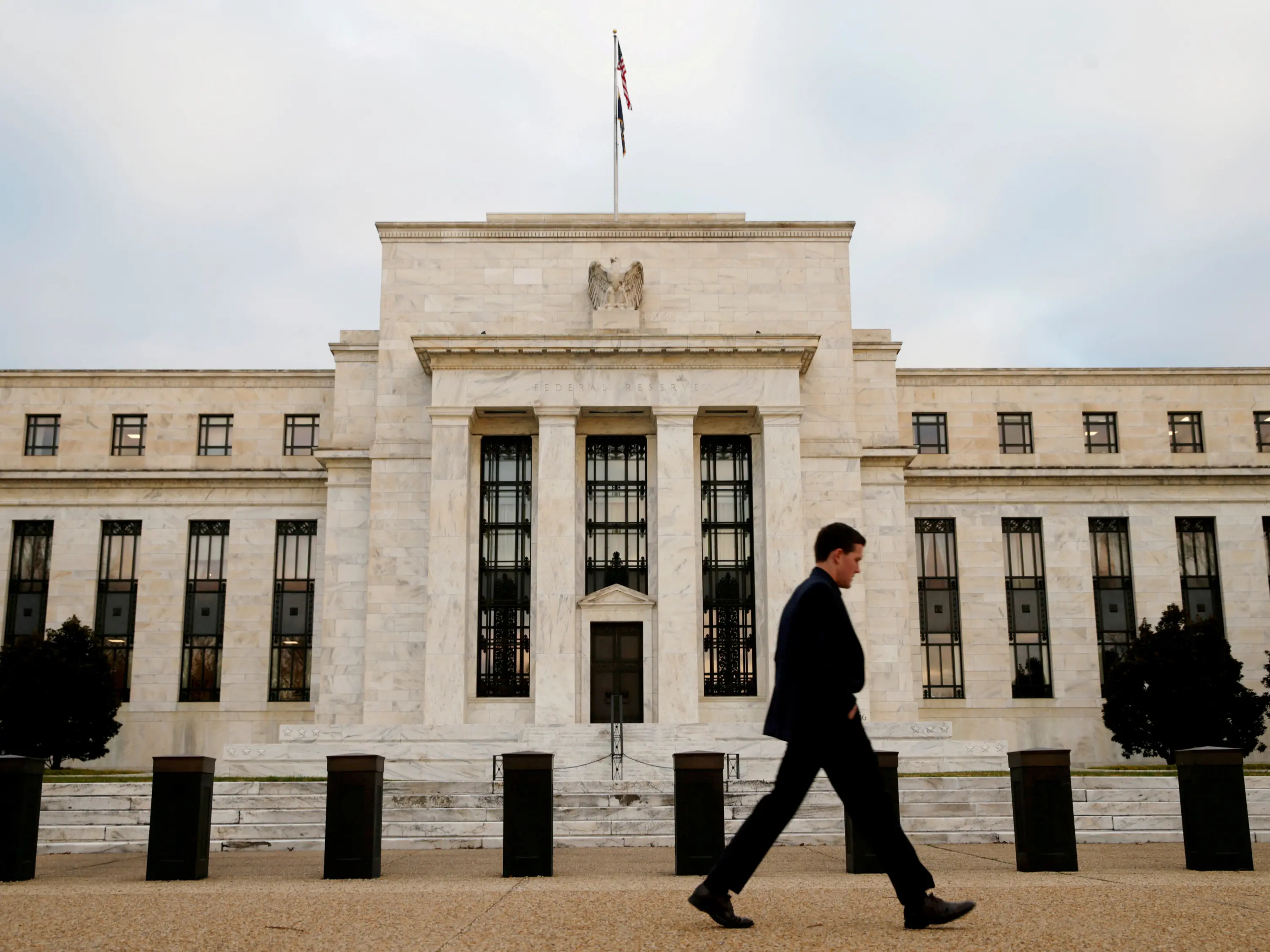
A man walks past the Federal Reserve Bank in Washington, DC, US. Photograph: (Reuters)
Amid mounting pressure from Trump allies, here's inside the Federal Reserve $2.5 billion construction bill.
Amid US President Donald Trump's mounting trade tensions, the Federal Reserve is under the spotlight. But this time, it’s not about interest rates or inflation, it’s about a construction bill. What started as a $1.9 billion renovation of the Federal Reserve’s Washington, DC headquarters has now swelled to $2.5 billion. That spike has sparked outrage from Trump's allies, who are pushing for an investigation into what they claim is an “ostentatious overhaul” of the 1937-era Marriner S. Eccles Building.
According to Bloomberg, the ballooning costs have more to do with geological quirks, engineering nightmares, and post-9/11 security requirements than rooftop gardens or VIP lifts.
Trump’s circle sees a chance to go after Powell
Critics from the Trump administration aren’t buying it. In a July 10 letter to Fed Chair Jerome Powell, Office of Management and Budget Director Russell Vought labelled the renovation as excessive. He pointed to “rooftop terrace gardens,” “VIP dining rooms,” and “luxury elevators” as signs of government waste. Bill Pulte, a prominent Powell critic and Trump appointee leading the Federal Housing Finance Agency, told Bloomberg he’s confident that Congress will open a probe into the cost overruns.
The criticism, however, might not just be about construction. As Bloomberg noted, the controversy could provide Trump allies with a pretext to push for Powell’s removal, especially after the Fed’s refusal to cut interest rates this year, defying the White House’s pro-growth stance.
Powell pushes back
Trending Stories
&imwidth=280&imheight=210&format=webp&quality=medium)
&imwidth=280&imheight=210&format=webp&quality=medium)
&imwidth=280&imheight=210&format=webp&quality=medium)
&imwidth=280&imheight=210&format=webp&quality=medium)
&imwidth=280&imheight=210&format=webp&quality=medium)
&imwidth=280&imheight=210&format=webp&quality=medium)
&imwidth=280&imheight=210&format=webp&quality=medium)
&imwidth=280&imheight=210&format=webp&quality=medium)
&imwidth=280&imheight=210&format=webp&quality=medium)
&imwidth=280&imheight=210&format=webp&quality=medium)
&im=FitAndFill=(700,400)&imwidth=280&imheight=210&format=webp&quality=medium)
&im=FitAndFill=(700,400)&imwidth=280&imheight=210&format=webp&quality=medium)
&imwidth=280&imheight=210&format=webp&quality=medium)
&imwidth=280&imheight=210&format=webp&quality=medium)
&im=FitAndFill=(700,400)&imwidth=280&imheight=210&format=webp&quality=medium)
&imwidth=280&imheight=210&format=webp&quality=medium)
&imwidth=280&imheight=210&format=webp&quality=medium)
&imwidth=280&imheight=210&format=webp&quality=medium)
&imwidth=280&imheight=210&format=webp&quality=medium)
&imwidth=280&imheight=210&format=webp&quality=medium)
&imwidth=280&imheight=210&format=webp&quality=medium)
&imwidth=280&imheight=210&format=webp&quality=medium)
&imwidth=280&imheight=210&format=webp&quality=medium)
&imwidth=280&imheight=210&format=webp&quality=medium)
&imwidth=280&imheight=210&format=webp&quality=medium)
&imwidth=280&imheight=210&format=webp&quality=medium)
&imwidth=280&imheight=210&format=webp&quality=medium)
&imwidth=280&imheight=210&format=webp&quality=medium)
&imwidth=280&imheight=210&format=webp&quality=medium)
&imwidth=280&imheight=210&format=webp&quality=medium)
&imwidth=280&imheight=210&format=webp&quality=medium)
&imwidth=280&imheight=210&format=webp&quality=medium)
&imwidth=280&imheight=210&format=webp&quality=medium)
In his defence, Powell responded to Vought in a July 17 letter, clarifying that the “terrace gardens” are eco-friendly green roofs and that the lift expansion is meant to comply with accessibility standards, not luxury tastes. As per Bloomberg, speaking to lawmakers in June, Powell acknowledged the scale of the challenge. “No one in office wants to do a major renovation of a historic building during their term in office,” he said. “We decided to take it on because… I came to understand how badly the Eccles Building really needed a serious renovation. It never had one. It was not really safe and it was not waterproof.”
It’s not luxury — it’s geology
So, what exactly is driving up the price?
The Fed’s renovation covers both the Eccles Building and the adjacent East Building, originally built in 1931. According to Bloomberg, the project includes new office space, removal of hazardous materials like asbestos and lead, replacement of outdated mechanical systems, and structural upgrades to meet modern federal security standards.
But the most expensive part is below ground.
Washington, DC’s Tidal Basin, once a swamp, sits on unpredictable terrain with a high-water table. Deep excavation under these historic buildings turned out to be a feat of modern engineering.
Berkel and Company Contractors, a specialist firm, had to lower the slab beneath the Eccles Building by more than 20 feet. That involved suspending the entire structure, demolishing the old basement, and driving over 1,000 micropiles, a method used when traditional foundations aren’t viable. Berkel later received an industry award for “excellence in the face of adversity,” as noted by the Washington Building Congress.
Underground builds in DC are notorious
Washington isn’t an easy place to dig. As landscape architect Phia Sennett wrote for the National Trust for Historic Preservation, much of the land along the National Mall was artificially created using sediment from the Potomac River, built over creeks and marshland.
The Fed’s expansion includes a new 318-space parking garage under the East Building’s south lawn and a five-storey annex, with four floors below ground. Such below-grade construction is common in DC due to height restrictions, but it’s also expensive and risky.
Bloomberg pointed out that the Smithsonian’s Castle restoration, which also proposed underground expansion was shelved after projected costs hit $2 billion. The nearby National Museum of African American History and Culture required a giant waterproof “bathtub” to keep the water out, with final costs of $540 million, 50 per cent over its original estimate.
The Fed’s renovation was also delayed by design politics. During Trump’s first term, the US Commission of Fine Arts, led by Trump appointees demanded that the building incorporate more white marble and classical design elements, reversing an earlier proposal that used more glass.
As reported by the Associated Press and cited in Bloomberg, the Fed had to rework its architectural plans to align with the administration’s “classical architecture” mandate for federal buildings.
Mina Wright, director at the General Services Administration, described the Fed’s review process as “tumultuous.” Speaking in 2021, she said, “They’ve had some hostile criticism at one point that was unjustified.”
The firms behind the billion-dollar facelift
The Fed’s renovation is being carried out by Fortus, a joint venture between Dutch engineering giant Arcadis and US-based Quinn Evans Architects. Arcadis has experience in water infrastructure and resilience, while Quinn Evans is known for restoring historic buildings, including Michigan Central Station and the National Academy of Sciences.
Neither firm commented directly on the controversy, referring Bloomberg back to the Fed.
The bottom line
While critics cry foul over a $2.5 billion bill, the real story lies in the unseen layers beneath the Fed’s historic headquarters, in foundations lowered by hand, in a water-logged city that’s notoriously tough to build in, and in the tangled bureaucracy of federal design mandates.
For Powell, the renovation may be a political liability. But as he told Congress, it was a decision made out of necessity, not extravagance: “It was not safe. And it was not waterproof.”