Silicon Valley’s bold new bet: Massive investment in physical infrastructure to power AI

&imwidth=600&imheight=450&format=webp&quality=medium "Silicon Valley’s bold new bet: Massive investment in physical infrastructure to power AI")
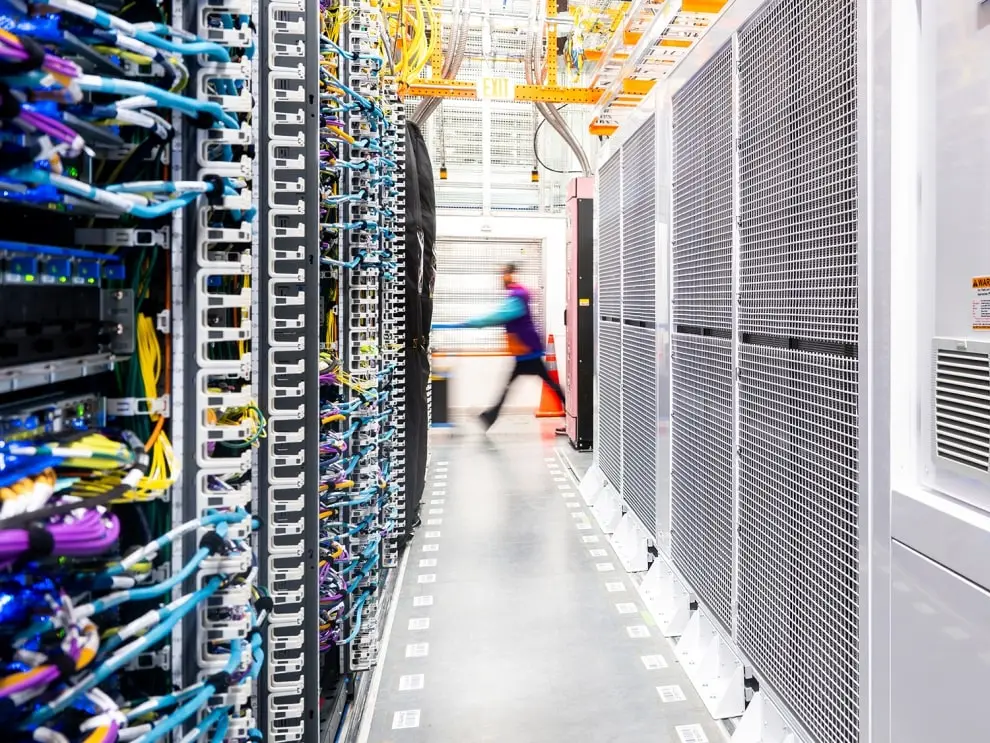
Amazon data centre. Photograph: (AWS website)
The increasing investment in infrastructure is reinforcing the dominance of a few large players in the tech industry. While these companies are amassing unprecedented amounts of capital, they are also creating deeper and wider moats around their businesses.
As the world hurtles toward an AI-driven future, the tech giants of Silicon Valley are embracing a bold new strategy: building things. After years of rapid innovation and iteration, industry leaders are now focusing on one crucial element to power the next wave of artificial intelligence (AI): physical infrastructure. From massive data centres to advanced manufacturing capabilities, these companies are sinking billions into the hardware necessary to support AI models, with some pushing their capital expenditures (capex) to unprecedented levels.
A new era of infrastructure spending
Tech companies like Meta, Alphabet (Google), Microsoft, and Amazon are investing heavily in physical infrastructure, notably in colossal data centres that house the powerful chips essential for AI computations. This age of infrastructure is characterised by massive, sustained investments in tangible assets that support the growing demand for AI capabilities. According to recent reports, the largest tech companies, including Meta, Google, Microsoft, and Amazon, have collectively spent a record $102.5 billion on capex in their most recent earnings reports.
This spending spree marks a dramatic shift in how Silicon Valley operates. In the past, these companies were primarily focused on software and code, with their largest expenses going toward talent, stock compensation, and research and development. Today, however, the biggest tech companies are investing in hardware at an unprecedented pace, acquiring and building the infrastructure required to keep up with the surging demand for AI.
For context, Google alone has announced a planned $85 billion investment in AI and cloud infrastructure for 2025—an increase of $10 billion from its previous estimates. Amazon isn’t far behind, with plans to allocate $100 billion to AI infrastructure in 2025. Even Meta, traditionally less focused on physical assets, has ramped up its plans, now projecting to spend between $64 billion and $72 billion on AI infrastructure in the next year. The scale of these investments puts them in the same realm as major industrial spending from the early 20th century, when titans of business like JPMorgan and Andrew Carnegie dominated the steel and railroad sectors.
The power of vertical integration
Trending Stories
)
)
)
)
)
&im=FitAndFill=(700,400))
)
)
)
)
&im=FitAndFill=(700,400))
)
)
)
)
)
)
)
)
)
)
)
&im=FitAndFill=(700,400))
)
)
)
)
)
)
)
)
&im=FitAndFill=(700,400))
)
&im=FitAndFill=(700,400))
This shift toward vertical integration is reminiscent of the early days of corporate monopolies. Tech companies are increasingly investing in the physical assets that power their businesses. Just as the steel barons once controlled production from mine to mill, today’s tech giants are building their own supply chains for AI development. This is crucial because AI, unlike traditional software, requires massive amounts of computational power, something that cannot be scaled with just software and intellectual property alone.
AI supercomputers, which process vast amounts of data and run sophisticated models, rely on complex infrastructure that includes not only server farms but also energy resources, real estate, and cooling systems to prevent overheating. This infrastructure is so expansive that it often takes up entire industrial sites, with some data centres now being built on old steel mill locations due to their proximity to energy resources. The scale of the investment is staggering, and it reflects the growing recognition that the companies with the most expansive infrastructure will be the ones leading the AI revolution.
In the not-too-distant past, companies like Facebook, Microsoft, and Amazon were primarily software-driven, with most of their operational costs dedicated to talent, research, and coding. Now, however, these firms are controlling more of the physical infrastructure necessary to run their operations. This makes them less dependent on third-party suppliers and gives them greater leverage over the markets they serve. Even competitors like OpenAI, despite being one of the best-funded startups in the AI race, find themselves unable to keep up with the massive investments being made by these tech giants.
The growing power of the few
In an ironic twist, the increasing investment in infrastructure is reinforcing the dominance of a few large players in the tech industry. While these companies are amassing unprecedented amounts of capital, they are also creating deeper and wider moats around their businesses. The physical assets that power their AI capabilities, from data centres to chip factories, serve as barriers to entry that are difficult for smaller competitors to overcome. The competition is now less about software innovation and more about who can control the physical resources necessary to power AI.
This concentration of power, much like the monopolistic practices of the Gilded Age, has raised questions about regulation. While the world’s tech giants may be poised to dominate the next phase of the AI revolution, the lack of regulatory oversight is creating an environment where the biggest players continue to outspend and out-innovate their competitors. Just as in the past, when corporate power went largely unchecked, today’s tech titans are in a position to shape the future of AI and infrastructure in ways that could leave smaller firms and startups struggling to catch up.
In this new era of infrastructure, the tech giants are betting that control over physical assets will be the key to maintaining their dominance in the AI market. While the long-term returns on these investments are still uncertain, the scale of the capital expenditures signals a new phase in the evolution of Silicon Valley. As companies like Amazon, Google, and Meta build and control the infrastructure that powers AI, they are laying the groundwork for a future in which they hold the reins of the AI economy. The question now is whether this dominance will be sustainable or whether emerging players can find ways to challenge these giants and break their hold over the industry.
(With inputs from agencies)