Investors quick to sell initial public offering shares, SEBI report reveals

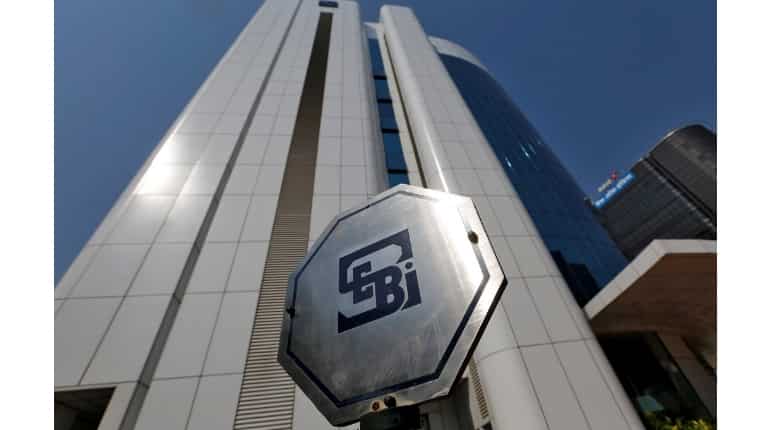
Securities and Exchange Board of India (SEBI)
According to a recent study by the Securities and Exchange Board of India (SEBI), a significant portion of Initial public offering (IPO) shares are being sold off rapidly after listing. The report, which examines investor behaviour from April 2021 to December 2023, reveals that 54 per cent of the Initial public offering shares allotted to investors (excluding anchor investors) were sold within a week of listing.
The study highlights a pronounced "disposition effect," where investors are inclined to sell assets that have gained in value, while holding onto those that have lost value. Specifically, individual investors sold 50.2 per cent of their allotted shares within a week, non-institutional investors (NIIs) offloaded 63.3 per cent, and retail investors sold 42.7 per cent. Over a year, individual investors' selling rate soared to 70 per cent by value thus underlining the need for investor education and calmness as investors.
Mutual funds, in contrast, are more likely to hold onto initial public offerings shares for a longer duration. The study found that mutual funds sold only 3.3 per cent of their allotted shares within a week, whereas banks were far quicker, selling 79.8 percent within the same period.

The report also noted that returns significantly influence selling behaviour. When IPO returns exceeded 20 per cent within the first week, individual investors sold 67.6 per cent of their shares by value. Conversely, when returns were negative, only 23.3 per cent of shares were sold.
How has been the allotment of initial public offerings?
It is to be noted that retail investors from Gujarat were particularly active, receiving 39.3 per cent of the allotment, followed by Maharashtra with 13.5 per cent, and Rajasthan with 10.5 per cent respectively. The surge in IPO participation aligns with the growth in demat accounts, with nearly half of the accounts used for IPO applications between April 2021 and December 2023 having been opened post-COVID. This again underlines the importance of taking calm and informed decision in the financial markets.
)
Laura Wolvaardt sets new world record for most WT20I runs in a year
)
North Korea's last nuclear test in 2017 set off 1,399 earthquakes over 8 years, each stronger than previous
)
India seeks to build a full semiconductor supply chain
&im=FitAndFill=(700,400))
New Friday OTT releases (September 18, 2026): Lust Stories 3, You+Me, Best of the Best- 8 new titles coming on Netflix, Prime Video and more
)
Trump signs Russia sanctions law: India faces fresh 100% tariff threat over Russian oil
)
Drone strikes cooling tower at Russia's Kursk Nuclear Plant, IAEA confirms
)
Trump bans CNN, MS NOW and Politico from White House over ‘FAKE NEWS’
)
‘Will go to any extent’: Pakistan vows to defend Saudi Arabia amid Houthi attacks
)
Trump signs Russia sanctions bill into law, targets Moscow’s energy sector
&im=FitAndFill=(700,400))
From Abhishek Sharma to Sahil Chauhan, 5 batters with fastest T20I hundreds
)
China may have gained access to US's classified F-35 jets; parts meant for repairs diverted to Hong Kong, sparking Pentagon inquiry
)
Three labourers killed as DU student loses control of his car, rams into them on Dwarka Expressway
)
Why Ranveer Singh’s Dhurandhar missed India’s Oscar entry; FFI jury member reveals what happened
)
'Gangsta' crab shoves knife blade at man and his dog in Florida - Watch
)
US F-16 fighter jet crashes in Michigan during training mission, pilot ejects safely
)
How did an Australian river with 500 crocodiles pass the Olympic test? Here's how
)
Shivakumar attends 79th Kalyana Karnataka Utsav in Kalaburagi
)
Godfather of AI Geoffrey Hinton gives US lawmakers a one-year warning on AI
)
Trump's Greenland dream comes true? POTUS announces 'Infinite Life' deal with Denmark, claims permanent US control
)
US And Denmark reach Greenland deal, Trump announces expanded military presence
&im=FitAndFill=(700,400))
Meet top 5 Indian batters with fastest T20I centuries
)
FACT CHECK: Why did PM Modi ask Xi ‘is it okay’ at BRICS Summit? New video reveals...
)
Trump 2.0: Dark days ahead for America’s ‘imperial presidency’
)
Pentagon revives mandatory testosterone testing for male troops aged 30 and above
&im=FitAndFill=(700,400))
Meet top 5 bowlers in latest ICC T20I rankings
)
Africa is splitting, and a lot sooner than estimated, giving way to a new ocean
)
Ukraine plans record $109 bn defence spending, nearly two thirds of budget amid Russia war
)
'He will always be ahead': India coach Gambhir says Sooryavanshi won't walk into team ahead of Samson
)
Former India player Diana Edulji wants Smriti Mandhana to replace Harman as skipper at the earliest
)
Hong Kong extends newborn cash support scheme by three years
)
The Verdict | When precision fails: US commits war crime in Minab school strike, UN finds
)
Indian activist-lawyer Prashant Bhushan's post brings focus on ‘conflict of interest’ appointments of ex-govt officials at Reliance, Adani groups
&im=FitAndFill=(700,400))
Meet top 5 batters in the latest ICC T20I Rankings
)
Who is Khalilur Rahman? All you need to know about 81st UN General Assembly President
SEBI’s policy changes in April 2022 have led to notable shifts in the initial public offering landscape. Adjustments to the Non-institutional investor (NII) share allotment process and Reserve Bank of India'snew guidelines on initial public offer (IPO) financing by non-banking financial companies (NBFCs) have contributed to a reduction in oversubscription rates.
The Non-institutional investor (NII) category’s oversubscription decreased from 38 times to 17 times, and applications from large NII investors (those applying for more than Rs 1 crore) fell dramatically from 626 per IPO to just 20. Additionally, the exit rate of big-ticket NII investors within a week dropped from 70 per cent to about 25 per cent in the post-policy period.
These findings highlightthe evolving dynamics of the initial public offeringmarket and investor behavior. The SEBI study offers crucial insights into how investor strategies are shifting and highlights the impact of recent regulatory changes on market practices.
What lessons can retail investors take from this study?
It is crucial for retail investors to take this report by SEBI seriously. Retail investors should consider reading good books on investing and try to understand the concept of compounding. Patience plays a very important role in wealth building. Compounding is that simple concept of wealth creation which forms the basis of the investment thesis of prominent investors like Warren Buffett, Charlie Munger among others.
Therefore, retail investors should consider making investments in equity markets with a long-term horizon post understanding the business and the risks associated with the same. The focus hence should be on understanding the underlying business before going for the initial public offering. Wealth building therefore is a consequence of making calm and sensible investment decisions with a long-term vision.
