China’s factory-gate prices fall more than expected in July, deflation fears linger

&imwidth=600&imheight=450&format=webp&quality=medium "China’s factory-gate prices fall more than expected in July, deflation fears linger")
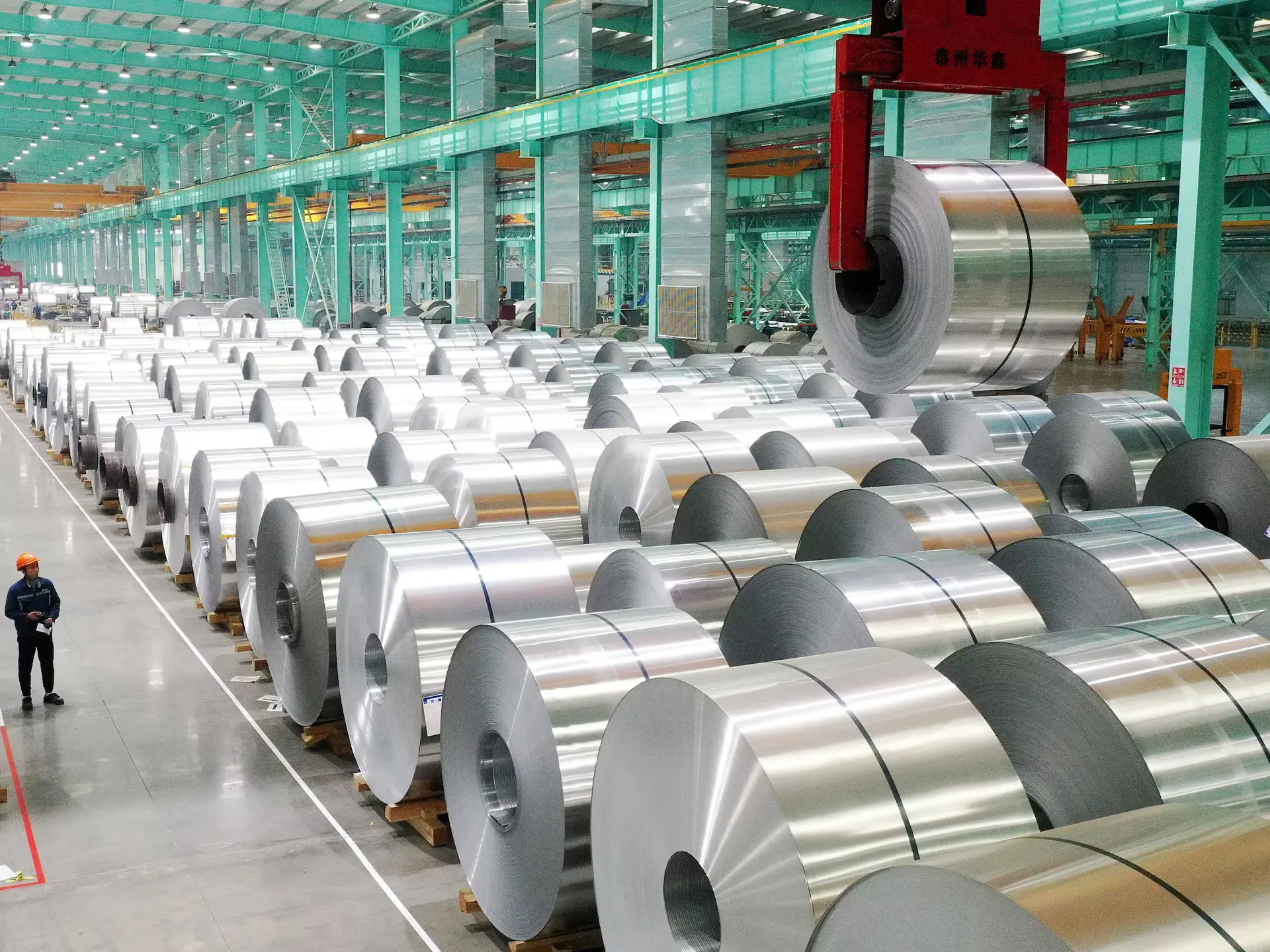
A drone view shows an employee working on the production line of aluminium products at a factory in Huaibei, China. Photograph: (Reuters)
China’s factory-gate prices fell for the 25th straight month in July, but the pace of decline slowed, offering tentative signs that deflationary pressures may be bottoming out.
China’s producer prices dropped more than expected in July, while consumer prices were flat, signalling that the world’s second-largest economy is still grappling with weak domestic demand and fragile business confidence. According to data from the National Bureau of Statistics (NBS) cited by Reuters, the producer price index (PPI) fell 3.6 per cent year-on-year, missing economists’ forecast of a 3.3 per cent decline and matching June’s near two-year low.
PPI, a key gauge of factory-gate prices, has now been in decline for more than two years. July’s figures show that Beijing’s early-stage efforts to curb aggressive price competition and address overcapacity in key industries have yet to deliver a significant turnaround. The current industrial restructuring push is a more modest version of the sweeping supply-side reforms launched a decade ago, which were instrumental in ending a previous deflationary cycle. On a month-on-month basis, PPI fell 0.2 per cent in July, a smaller drop than June’s 0.4 per cent fall. Dong Lijuan, NBS chief statistician, told Reuters that extreme weather and ongoing global trade uncertainties had contributed to price declines in certain sectors.
Signs of easing pressure, but risks remain
Some analysts see tentative signs that deflationary pressures may be starting to ease. Xing Zhaopeng, senior China strategist at ANZ, told Reuters that improvements in both the month-on-month PPI and year-on-year core CPI could indicate the government’s “anti-involution” measures, aimed at reducing disorderly competition in industries such as autos will start lifting annual PPI from August.
However, others remain cautious. Without stronger demand-side stimulus or reforms to boost household welfare, analysts warn these policies may have limited impact on final demand. A prolonged property market slump and strained trade relations with the United States continue to weigh heavily on consumer spending and manufacturing activity.
Consumer prices show mixed trends
Trending Stories
)
)
)
)
)
)
)
)
)
)
)
)
)
)
)
)
)
)
)
)
)
&im=FitAndFill=(700,400))
)
)
)
)
)
)
&im=FitAndFill=(700,400))
)
)
)
)
)
)
)
)
)
China’s consumer price index (CPI) was unchanged year-on-year in July, compared with a 0.1 per cent rise in June. This outperformed a Reuters poll forecast for a 0.1 per cent decline. Core CPI, which excludes volatile food and fuel prices, rose 0.8 per cent, the highest level in 17 months, suggesting some resilience in underlying consumer demand.
Food prices fell 1.6 per cent from a year earlier, following a 0.3 per cent drop in June. On a monthly basis, CPI climbed 0.4 per cent in July, reversing June’s 0.1 per cent fall and beating forecasts for a 0.3 per cent increase.
Extreme weather adds to economic strain
The NBS noted that weather played a significant role in price movements last month. Large parts of China’s eastern coast endured sweltering heat, while heavier-than-usual monsoon rains hit both northern and southern provinces. These disruptions have further complicated efforts to stabilise prices and growth.
Zhiwei Zhang, chief economist at Pinpoint Asset Management, told Reuters it is still too early to declare the end of deflation in China. He warned that the property sector has not yet stabilised, the economy remains overly reliant on external demand, and the labour market is still weak.
With deflationary pressures persisting, policymakers face the challenge of balancing targeted industrial reforms with measures to spur broader domestic demand without triggering fresh economic imbalances.
(With input from the agencies)