Animal farming: from carbon culprit to climate champions?

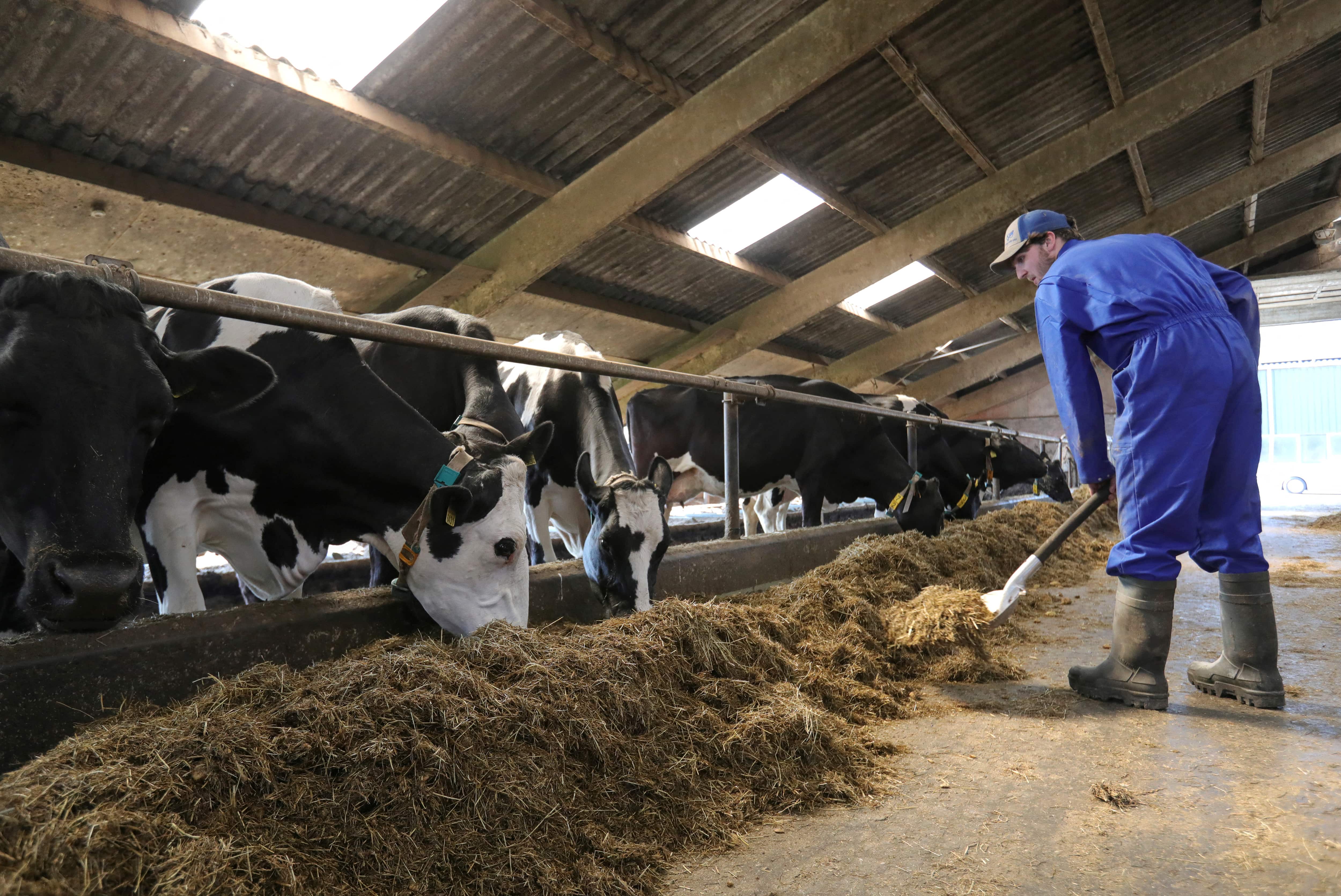
A worker is feeding cows
The use of biogas capture from livestock manure is an innovative and sustainable approach that highlights how animal farms, traditionally considered a carbon threat, can actually become a crucial part of achieving global decarbonization goals. This process offers several benefits for farmers and the environment, while also challenging the notion that livestock operations are inherently detrimental to the environment.
Changing the Narrative on Animal Farms
For many years, animal farms have been viewed as contributors to carbon emissions, primarily due to the methane released by livestock. However, the adoption of biogas capture technology flips the script, demonstrating that these farms can be part of the solution to climate change.

Transforming Carbon Threat into Opportunity
Biogas capture technology reframes animal farms as potential contributors to global decarbonization efforts. Instead of being perceived solely as carbon emitters, these farms can actively work to reduce their emissions and generate clean energy.
Leveraging Methane Emissions
)
The Royals enter the Doctor Who universe: King Charles and Queen Camilla beam into Commonwealth Games in TARDIS
)
Woman used AI to tell court what happened the night her ex-boyfriend 'raped' her. It was a bad idea
)
'First dumb AI': Meta AI blocks Indian PM Modi's video in his own country, allows abuse ads and deletes livelihoods without explanation
)
India avoids higher US tariff, secures lower 10% rate. Here's how
)
He predicted COVID-19 and 2008 economic crisis, was labeled fearmonger. Now he has another dire warning
)
Sadie Sink's leaked Spider-Man: Brand New Day clip fuels fresh Jean Grey speculation
)
RSS backed Jantar Mantar student protest? Mohan Bhagwat's 'question authority' remark resurfaces
)
ChatGPT invoked God, told pastor not to worry about his symptoms. Then pulmonary embolism hit
)
Rahul Gandhi slams BJP for felicitating Dharmendra Pradhan in Parliament, accuses Modi government of 'celebrating ruined futures'
)
'Islamic Republic will never make a deal with the US': Iran deputy speaker echoes Araghchi’s remark
)
NEET Protests riddled with misinformation? Delhi Police blocks 480 Pakistan-based handles spreading 'fake news' since Operation Sindoor
)
'Spreading deepfakes, deleted PM Modi's video': Why Meta AI should be banned in India for interfering in Indian economy and democracy
)
You are a 'Naked Official' in China if you hold high posts and have children or spouse abroad. What about India?
)
'Very unimpactful': Trump downplays Russian support for Iran, promises to 'ask Putin' about Zelensky's claims
)
Delhi Police issues BIG statement on viral 'don't leave national capital without permission' notice | FACT CHECK
)
Over 70% of Indian suicides abroad occur in Gulf countries, MEA data shows
)
Earthquake of magnitude 7.1 strikes Japan's Kumamoto prefecture, tsunami warning issued
)
Trump says Iranian school bombing photos could be AI-generated - 'I don’t think...'
)
China deploying advanced fighter jets closer to India's northern frontier
)
Who will benefit from Kapil Sibal's ₹1 crore legal aid fund for NEET protesters? This is what we know
)
Giant iceberg flips violently near Greenland exposing its underside - 'I didn't know they could do that'
)
Asim Munir eyes defence deal with Qatar & Turkiye after Kuwait as Pakistan seeks investments | Gravitas
)
'Worst quality AI in market': Meta AI's moderation fail hits PM Modi and Indian Democracy
)
‘Kill Melania, Barron’: Why is IRGC-linked media outlet urging ‘freedom fighters’ to assassinate Trump’s family? WATCH
)
'Broader struggle for democracy...': Greta Thunberg joins Indian students protest in London - What she said
)
Russia-Ukraine War: Russia drops 3-tonne Glide bombs on Ukraine
)
NEET aspirant ends her life in Maharashtra after falling 11 marks short of cut-off
)
Netanyahu to present Trump with fresh intel on Iran's SECRET 'Pickaxe Mountain' nuclear site: Report
)
3,000 years ago, humanity spoke thousands of languages — then fell silent. Where did they all go?
)
Pakistan-occupied Kashmir election turns violent: 19 killed, protests intensify as rigging allegations fly
)
Tom Cruise's daughter Suri drops his surname; adopts Katie Holmes' middle name Noelle
)
Jennifer Lopez's ex-husband Ojani Noa claims he confronted Sean 'Diddy' Combs over alleged affair
Livestock operations are uniquely positioned to capture and repurpose methane emissions, which have been a significant concern. By preventing these emissions from entering the atmosphere, farms can play a role in mitigating their contribution to global warming.
Harnessing Biomethane as a Sustainable Fuel
The upgraded biogas to biomethane serves as a sustainable alternative to fossil fuels. This renewable fuel can power tractors, farm equipment, and facilities, reducing the reliance on carbon-intensive energy sources.
Economic Benefits and Revenue Generation
Biogas capture technology not only benefits the environment but also offers economic advantages to farmers. They can use the produced biomethane for their own operations, potentially reducing energy costs. Additionally, excess biomethane can be sold as fuel or converted to electricity, creating a new revenue stream.
Alignment with Decarbonization Goals
The use of biomethane fuel enables farmers to align with global and national decarbonization policies. It allows them to demonstrate their commitment to environmentally friendly agricultural practices.
Soil Enhancement and Sustainable Agriculture
The solid byproduct, digestate, enriches the soil as an organic soil enhancer, reducing the need for carbon-intensive chemical fertilizers. This supports sustainable farming practices and contributes to improved soil health.
Inclusivity Across Farm Sizes
Biogas capture is a versatile solution that can be implemented on both large and small farms. This inclusivity ensures that farms of various scales can contribute to carbon reduction efforts.
Reducing Environmental Impact
Biogas capture not only addresses methane emissions but also reduces odors and prevents rainwater from entering open-air lagoons, making it a comprehensive solution for mitigating environmental impact.
Global Potential and Positive Environmental Effects
With millions of farms worldwide, biogas capture has the potential to make a significant impact on global carbon emissions. It is a scalable solution that can contribute to positive environmental effects on a global scale.
The collaboration between agricultural machinery firms and biomethane experts showcases how the agriculture sector can transform from being seen as a carbon threat to actively participating in the transition to more sustainable and environmentally responsible practices. This approach aligns with the broader trend of integrating clean energy technologies into various sectors to reduce emissions and accelerate progress toward a more sustainable future.
WATCH WION LIVE HERE