

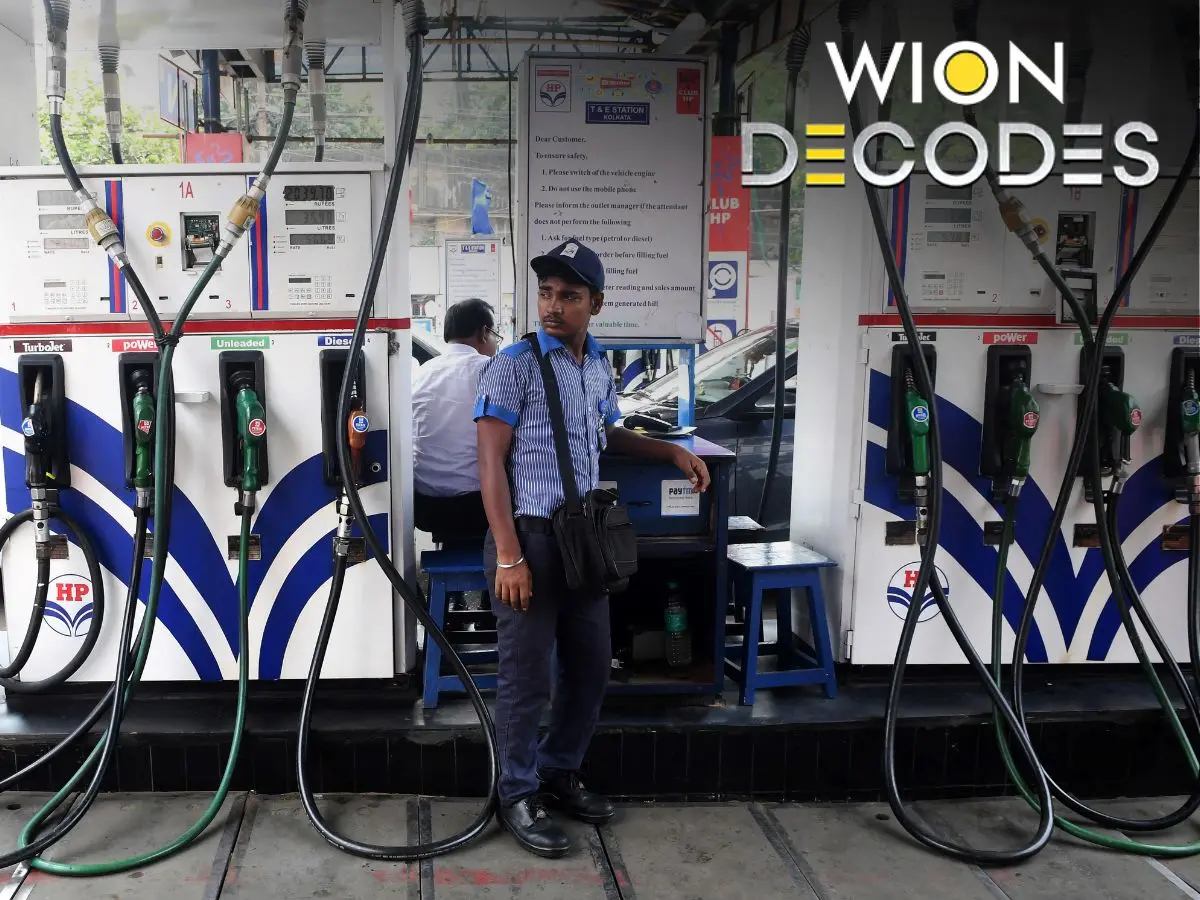
&imwidth=800&imheight=600&format=webp&quality=medium "WION Decodes: What's behind India's ethanol push? Centre exempts E22, E25, E27 and E30 fuels from excise duty")
The Centre has extended central excise duty exemptions to petrol blended with 22 per cent, 25 per cent, 27 per cent and 30 per cent ethanol, marking another major step in India's ethanol blending programme.
In notifications issued by the Department of Revenue, the government provided a nil excise duty rate for E22, E25, E27 and E30 fuel blends that meet Bureau of Indian Standards norms. The decision clears the way for the wider use of petrol containing up to 30 per cent ethanol after India achieved its E20 blending target ahead of schedule.
Under the new framework, E22 fuel will contain 78 per cent petrol and 22 per cent ethanol, while E25, E27 and E30 blends will contain 25 per cent, 27 per cent and 30 per cent ethanol respectively.
So why is India pushing for higher ethanol blending?
Reducing dependence on imported crude oil
India imports over 85 per cent of its crude oil requirements, making it vulnerable to global supply disruptions and price fluctuations. Replacing a portion of petrol consumption with domestically produced ethanol helps reduce dependence on imported energy.
Trending Stories
&imwidth=180&imheight=135&format=webp&quality=medium)
'Hell of a beautiful a**': Trump compliments Nicki Minaj as rapper joins him in Michigan rally
&imwidth=180&imheight=135&format=webp&quality=medium)
'Lousy president': Trump hits back at Obama over 'cheesecake factory' White House jibe
&imwidth=180&imheight=135&format=webp&quality=medium)
Student-led movement ousts Serbia's longtime leader as protests rage across Europe | GRAVITAS
&imwidth=180&imheight=135&format=webp&quality=medium)
VIDEO: UP bride collapses while entering hotel room with husband, dies next day in Jhansi; father alleges murder
&imwidth=180&imheight=135&format=webp&quality=medium)
Cameroon unveils school-based migration clubs to support young people’s migration choices
&imwidth=180&imheight=135&format=webp&quality=medium)
Jordan strikes 'terrorist organisations' in Syria after deadly church attack as Damascus shuts main border crossing
&imwidth=180&imheight=135&format=webp&quality=medium)
Microsoft offers voluntary exit packages to 60,000 employees in India, US, UK and Canada
&imwidth=180&imheight=135&format=webp&quality=medium)
Amber alert issued for 6-year-old boy abducted from US' California
&imwidth=180&imheight=135&format=webp&quality=medium)
Harry Kane favourite to win 2026 Ballon d’Or ahead of Lamine Yamal and Kylian Mbappé
&imwidth=180&imheight=135&format=webp&quality=medium)
'He is a red flag': Ex-India strength and conditioning coach on Rohit's fitness regime
&imwidth=180&imheight=135&format=webp&quality=medium)
Maurene Comey, daughter of ex-FBI director James Comey, was unlawfully fired as federal prosecutor, judge rules
&imwidth=180&imheight=135&format=webp&quality=medium)
‘That is a miss’: Ravi Ashwin questions Sooryavanshi’s demotion to No. 3 in 2nd T20I vs NZ
&imwidth=180&imheight=135&format=webp&quality=medium)
'Skinwalker' sightings in Utah from 2010 detailed in new UFO Files
&imwidth=180&imheight=135&format=webp&quality=medium)
Pakistan airline PIA unveils new crew uniforms, faces online criticism
&im=FitAndFill=(700,400)&imwidth=180&imheight=135&format=webp&quality=medium)
New OTT releases this week (October 26-November 1, 2026): Baththa, Akka, The One About Matthew Perry- 7 titles coming on Netflix, Prime Video and more
&imwidth=180&imheight=135&format=webp&quality=medium)
Elon Musk’s Grok releases first AI-generated Odyssey episode, months after promising ‘historically accurate’ full-length film
&imwidth=180&imheight=135&format=webp&quality=medium)
US Midterms 2026: Last leg polls and forecasts indicate Democratic momentum, but Senate control remains uncertain
&imwidth=180&imheight=135&format=webp&quality=medium)
'Already tired of his 9-to-5': Baby born with a moustache becomes internet sensation, video goes viral | Watch
&imwidth=180&imheight=135&format=webp&quality=medium)
Zimbabwe slips four places to 14th out of 29 in Africa’s Digital Rights and Inclusion ranking
&imwidth=180&imheight=135&format=webp&quality=medium)
Maldives opposition leader demands transparency on Muizzu Govt's Pakistan defence, security deals
&imwidth=180&imheight=135&format=webp&quality=medium)
'I'll organise the Opposition': Bolsonaro vows to challenge Lula government after defeat, Trump calls vote 'rigged'
&imwidth=180&imheight=135&format=webp&quality=medium)
At least five shot dead in Guwahati hotel over suspected property dispute, police launch investigation
&imwidth=180&imheight=135&format=webp&quality=medium)
Uttarakhand innovator Ravi Tamta builds flying car without any formal engineering degree
&imwidth=180&imheight=135&format=webp&quality=medium)
Trump offers $1 million before US midterms. What is he asking Americans to report?
&imwidth=180&imheight=135&format=webp&quality=medium)
Boys, aged 10 and 12, rape 9-year-old in UP’s Hathras, lure her with berries
&imwidth=180&imheight=135&format=webp&quality=medium)
Houthi drones, missiles turn Saudi troop gathering into killing field | Gravitas
&imwidth=180&imheight=135&format=webp&quality=medium)
Equities or gold: How Kwala Intel approaches the investment dilemma
&imwidth=180&imheight=135&format=webp&quality=medium)
Israel elections 2026: How the country is gearing up for a crucial vote
&imwidth=180&imheight=135&format=webp&quality=medium)
Meta’s AI bet is getting more expensive: What its $95 billion share plan means
&imwidth=180&imheight=135&format=webp&quality=medium)
Trump’s oil and gas holdings surge to $81.6 million amid Iran war as Americans face rising fuel costs
&imwidth=180&imheight=135&format=webp&quality=medium)
'I've done my work sincerely': AR Rahman on facing backlash over Ramayana soundtrack
Since 2014, ethanol blending has helped substitute 302 lakh metric tonnes of crude oil imports and generated foreign exchange savings of more than Rs 1.84 trillion.
Also Read: '8647' anti-Trump marking resurfaces in Washington; US police probe National Mall graffiti
Agrarian and Rural Economy
Ethanol is produced from sugarcane molasses, maize and damaged food grains. The programme has created a large domestic market for agricultural produce while providing an additional source of income for farmers.
According to government data, more than Rs 1.58 trillion has flowed to farmers through the ethanol supply chain. The programme has also improved cash flow for sugar mills, helping them clear payments to farmers more efficiently.
Supporting India's climate goals
The government views ethanol as an important transition fuel in its broader strategy to achieve net-zero emissions by 2070.
Ethanol-blended petrol produces lower emissions of carbon monoxide and particulate matter compared with conventional fuel. The programme has helped mitigate more than 909 lakh metric tonnes of carbon dioxide emissions so far, while lifecycle greenhouse gas emissions can be up to 61 per cent lower than those from standard petrol.
Preparing for higher blend fuels
With the E20 target already achieved, policymakers are now preparing for the next phase of ethanol adoption through higher blend fuels such as E22, E25, E27 and E30.
The government has also introduced E85 fuel, which is priced Rs 20 per litre lower than standard petrol, to encourage the adoption of Flex Fuel Vehicles. Automobile manufacturers, including Maruti Suzuki and Hero MotoCorp, have already begun rolling out vehicles designed to run on such fuels.
