Why nationalism push in Quebec is posing as election challenge for Canada PM Trudeau?

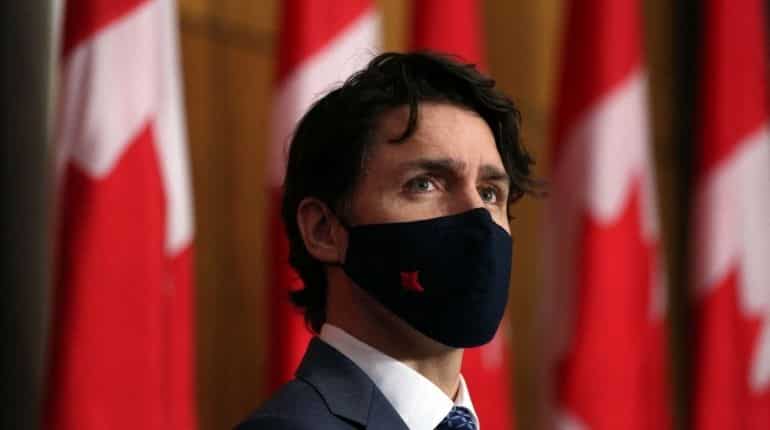
Canadian Prime Minister Justin Trudeau (File Photo)
Thenationalistmovementin Quebecis one of the most powerful national movements in the developed West.Some 25 years after an independence bid byQuebecalmost broke Canada apart, a new push by the province to strengthen its French-speaking identity poses an awkward challenge for Prime Minister Justin Trudeau months before an expected election.
Quebec, a political battleground that accounts for almost a quarter of the 338 seats in the federal House of Commons, has a history of separatist governments, one of which held a 1995 referendum on independence that only just failed.
There are many causes for the nationalistic distinction between Quebecers and English-speaking Canadians. One is the historical memories and symbols of these Francophones, including the minimal but gradually building divisions between the two communities since settlement.

Although Quebec has seen much recent economic advancement, the economic gap has been a source of resentment throughout history for French-Canadians.
Premier Francois Legault is a nationalist who rejects separatism but wants more rights forQuebec, which has just 8.5 million people and constantly frets about its linguistic and cultural heritage on a continent with hundreds of millions of English speakers.
This month, Legault vowed to amend Canada's Constitution to recognize French asQuebec's only official language and to callQuebeca "nation" to underscore its distinct status, not to assert that it is a separate state.
&im=FitAndFill=(700,400)&imwidth=180&imheight=135&format=webp&quality=medium)
What is the real meaning behind Pete Hegseth's tattoos?
&imwidth=180&imheight=135&format=webp&quality=medium)
Kim Jong Un death rumours: State media shares photos to prove dictator is alive amid reports of brain haemorrhage
&imwidth=180&imheight=135&format=webp&quality=medium)
Two Indians among 28 arrested in California over alleged voter registration fraud, DOJ says
&imwidth=180&imheight=135&format=webp&quality=medium)
‘Nuclear-use decision should be taken by humans’: India flags AI risks at UN
&imwidth=180&imheight=135&format=webp&quality=medium)
Flying car race: Alef Aeronautics welcomes Tesla Roadster '11 years' later, but are the two models the same?
&imwidth=180&imheight=135&format=webp&quality=medium)
Dussehra 2025: Why is Ravana not burnt but worshipped in these places of India?
&imwidth=180&imheight=135&format=webp&quality=medium)
Shastri backs Shami comeback; lauds Bhuvi and warns Bumrah on format workload ahead of World Cup
&imwidth=180&imheight=135&format=webp&quality=medium)
Netanyahu rival Benny Gantz quits Israel election race, vows to push for unity government
&imwidth=180&imheight=135&format=webp&quality=medium)
US Midterm 2026: What do opinion polls and prediction markets say less than two weeks before voting
&imwidth=180&imheight=135&format=webp&quality=medium)
Mariah Carey wins $20 million legal battle over brother’s defamation lawsuit against her bestselling memoir
&imwidth=180&imheight=135&format=webp&quality=medium)
Skyborne sentinels: How GSAT-7B gives the Indian Army its own eye in orbit
&imwidth=180&imheight=135&format=webp&quality=medium)
WATCH | Albania protesters set Supreme Court on fire as anti-Rama riots escalate
&imwidth=180&imheight=135&format=webp&quality=medium)
Indian Air Force turns to homegrown firefighting robot developed under iDEX programme
&imwidth=180&imheight=135&format=webp&quality=medium)
Pete Hegseth meets Benjamin Netanyahu during unannounced visit to Israel ahead of election
&im=FitAndFill=(700,400)&imwidth=180&imheight=135&format=webp&quality=medium)
Ghaziabad is world's fastest-growing city; Surat, Patna, Rajkot also feature on list
&imwidth=180&imheight=135&format=webp&quality=medium)
'It's a joy to see the makers bring it on such a grand scale': SS Rajamouli on Ramayana
&imwidth=180&imheight=135&format=webp&quality=medium)
Dark fantasy, violence, adult themes: BBFC data reveals animation's shift towards older audiences
&imwidth=180&imheight=135&format=webp&quality=medium)
WATCH | Japan launches historic mission to collect samples from Mars' moon Phobos
&imwidth=180&imheight=135&format=webp&quality=medium)
India begins National Red List Assessment of 1,211 bird species to boost conservation
&imwidth=180&imheight=135&format=webp&quality=medium)
PCB omits Atherton, Hussain from tri-series commentary panel over Imran Khan interview row
&imwidth=180&imheight=135&format=webp&quality=medium)
Trump calls on New Mexico to become 'New America', claims 'home values and incomes would rise'
&im=FitAndFill=(700,400)&imwidth=180&imheight=135&format=webp&quality=medium)
Priyanka Chopra to Shilpa Shetty: 6 Bollywood actresses and their fitness secrets
&imwidth=180&imheight=135&format=webp&quality=medium)
Pujara says 'Samson and Vaibhav cannot be in Playing XI' for India on NZ tour
&imwidth=180&imheight=135&format=webp&quality=medium)
US midterms 2026: From Pooja Sethi to Vivek Ramaswamy, here are Indian-origin candidates to watch out for
&im=FitAndFill=(700,400)&imwidth=180&imheight=135&format=webp&quality=medium)
New OTT releases this week (October 19-25, 2026): Gajab Raat to Chaar Yaar-8 titles to watch during Dussehra week on Netflix, Prime Video and more
&imwidth=180&imheight=135&format=webp&quality=medium)
Baby orangutan rescued in India returns to Indonesia
&imwidth=180&imheight=135&format=webp&quality=medium)
India moves to buy 10,000 more AI chips for a national compute pool open to startups
&imwidth=180&imheight=135&format=webp&quality=medium)
Prince Harry, Meghan Markle never accepted Queen Elizabeth’s terms for royal exit: Report
&imwidth=180&imheight=135&format=webp&quality=medium)
'Whatever I can do to end this war': Trump floats China Summit with Putin and Xi, questions Zelensky's role in peace talks
&imwidth=180&imheight=135&format=webp&quality=medium)
'We feel like Mr India': Gujarat’s undercover SHE team guard garba nights at Navratri
&imwidth=180&imheight=135&format=webp&quality=medium)
Cattle-feed bran in biscuits, detergent in milk: FSSAI acts against 3 companies
&imwidth=180&imheight=135&format=webp&quality=medium)
Feds obtain DNA evidence that could prove Ilhan Omar married her brother: Report
&imwidth=180&imheight=135&format=webp&quality=medium)
Ramayana advance booking: Ranbir Kapoor, Yash's film cross $500K ahead of Diwali release
&imwidth=180&imheight=135&format=webp&quality=medium)
AUS vs SA: Boland grabs opportunity with both ends to help Australia dominate
Legault said he would do so through a rarely invoked authority to unilaterally change parts of the Constitution that affect just one province. The move is largely symbolic, since French is already the province's only official language and the federal Parliament in 2006 recognizedQuebecas a nation inside Canada.
But some legal experts say the move is unconstitutional, and it has raised fears inside and outsideQuebecthat it could put new strains on national unity at a time when some western provinces have expressed unhappiness with federal policies.
Legault, whose CAQ party faces a provincial election in October 2022, says he is addressing concerns that the use of French is slipping.
It is a dilemma for Trudeau, a fluent French speaker whose father, Pierre, fiercely opposedQuebecseparatism when he was prime minister but enacted legislation recognizing French, for the first time, as one of Canada's two official languages.
A Leger poll this week showed the vast majority ofQuebec's French-speaking residents backing the proposals. If Trudeau opposes Legault, he could threaten some of the seats the Liberals hold in the province.
"We've all been through the constitutional battles of the past number of decades that have left many scars on many people," Trudeau told reporters on Tuesday, referring to the two referendums onQuebecindependence, in 1980 and 1995.
He said he could live with Legault's proposed change, adding, however, that the rights of both French and English speakers must be protected.
Trudeau must increase his support inQuebecfrom the last election in 2019 if he wants to regain a parliamentary majority. Like Trudeau, the leaders of other federal parties - including the official opposition Conservatives - did not condemn Legault's move.
"I think electoral pragmatism is playing a role here, absolutely," said Daniel Beland, who heads the Institute for the Study of Canada at Montreal's McGill University.
The Liberals hold 35 ofQuebec's 78 seats, just ahead of the separatist BlocQuebecois at 32. Trudeau's party is leading inQuebec, but is only 3 percentage points ahead of the Bloc, according to a Leger poll from this month.
TheQuebecCommunity Groups Network, which seeks to defend anglophones, said Legault's proposed measures "override fundamental human rights and will erode the vitality of our English-speaking minority community."
Quebec's anglophone population, roughly 10% of the province's total, is concentrated in key parliamentary constituencies and Liberals must keep them happy too.
"The English-speaking community is very angry. The risk is not so much that they will support another party - the risk is that they stay home," said a senior Liberal with direct knowledge of the issue.
The English speakers' votes are "key for getting us over the finish line, and them staying home could make the difference between winning and losing," said the Liberal, who requested anonymity given the sensitivity of the situation.
Another concern is thatQuebec's move will set a precedent that could prompt other provinces to seek constitutional changes for political reasons.
One Conservative lawmaker suggested that Alberta, where a nascent separatist party is seeking to take advantage of unhappiness with Ottawa, could unilaterally change the equalization system - under which richer provinces subsidize poorer ones - in order to hang onto more of its tax revenue.