Why B-52 bomber lands completely sideways and looks terrifying doing it

&imwidth=600&imheight=450&format=webp&quality=medium "Why B-52 bomber lands completely sideways and looks terrifying doing it")
Why B-52 bomber lands completely sideways and looks terrifying doing it
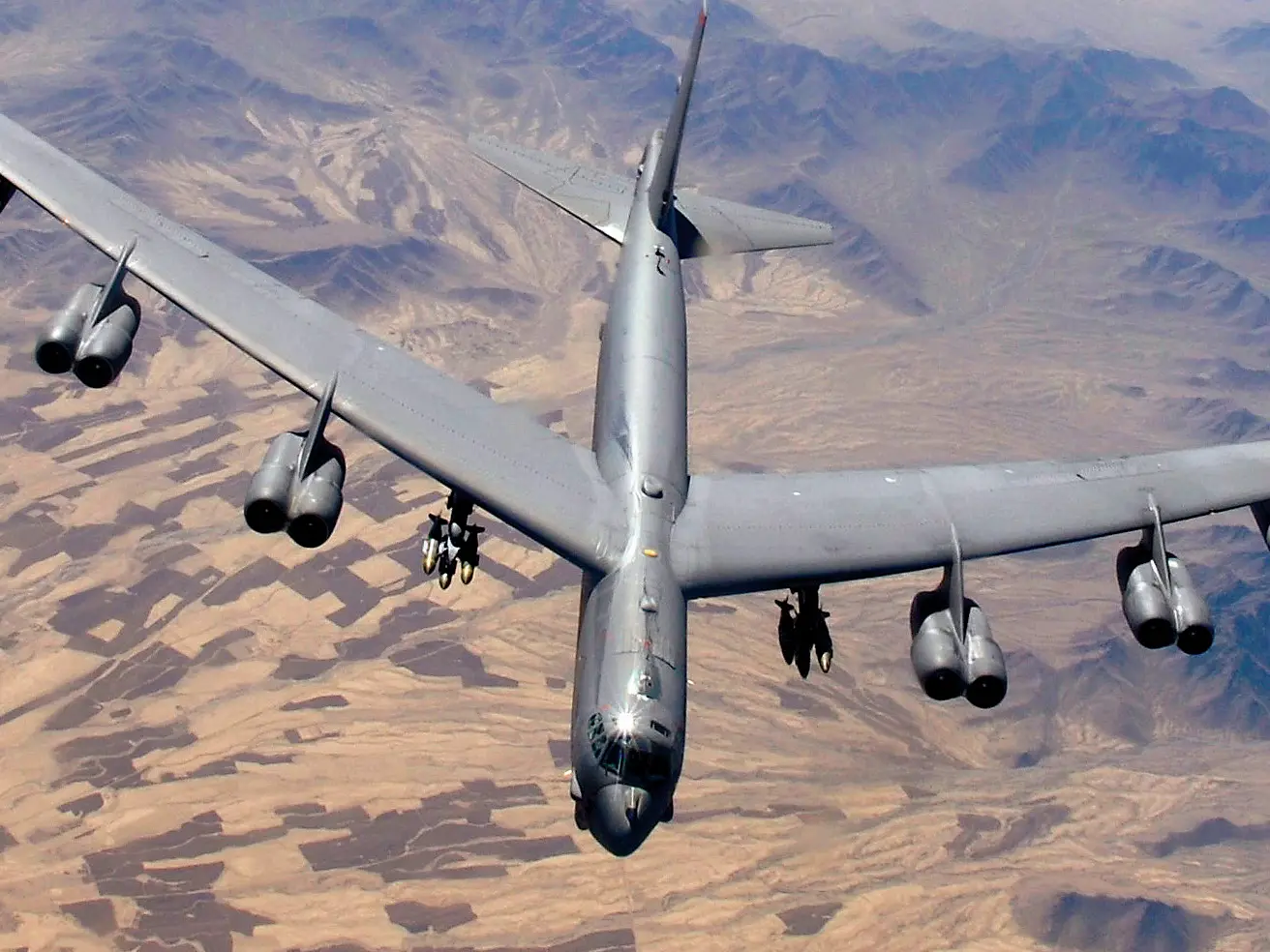
The B-52 Stratofortress is so massive, with a 185-foot wingspan and wingtip gear hanging far from the fuselage, that Boeing gave it a unique swivelling landing gear system allowing it to literally drive sideways down the runway in a crosswind.
If you have ever watched a B-52 land in a crosswind, the first thing you will notice is that the aircraft does not appear to be pointing at the runway. Its fuselage is angled to one side — sometimes dramatically — while it descends toward the tarmac. It looks fundamentally wrong, as if the pilot has lost directional control. In fact, it is the opposite: the pilot is using a landing system that exists on no other operational military or commercial aircraft in the world.
The Problem The Crab Walk Solves
When a crosswind blows across a runway, pilots normally use one of two techniques: they either angle the aircraft's nose into the wind and then straighten out at the last moment before touchdown (called a ‘sideslip’), or they accept a slight drift. Neither approach works well for the B-52. The aircraft has a 185-foot wingspan, and its outrigger landing gear — small wheels mounted under each wingtip to prevent the wings from scraping the ground — hang far from the fuselage centreline. If a B-52 pilot tried to drop a wing into the wind like a fighter jet, those outrigger wheels or the wingtip itself would strike the runway surface. The aircraft is simply too wide and too structurally delicate at the extremities to land conventionally in a strong crosswind.
How The Swivelling Gear Works
Boeing's solution was to give the B-52's main landing gear the ability to rotate. The pilot dials in the runway heading via a rotary selector in the cockpit, and the landing gear pivots to align with that heading regardless of which direction the fuselage is pointing. This means the wheels are always tracking straight down the runway centreline even while the aircraft's body is angled into the wind. The B-52 approaches the runway ‘crabbed’ — nose pointing into the wind, body at an angle to the runway — and touches down in that orientation. It then rolls down the runway with its fuselage still angled sideways while the wheels roll perfectly straight beneath it.
Why It Looks So Alarming
Trending Stories
&im=FitAndFill=(700,400)&imwidth=280&imheight=210&format=webp&quality=medium)
&im=FitAndFill=(700,400)&imwidth=280&imheight=210&format=webp&quality=medium)
&imwidth=280&imheight=210&format=webp&quality=medium)
&imwidth=280&imheight=210&format=webp&quality=medium)
&imwidth=280&imheight=210&format=webp&quality=medium)
&imwidth=280&imheight=210&format=webp&quality=medium)
&imwidth=280&imheight=210&format=webp&quality=medium)
&imwidth=280&imheight=210&format=webp&quality=medium)
&imwidth=280&imheight=210&format=webp&quality=medium)
&imwidth=280&imheight=210&format=webp&quality=medium)
&imwidth=280&imheight=210&format=webp&quality=medium)
&imwidth=280&imheight=210&format=webp&quality=medium)
&imwidth=280&imheight=210&format=webp&quality=medium)
&imwidth=280&imheight=210&format=webp&quality=medium)
&imwidth=280&imheight=210&format=webp&quality=medium)
&imwidth=280&imheight=210&format=webp&quality=medium)
&imwidth=280&imheight=210&format=webp&quality=medium)
&imwidth=280&imheight=210&format=webp&quality=medium)
&imwidth=280&imheight=210&format=webp&quality=medium)
&imwidth=280&imheight=210&format=webp&quality=medium)
&imwidth=280&imheight=210&format=webp&quality=medium)
&imwidth=280&imheight=210&format=webp&quality=medium)
&im=FitAndFill=(700,400)&imwidth=280&imheight=210&format=webp&quality=medium)
&imwidth=280&imheight=210&format=webp&quality=medium)
&imwidth=280&imheight=210&format=webp&quality=medium)
&imwidth=280&imheight=210&format=webp&quality=medium)
&imwidth=280&imheight=210&format=webp&quality=medium)
&imwidth=280&imheight=210&format=webp&quality=medium)
&imwidth=280&imheight=210&format=webp&quality=medium)
&imwidth=280&imheight=210&format=webp&quality=medium)
&imwidth=280&imheight=210&format=webp&quality=medium)
&imwidth=280&imheight=210&format=webp&quality=medium)
&imwidth=280&imheight=210&format=webp&quality=medium)
&imwidth=280&imheight=210&format=webp&quality=medium)
To an observer on the ground, the crab walk looks deeply unsettling. A 160-foot-long, 185-foot-wide bomber appears to be sliding sideways down the runway at high speed, its nose pointing somewhere off to the side while the aircraft tracks forward. Videos of B-52 crosswind landings regularly go viral because the visual is so counterintuitive — the brain expects the aircraft to veer off the runway or collapse its landing gear, but instead it rolls out perfectly straight every time.
A Unique Engineering Legacy
The B-52's crosswind landing gear is a solution that was designed in the early 1950s and has never been replicated on any other production aircraft. Modern transport aircraft and bombers use conventional nose-wheel steering and rely on aerodynamic techniques to handle crosswinds. The B-52 remains the only operational aircraft in the world that can land with its fuselage pointing in a completely different direction from its direction of travel — a piece of 1950s engineering that is still, seven decades later, unlike anything else flying.
