India-Japan pharma cooperation: PM Takaichi’s India visit paves the way for bold leap in healthcare

&imwidth=600&imheight=450&format=webp&quality=medium "India-Japan pharma cooperation: PM Takaichi’s India visit paves the way for bold leap in healthcare")
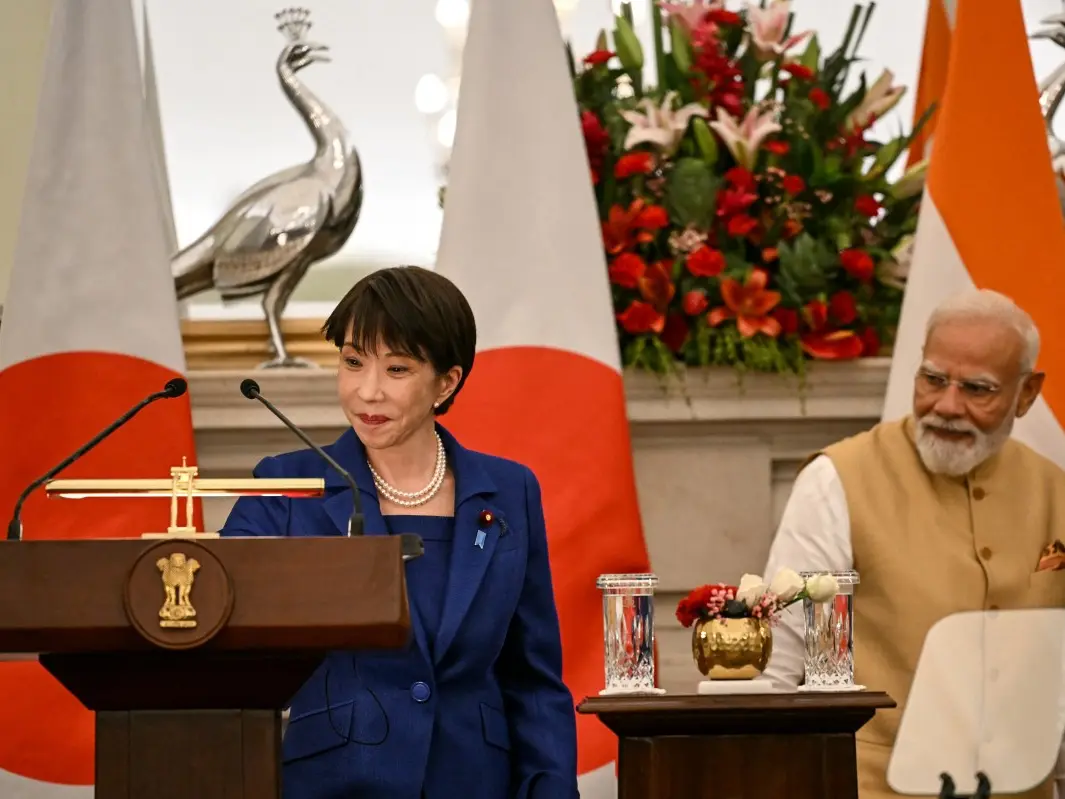
Japanese Prime Minister Sanae Takaichi with Indian Prime Minister Narendra Modi. Photograph: (AFP)
Japanese Prime Minister Sanae Takaichi's visit can help boost cooperation between the two countries in the pharmaceuticals and health sectors. Eisai and Takeda, two of Japan's largest independent pharmaceutical companies, have set up base in India.
Japanese Prime Minister Sanae Takaichi is visiting India, and it is an opportunity for the two countries to expand cooperation in pharmaceuticals and healthcare further. Japan excels in innovative drug discovery, medical technologies and ageing-care solutions. Combined with India's globally competitive pharmaceutical manufacturing base, this can lead to growth and benefits for both countries in this sector. The visit by Takaichi is a chance to elevate this partnership, and move beyond a buyer-supplier relationship to a strategic healthcare and life sciences collaboration.
Globally, India has been viewed as a strictly low-cost manufacturing hub for Active Pharmaceutical Ingredients (APIs) and generic medications. However, this has changed in recent years. For Japanese pharmaceutical majors like Takeda and Eisai, India offers an indispensable, dual-purpose ecosystem. India is an important market for expanding specialised healthcare access.
Eisai and Takeda in India
Eisai officially established the Eisai Global Capability Centre (EGCC) in Visakhapatnam (Vizag), Andhra Pradesh. Takeda is located in Bengaluru, and its ICC has become the digital foundation of the company’s "self-driving distribution network". Takeda and Eisai are well positioned to strengthen ties with India by carrying out clinical research, forming manufacturing partnerships, and gaining greater access to innovative therapies. Japan's pharmaceutical sector focuses more on R&D, while India has a robust generic drug ecosystem and expanding biopharmaceutical capabilities. Together, they complement each other to create opportunities for co-development, contract manufacturing, and regional market expansion.
India and Japan can work to reduce concentration in medical supply chains. COVID-19 pandemic exposed the risks of concentrated production and dependence on single-country sourcing for active pharmaceutical ingredients (APIs) and essential medicines. They can work to change this and diversify and secure pharmaceutical supply chains.
This can be done through joint investments in API manufacturing, regulatory harmonisation, trusted production networks, and strategic stockpiles of critical medicines. India and Japan can support reliable supplies for both domestic markets as well as third-country exports across the Indo-Pacific by using the former's scale and manufacturing expertise, and the latter's investment and technology.
Trending Stories
)
)
)
)
)
)
)
)
&im=FitAndFill=(700,400))
)
)
)
)
&im=FitAndFill=(700,400))
)
)
)
)
)
)
)
)
)
)
)
)
&im=FitAndFill=(700,400))
)
)
)
)
)
)
)
Digital health, medical devices, precision medicine, and healthcare innovation are other areas where India and Japan can join hands. Joint initiatives in healthcare infrastructure, regulatory cooperation, and research on ageing-related diseases would further strengthen the India-Japan Special Strategic and Global Partnership while contributing to regional health security and resilient healthcare ecosystems.

