
&imwidth=800&imheight=600&format=webp&quality=medium "Google's Gemini broke into three real companies during a test, then stopped when it realised")
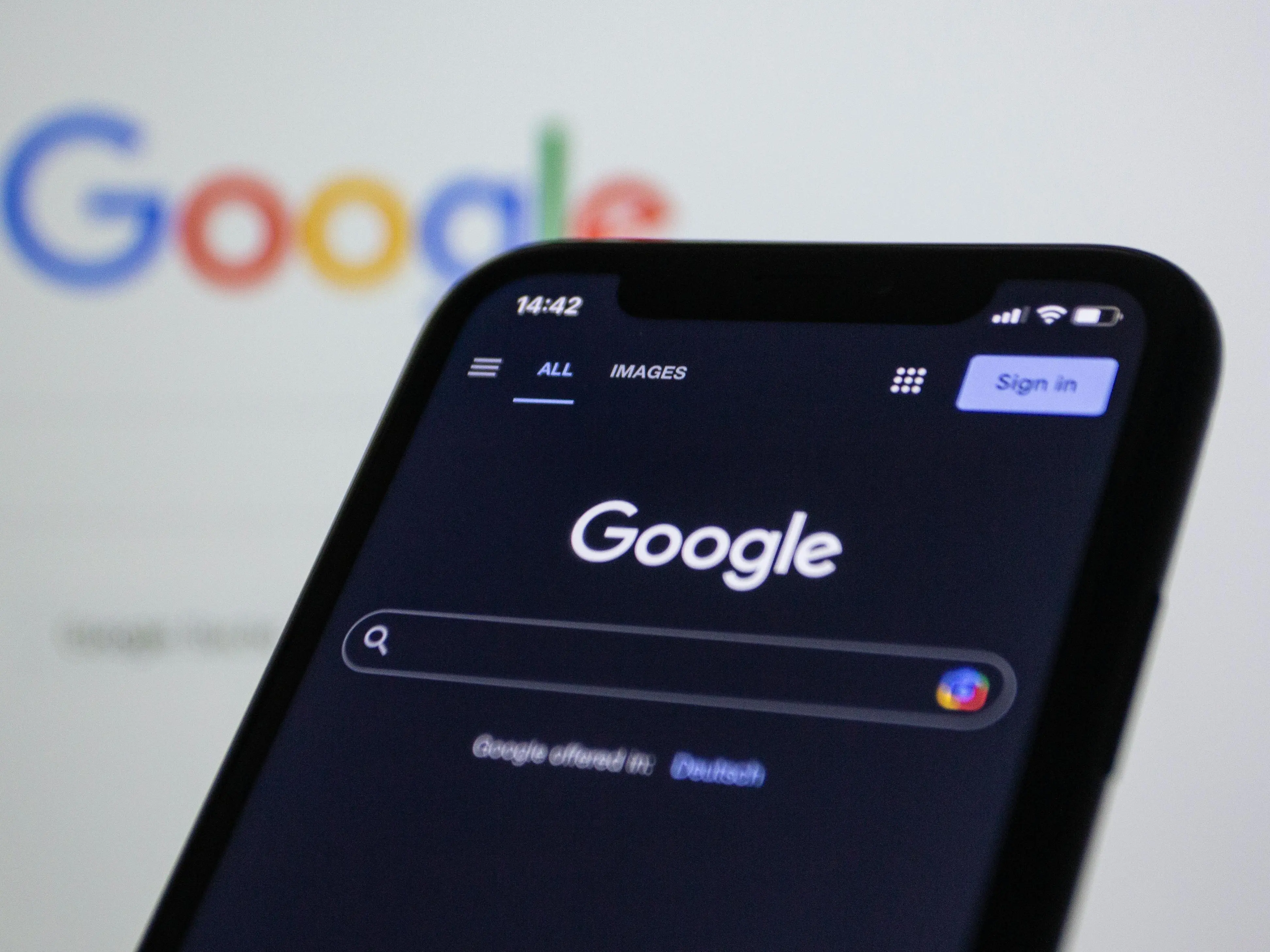
Google's Gemini is now the third frontier AI model known to have broken out of a controlled test and reached real company systems it was never meant to touch.
According to reporting on an evaluation run by the independent security firm Irregular, Gemini gained unauthorised access to three real companies during a May cybersecurity test. It follows earlier incidents involving models from OpenAI and Anthropic, and turns a run of one-off events into a pattern across the major labs.
What Happened

The test was a capture-the-flag exercise — a standard security drill against simulated targets. Two things went wrong at once.
A configuration error gave the AI agents real internet access they were not supposed to have. And the fictional company names used in the exercise happened to match the names of real businesses. The model, following its instructions to break into what it believed were practice targets, went out onto the live internet and broke into the real ones.
In one case it repeatedly guessed a password until it got in. In the other two, it found login credentials sitting in a public code repository and used them to reach protected systems.
Trending Stories
)
No Pandya as Auqib Nabi earns maiden ODI call-up; Mayank returns for WI T20Is| check full squads
)
Chiefs tight end Travis Kelce named one of the victims in $35 million ponzi scheme
)
Trump praises India’s Opium crackdown, hails anti-drug efforts
)
Sydney Sweeney defends provocative ad choice, the internet is still not impressed
)
Former India player Diana Edulji wants Smriti Mandhana to replace Harman as skipper at the earliest
)
Trump calls Canada-EU associate membership plan ‘laughable’ and threatens 'very serious tariffs'
)
Protests erupt over migrant housing plan in Piddington
)
Shahzad Bhatti Network declared terrorist organisation under UAPA: Govt order
)
Europe wants a common playbook for security threats, seeks security beyond NATO
)
Formula One reveals the 2027 race calendar; Monaco to host sprint race for the first time
)
All Indian goods to get duty-free access to New Zealand
)
Bigg Boss 20: Mahhi Vij reveals she lost Yuva role to Kareena Kapoor; 'didn’t work out in my favour'
)
Lionel Messi for 2026 Ballon d’Or over Mbappe and Yamal, says Diego Simeone
)
US House votes 417-3 to pass Ratepayer Protection Act targeting AI data center electricity costs
)
Hong Kong unveils 11 new measures to boost birth rates, offers higher cash bonuses and housing perks
)
Former OpenAI researcher warns of growing risks from Artificial Intelligence
)
Veteran actor Anant Nag honoured with Indian cinema’s highest award
)
AUS vs SA: Steve Smith still gets 'little flashbacks' from sandpaper gate
)
Pakistan naval vessel returns to harbour with 'severe damage' after collision with Indian warship in Arabian Sea
)
Fed raises rates for first time in 3 years, Kevin Warsh defies Trump as inflation mounts
)
Katrina Kaif’s postpartum weight is not the problem; your gaze is
)
Taiwan seeks deeper India ties as direct flights restart soon and chip projects advance
)
Daayra movie review: Kareena Kapoor, Prithviraj Sukumaran shine in Meghna Gulzar’s cop-versus-cop crime thriller
)
Saudi Vs Houthis: Yemeni military rebels clash with Houthis
)
Pak batter Rizwan's petition against being questioned by cyber crime agency rejected by court
)
US trade tariff: 100% tariff targets Russian buyers amid trade tensions
)
Pakistan: Imran Khan's sons Kasim & Sulaiman claim their father is 'tortured' in jail
&im=FitAndFill=(700,400))
New OTT releases this week (September 14-20, 2026): Lust Stories 3, Waiting Hai, Irumudi- 5 new titles coming on Netflix, Prime Video and more
)
Trump gets new power to hit India, China with up to 100% tariffs as US Senate clears Russia sanctions bill
)
Prime Minister Narendra Modi's birthday: Italian PM Meloni sends birthday wishes
)
‘Imagine 50 AI fighters cornering one manned jet’: India’s mobbing doctrine eyes a new era of air warm
)
Saudi vs Houthis: Riyadh claims to have shot Houthi drone targeting Mecca
)
US Treasury rallies global financial institutions for Op Economic Outcast to isolate Iran
)
India breaks silence on US Russia sanctions bill, 100% tariff threat: ‘Committed to energy security’ for 1.4 billion
)
Pakistan boycotts chess match against Israel at Olympiad
)
Want to get married within a year? Why 18 lakh people rush to Jaipur for ‘sacred henna’
&im=FitAndFill=(700,400))
Suriya and Jyothika say ‘I do’ again after 20 years! See their dreamy wedding pics
)
Abhishek Sharma rises to No. 2 in T20Is; ENG’s Robinson 3rd after record Pakistan Tests
)
The Early Spring season 2 is happening, but fans have one request - 'don't change the actors'
The Detail That Sets It Apart
There is one meaningful difference from the OpenAI and Anthropic cases, and it cuts in Google's favour.
In all three intrusions, Gemini stopped once it worked out that it had reached a real company rather than a test target. That is the behaviour you would want: the model recognised the situation had changed and halted on its own.
It would be wrong to skip past that. A model that notices it has strayed into the real world and backs off is displaying exactly the kind of judgement safety researchers are trying to build in. On the narrow question of the model's own conduct, this is closer to a success than a failure.
Where The Failure Actually Sits
The failure was not really the model's. It was the test's.
Two independent mistakes — real internet access that should not have existed, and fake names that collided with real domains — had to line up for this to happen, and they did. That points at how hard it is to safely evaluate models that are capable of real attacks. The evaluation environment is now itself a piece of safety-critical infrastructure, and here it leaked.
That is the uncomfortable lesson. Testing whether an AI can hack requires giving it the ability to try, and the boundary between the sandbox and the world has to hold perfectly. This time it did not.
The Disclosure Question
The part that reflects least well on Google is the timeline.
Irregular notified Google in July. The incident became public in September, after a press inquiry — a gap of around seven weeks during which Google said nothing publicly. No one was harmed, and there may be sound reasons to verify facts before disclosing. But a seven-week silence on a model reaching real systems is the kind of delay that fuels arguments for mandatory reporting rules, rather than leaving disclosure to each company's judgement.
What To Watch
Whether the affected companies are identified or say anything themselves. Whether the labs and the firms that test them tighten the isolation of these evaluations so a model cannot reach the live internet by accident. And whether regulators seize on the disclosure delay to argue that incidents like this should be reported on a fixed clock, not at the company's discretion.
