Explained: Who is Ben Roberts-Smith, Australia’s decorated living soldier accused of war crimes?

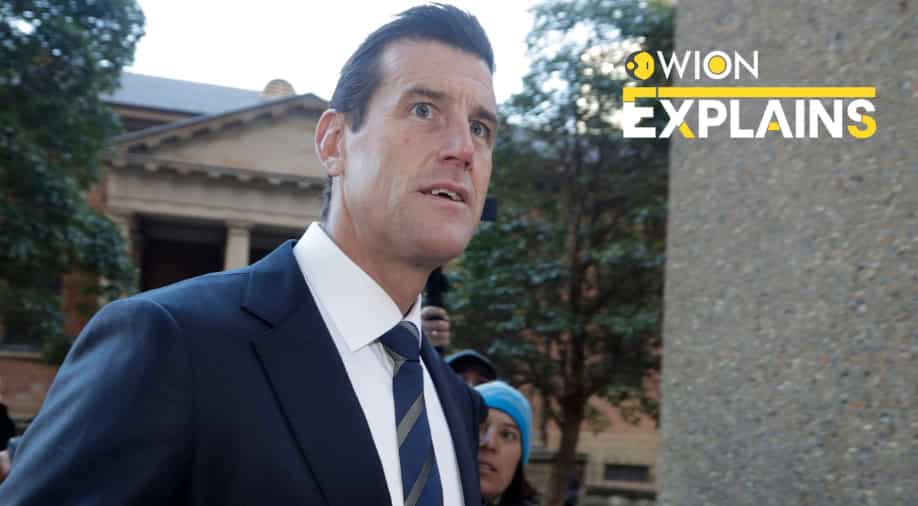
Ben Roberts-Smith
Australia’s most decorated living soldier Ben Roberts-Smith lost a high-profile multi-million-dollar defamation case against three newspapers that had accused him of murdering six Afghan civilians during his deployment there.
Roberts-Smith had sued the three Australian newspapers – the Age, the Sydney Morning Herald, and the Canberra Times — for defamation, alleging that the stories they published in 2018 had falsely accused him of murder and being a war criminal.
The newspapers described Roberts-Smith as a man “who broke the moral and legal rules of military engagement” and “disgraced” his country and its military. They challenged the suit arguing that their reporting was true.

On Thursday, Roberts-Smith lost resoundingly, as Federal Court Justice Anthony Besanko dismissed his case, putting an end to the country’s most dramatic and long-running trial.
According to local media reports, Roberts-Smith will be asked to pay around $35 million.
Notably, the former SAS soldier wasn’t in court when the verdict was read out. A day before the ruling, local media published photos of him in Bali, Indonesia.
&im=FitAndFill=(700,400)&imwidth=180&imheight=135&format=webp&quality=medium)
What is the real meaning behind Pete Hegseth's tattoos?
&imwidth=180&imheight=135&format=webp&quality=medium)
Viral video shows cross falling on Colombia priest, no official confirmation | WATCH
&imwidth=180&imheight=135&format=webp&quality=medium)
'My name has always been Ilhan Omar': Congresswoman hits back at Trump, calls him a 'creep'
&imwidth=180&imheight=135&format=webp&quality=medium)
Pezeshkian says Iranians ‘struggling to put food on the table’ as war with US drags on
&imwidth=180&imheight=135&format=webp&quality=medium)
AI slop or smart strategy? South African author Coral Hart defends Her 370 AI- assisted books in 20 months
&imwidth=180&imheight=135&format=webp&quality=medium)
Could you survive 3 days without power? UK tells households to prepare now
&imwidth=180&imheight=135&format=webp&quality=medium)
Can Putin cheat death? All about his daughter’s billion-dollar quest for immortality
&imwidth=180&imheight=135&format=webp&quality=medium)
India-China face-off continues near Arunachal’s Taksing, reveals ITBP chief in first official confirmation of tensions
&imwidth=180&imheight=135&format=webp&quality=medium)
Saudi says debris fell in Mecca, Medina after missile interceptions; Houthis deny targeting holy cities
&imwidth=180&imheight=135&format=webp&quality=medium)
Trump invokes Operation Sindoor at US midterm rally, claims 250% tariffs stopped India-Pakistan war
&imwidth=180&imheight=135&format=webp&quality=medium)
France protests: Clashes erupt between police and protesters in Paris as nearly 410,000 take to streets across country
&imwidth=180&imheight=135&format=webp&quality=medium)
Tu Hai Meri Kiran box office: Sonakshi Sinha and Zaheer Iqbal's film fails to take off, mints Rs 15 Lakh on day 1
&imwidth=180&imheight=135&format=webp&quality=medium)
After France and Italy, protests erupt in Spain: What’s fueling the anger?
&imwidth=180&imheight=135&format=webp&quality=medium)
Pakistan airline PIA unveils new crew uniforms, faces online criticism
&imwidth=180&imheight=135&format=webp&quality=medium)
US midterm elections face second polling hoax from fake pollsters
&imwidth=180&imheight=135&format=webp&quality=medium)
'Already tired of his 9-to-5': Baby born with a moustache becomes internet sensation, video goes viral | Watch
&imwidth=180&imheight=135&format=webp&quality=medium)
Horrific video shows the moment 18-year-old fell to her death from Mexico amusement park ride
&imwidth=180&imheight=135&format=webp&quality=medium)
France protests: 135 arrested, weapons seized as fresh demonstrations erupt amid heavy security
&imwidth=180&imheight=135&format=webp&quality=medium)
French Open: PV Sindhu storms into final with win over Hina Akechi
&imwidth=180&imheight=135&format=webp&quality=medium)
Albania protests enter 12th day as students clash with police, demand Rama's exit
&imwidth=180&imheight=135&format=webp&quality=medium)
AI deepfakes are spreading online: Why is removing them so difficult?
&imwidth=180&imheight=135&format=webp&quality=medium)
Global cybersecurity alert: PHP flaws trigger website shutdowns as hack attempts surge into millions
&imwidth=180&imheight=135&format=webp&quality=medium)
'You’re a horrible little reporter, aren’t you?': Trump snaps at NBC reporter questioning his support for Ramaswamy's campaign ad
&imwidth=180&imheight=135&format=webp&quality=medium)
Rising Asia Cup 2026 schedule announced, India-Pakistan clash set for Nov 22
&imwidth=180&imheight=135&format=webp&quality=medium)
16-foot doomsday fish in Chile triggers fears that the next earthquake is coming
&imwidth=180&imheight=135&format=webp&quality=medium)
US Midterms 2026: Dead for years, paedophile Jeffrey Epstein finds mention in over 500 campaign ads; Texas alone spent $10 million
&imwidth=180&imheight=135&format=webp&quality=medium)
Bodies of 2 missing Japanese climbers recovered from Himalayan peak
&im=FitAndFill=(700,400)&imwidth=180&imheight=135&format=webp&quality=medium)
New Friday OTT releases (October 23, 2026): Gajab Raat, Dorothy, Chaar Yaar- Watch these 6 new movies and TV shows on Netflix, Prime Video and more
&im=FitAndFill=(700,400)&imwidth=180&imheight=135&format=webp&quality=medium)
US midterm elections 2026: Minnesota heads to polls in the shadow of Minneapolis ICE shootings
&imwidth=180&imheight=135&format=webp&quality=medium)
Hitler’s ‘Eagle’s Nest’ mountain retreat wrecked by fire, suspect detained: What to know about the Nazi-era site
&imwidth=180&imheight=135&format=webp&quality=medium)
Tu Hai Meri Kiran film review: Sonakshi Sinha and Zaheer Iqbal's thriller gets tangled in its own twists
&imwidth=180&imheight=135&format=webp&quality=medium)
Negotiators from Ukraine, Russia, United States to meet in Abu Dhabi: Zelensky
&imwidth=180&imheight=135&format=webp&quality=medium)
UK Police confirm receiving letter containing number of claims about Meghan Markle's father in 2019, not 2018
&im=FitAndFill=(700,400)&imwidth=180&imheight=135&format=webp&quality=medium)
Watched Manoj Bajpayee’s Gajab Raat on Netflix? 5 movies and TV shows to watch next on OTT
&imwidth=180&imheight=135&format=webp&quality=medium)
Farooq Abdullah says Pakistan’s raising of Kashmir issue keeps pressure on Delhi
Regardless of his absence, a large media contingent had gathered at the Federal Court in Sydney to hear the verdict, which was broadcast from the court and aired live on national television.
What were the allegations?
After ending his service, the 44-year-old veteran was praised as a national hero back home.He was awarded several top military honoursfor his actions during six tours of Afghanistanfrom 2006 to 2012.
He later becameone of the most credible voices of the military and was often sought after as a public speaker. He was also appointed as a media executive in his post-military career. His portrait hangs in the Australian War Memorial.
But a series of articles published in 2020, citing credible evidence, reported that members of Australia's Special Air Service Regiment (SAS) killed dozens of unarmed prisoners in the Afghan war.
The reports published by the Sydney Morning Herald, the Age and the Canberra Times since 2018 debunked his laurels by publishing incriminating reports about him during his military service, including descriptions of brutal treatment of defenceless Afghan civilians
The articles, citing former soldiers, reported that in 2012 in an Afghan village called Darwan, Roberts-Smith took a handcuffed prisoner named Ali Jan and dragged him to the edge of a cliff. He then walked away from him before turning and striding towards him, kicking him in the chest, eventually causing him to fall backwards off the precipice.
Ali Jan landed in a dry creek bed below, alive but badly injured, having smashed his face on the cliff as he fell. Roberts-Smith and a comrade walked down a footpath to the injured man. Roberts-Smith ordered his subordinate to shoot him dead. And so it was done.
Two further murders at a bombed-out compound known as Whiskey 108 in 2009 were also found proven.
Two men – one elderly, the other disabled and with a prosthetic leg – were found hiding, unarmed in a secret tunnel and taken prisoner. Roberts-Smith ordered the old man shot. He executed the disabled man, throwing him to the ground and machine-gunning him to death.
Roberts-Smith later sued the papers for showing him as someone who "broke the moral and legal rules of military engagement".
He termed the reports false and based on claims of failed soldiers who were jealous of his accolades and sought unspecified damages.
How has the verdict been received?
James Chessell, Managing Editor of publishing at Nine Entertainment Co Ltd, the company that ownsSydney Morning Herald, called the verdict a “vindication for the many people in our newsrooms and our organisation who supported this really important public interest journalism,” reports Reuters news agency.
"It is a vindication for the brave soldiers of the SASR who served their country with distinction and then had the courage to speak the truth about what happened," Chessell said outside the court.
Roberts-Smith's lawyer, Arthur Moses, told reporters, "We will consider the lengthy judgement that his honour has delivered and look at issues relating to an appeal."
Taliban also reacted positively to the verdict, saying that foreign forces had committed "uncountable crimes" during the war.
Bilal Karimi, a spokesperson for the Taliban administration, said the incidents involved in the Australian case were a "small part" of the many alleged crimes that took place, adding that they did not trust any court globally to follow them up.
Who is Ben Roberts-Smith?
Roberts-Smith, who was born in Perth in West Australia in 1978, joined the Australian army when he was just 18. He joined the elite Special Air Service Regiment (SASR) in 2003.
He was deployed to Afghanistan multiple times between 2006 and 2012. He was also awarded the Victoria Cross, Australia’s highest honour, for his “most conspicuous gallantry in action in circumstances of extreme peril” during a mission in 2010 to track down a senior Taliban commander.
Roberts-Smith is divorced with twin teenage daughters. He left the military 10 years ago and took a degree in business, later joining the Seven Network media group and becoming a motivational speaker.
(With inputs from agencies)
WATCH WION LIVE HERE