Big Ben's back! World-famous ringer now functional after five-year restoration project

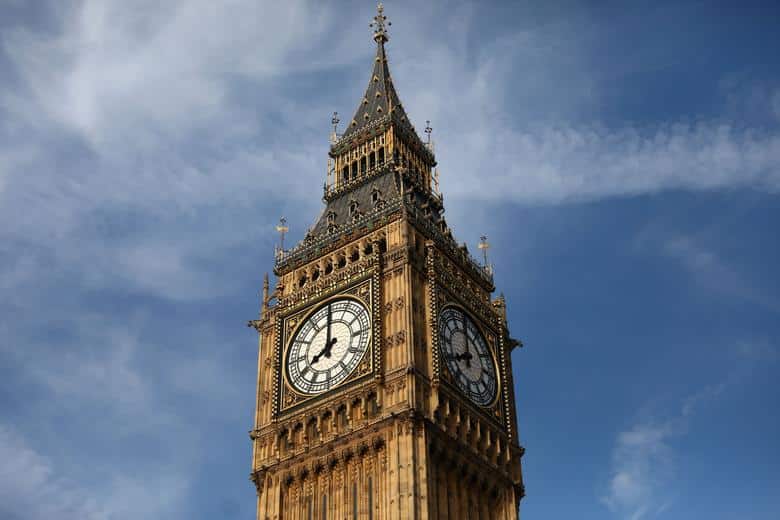
The Big Ben to resume after five years
The well-renowned ringer - The Big Benis back with a "bong" following a five-year repair project. Aftera lengthy restoration plan involving more than 1,000 moving components, the giantclock that looms above Britain's Houses of Parliament is now working seamlessly.The five cast-iron bells of the clock, including Big Ben, had stopped ringing in 2017.After a week of trials, normal service will resume every 15 minutes from 11:00 am (1100 GMT) on Sunday.The daycommemorates the moment when World War I's guns finally fell silent on November 11, 1918. In Britain, Remembrance Sunday always follows Armistice Day on November 11.
Big Ben and his partner have rung only twice since 2017 - when Britain left the European Union in 2021 and at the funeral ofQueen Elizabeth II in September.
The bells are situatedin a belfry atop the 96-metre (315-foot) Elizabeth Tower, which is surrounded by external protective netsto keep away bats and pigeons. Some of London's most breathtaking views can be witnessed from here.

The latest trialshave been closely monitored by Ian Westworth, 60, and his colleagues to make sure that all systems run smoothlyafter the £80-million ($90-million) restoration.
“It’s the sound of London back again," Westworth told AFP on a dawn tour of the tower.
)
Did India risk its US trade deal despite softer stance at BRICS?
)
Pakistan puts Pak Rs 70 lakh bounty on UN terrorist Masood Azhar; move draws skepticism in Delhi
)
First naval drone battle? Ukraine says Sargan 3000 sank Russian unmanned boat
)
Practical Magic 2 breaks Spidey spell over North American box office
)
'Huge destructive power': North Korea calls its latest missile launches 'live-fire drill' even as US dismisses 'immediate threat'
)
‘Let’s go’: Newly declassified videos show dramatic rescue of US Air Force officers downed in Iran
)
Ganesh Chaturthi 2026: Devotees throng the iconic Lalbaugcha Raja pandal in Mumbai
)
Delhi’s balancing act: BRICS serves as a stage for West Asia diplomacy
&im=FitAndFill=(700,400))
Why European Meteor missiles use ramjet engines compared to standard US solid rockets
)
Iran, India agree to deepen humanitarian and political ties, President Pezeshkian says
)
‘Want to reset ties with India, have engagement based on mutual interests,’ says Bangladesh minister
)
Trump says Canada eager to reach a deal, it could come ‘fairly soon’ if Ottawa treats US farmers better
)
Turkish Airlines plane flies through a storm three times, triggering severe turbulence
&im=FitAndFill=(700,400))
Why Chinese PL-15 air-to-air missiles use dual-pulse motors compared to European interceptors
)
Orlando Bloom addresses Pirates of the Caribbean comeback and reunion with Johnny Depp
)
China thinned Himalayan troop presence in 2025, India defence report says; terms border situation 'stable'
)
Russia proposes to build 360 kmph Ivolga FG trains in India: What happened on sidelines of BRICS
)
800 million years old - Scientists discover 'fingerprints' of supercontinent Gondwana in ancient rocks
)
Israeli minister calls to strip Gaza film directors of citizenship
)
'Nobody knows if it can be in control': ‘Godfather’ of AI, China spy chief back AI slowdown calls, flags political threat
)
China discovers vast gold and silver 'mine' in the Pacific with unheard-of deposits
)
Russian drone hits Warsaw-bound train near Polish border, Zelensky accuses Moscow of ‘deliberate’ targeting
)
War is making Russia stronger? How Ukraine is shaping Moscow’s next generation of weapons
)
Plane carrying prominent figure crashes at Libya’s Misrata airport: Report
)
Veteran Bollywood actress Nafisa Ali shares health update as Stage 4 cancer progresses, starts targeted therapy
)
NEET-UG to move to computer-based test soon, NTA DG says ‘CBT is the future’
)
Woman removes all her clothes on American Airlines flight, performs 'indecent acts'; arrested
)
Liam Neeson sparks romance rumours after holding hands with Stella Stocker at TIFF 2026
&im=FitAndFill=(700,400))
New OTT releases this week (September 14-20, 2026): Lust Stories 3, Waiting Hai, Irumudi- 5 new titles coming on Netflix, Prime Video and more
)
Indian importers urge Bangladesh to lift export ban on 'Hilsa' fish ahead of Durga Puja
)
Video of Pakistani lawmaker struggling to read English tribute to Jinnah goes viral - WATCH
)
Did China give Iran intel before US base strike that killed 3 troops? Trump says, 'You’re right...'
)
Women's Asia Cup 2026: India denied trophy once again despite winning the title
)
Humans may lose control of AI: Anthropic CEO calls for slowdown, Altman, Musk back him
“The bell’s sounded through wars, and you try and imagine what this bell’s actually seen — 160 years of development."
The Elizabeth Tower was previously called the Clock Tower. In 2012, it was renamed to honour the late Queen Elizabeth II'sdiamond jubilee. In the 1840s, it stood tall as the most dominant in the Westminster skyline.
Also WATCH |World Business Watch: Crypto exchange Coinbase cuts jobs
“You used to be able to hear this (Big Ben) on a quiet night up to 15 miles (24 kilometres) away," Westworth said, as a chill wind whistled through the belfry.
The restoration project
The five-year restoration work entailedcleaning and repainting each of the five bells’ hammers and arms. Owing to the Big Ben's size, the flooring in the tower beneath will have to be dismantled if it ever had to be removed.
The most cumbersome task was disassembling the 11.5-tonne clock mechanism from 1859 so a specialised business in Cumbria, northwest England, could clean, repair, and re-oil every cog and pinion. Other modifications were purely cosmetic in nature.
The four clock faces are currently illuminated by 28 spherical LED lights, with a balance of green and white providing the most accurate representation of how they would have appeared in gas-lit Victorian days. When the parliament is in session, a taller LED light rests over the bells and emits a white glow.
(With inputs from agencies)
WATCH WION LIVE HERE: