SOLVED! Decades-old mystery behind location of da Vinci’s Mona Lisa. All you need to know

Mona Lisa
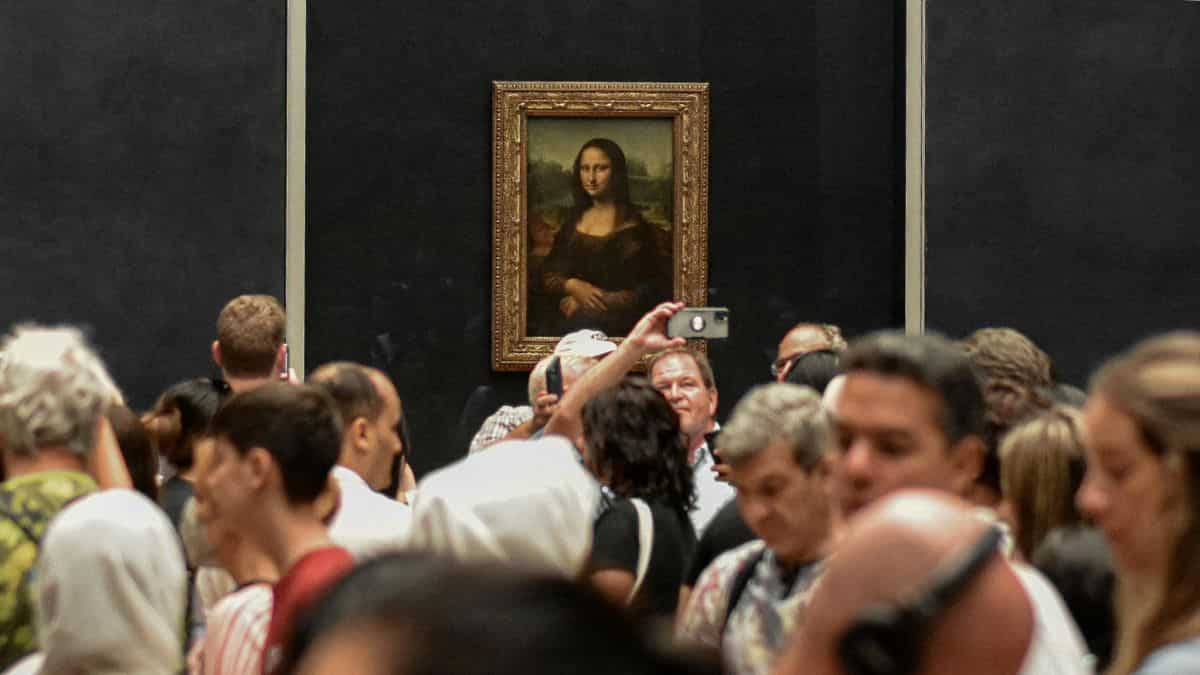
Leonardo da Vinci's Mona Lisa is known for its mysterious expression. Not only that, the painting is a well-known mystery, from who the subject is, to where the painting is situated a.k.a., its background, among some of themany subjects of intrigue for long.
Now, an Italian geologist and art historian, Ann Pizzorusso, believes she may have solved one of the painting's secrets—the exact location depicted in its background.
Small Italian town

Pizzorusso, who specialises in Leonardo Da Vinci and the Renaissance, as per CNN, has suggested the scene behind the Mona Lisa is set in Lecco, a town on the southeastern shore of Lake Como, Italy.
Her theory stems from her geological expertise and her study of Leonardo's diaries and drawings. In one notebook entry, Leonardo mentions being in Lecco while working as an engineer, though his project there was ultimately cancelled.
)
The Early Spring is proof not everyone can talk about their real feelings, and it is perfectly OK
)
UN votes to ‘correct the map’ as India backs fairer world view
)
Nigerian Navy discovers 99,000 litres of suspected stolen, illegally refined products as it intensifies anti-crude oil theft operations
)
Who is Aditi Paudel? 17-year-old becomes Japan's first literacy ambassador
)
Bengaluru: Officials find 40 kg expired chilli at chairman's club
)
Jaishankar rejects trade link to ending Ukraine war
)
Israeli strikes on Lebanon kill three, injure 23 despite truce
)
Alpine glacier was covered with sheep wool sheets to prevent melting. It worked
)
South Korea mulls deploying military assets to Strait of Hormuz
)
World's fifth-largest economy, British army can't afford to train
)
Breaking | Vance takes the podium: First White House briefing since Leavitt's exit
)
Taiwan raises 'concerns' over China's missile test
)
BRICS 2026: $1 trillion sovereign capital set to converge in Delhi for first iBRICS Summit
)
What is Iran's Pickaxe Mountain that Trump has again threatened to bomb?
)
UN votes to correct world map that visually shrank Africa for 450 years
)
Former NewJeans member Danielle launches YouTube channel, hints at new solo journey
)
Bangladesh batter Towhid Hridoy creates history with 350 not out in South Africa
)
Brendan Fraser’s transformation fuels The Mummy 4 excitement as fans welcome back Rick O’Connell
&im=FitAndFill=(700,400))
Krishna Janmashtami 2026: From Dhaniya Panjiri to Makhana Kheer- 5 best sweet dishes perfect for celebrating Lord Krishna’s birth
)
Donald Trump plans to travel to Ireland on Qatari-donated jet amid security concerns
)
Nazi-looted art to return to Jewish heirs
)
Eight killed in Kerala’s Thrissur after car rams into lorry parked on highway
&im=FitAndFill=(700,400))
Why Russian fighter jets use bulky, low-pressure tyres compared to US jets
)
FBI-wanted fraud accused arrested in Jalandhar over $600,000 scam
&im=FitAndFill=(700,400))
Why US tanks weigh over 20 tons more than Russian tanks
&im=FitAndFill=(700,400))
New Friday OTT releases (September 4, 2026): GDN, Dhamaal 4, Jagamae Sangeetham- Watch 6 new movies and TV shows on Netflix, Prime Video and more
)
Killing the Himalayas slowly: Human urine is melting a glacier on Mount Everest
His geological sketches from this time, including a red chalk drawing of a mountain range near Lecco — now part of the Royal Collection at Windsor, London — seem to support Pizzorusso's claim, reports CNN.
The distinctive "sawtooth" pattern in the mountain range, which Pizzorusso identifies as a type of erosion unique to limestone, is a key factor in her theory.

While other historians have previously proposed locations like Bobbio or Arezzo, Pizzorusso is the first to make this connection, focussing not on the arched bridge over the Mona Lisa's right shoulder but on the unique rock formations on the horizon.
"Bridges are fungible," she notes, whereas the limestone pinnacles are more distinctive.
"If you look in the background, you'll see pinnacles. It's a type of erosion that happens in limestone that has fractures in it and breaks off in blocks, almost like a sawtooth pattern… We can show limestone exists in (Lecco). When you look at the Mona Lisa, there's a series of mountains in the background that have this sawtooth pattern," she told the publication.
Pizzorusso also points to the body of water behind the Mona Lisa, which she identifies as Lake Como. This glacial lake, dating back about 10,000 years, has a shape characteristic of glacial scouring.
"If you look behind her you have the elongated glacial lakes that have a particular form like fingers," said the geologist, adding, "because when the glacier moved it scoured out certain pieces of land."
A theory worth 30 years
Reportedly, despite her conviction, Pizzorusso kept her theory mostly to herself for 30 years, discussing it only with other Leonardo scholars.
Confident that "everything added up", she will present her findings at a geology conference in Lecco this week.
However, her discovery raises further questions about Leonardo’s choices. If the location is indeed Lecco, why did Leonardo place the Mona Lisa—thought by some to be Lisa Gherardini, a rich Tuscan merchant’s wife—in this wild, untamed environment, far from Tuscany?
Pizzorusso ponders Leonardo's possible message: "Why did he put her in this wild, untamed environment? This is not Tuscany. What was he trying to tell us by putting this serene, enigmatic lady in this rugged, alpine environment?".
(With inputs from agencies)

