WION Decodes: Why do some people feel entitled to disrespect those with fewer means?

&imwidth=600&imheight=450&format=webp&quality=medium "WION Decodes: Why do some people feel entitled to disrespect those with fewer means?")
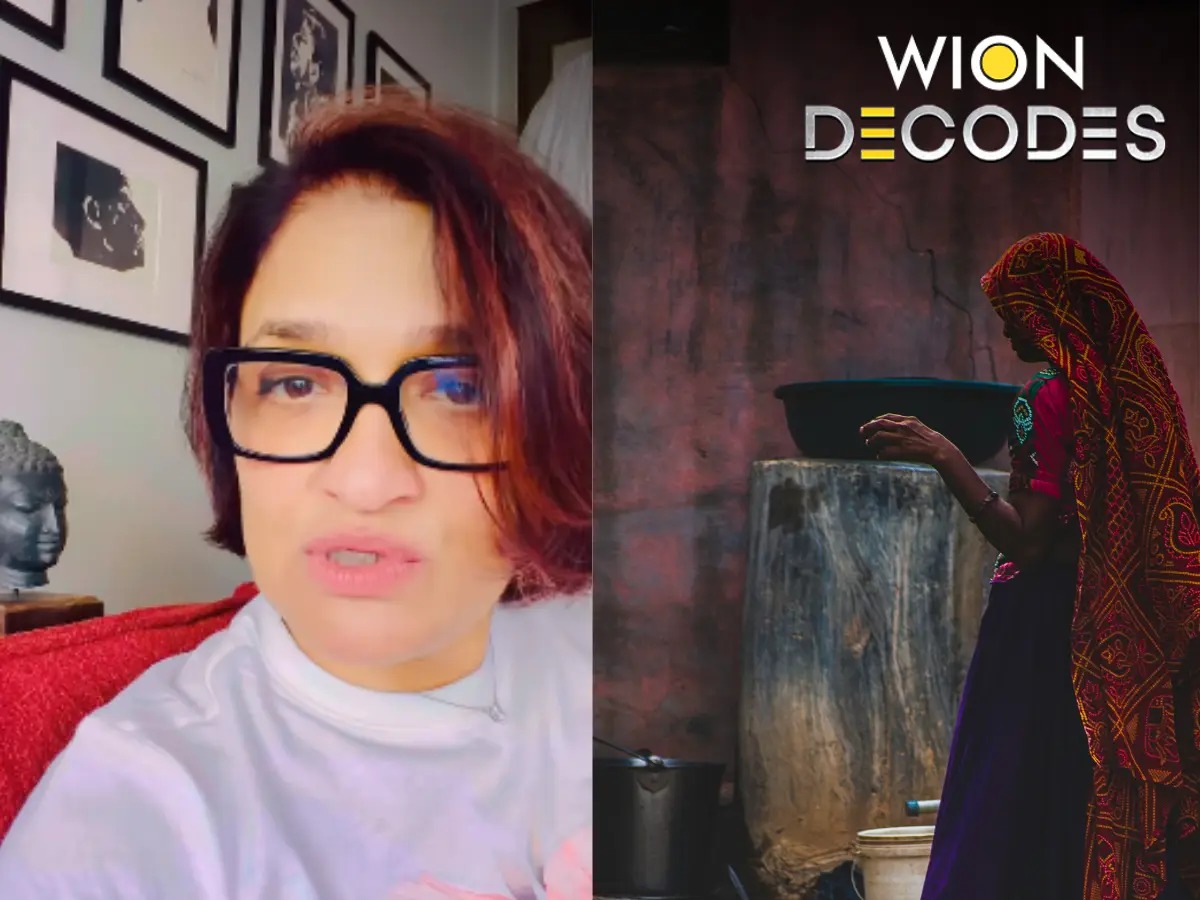
Sandhya Mridul shared a sad experience where her house help was refused a hair cut at salons. Photograph: (Instagram/ Sandhya Mridul)
The societal hierarchy has normalised treating the economically weaker with disdain. Sandhya Mridul revealed how salons refused to cut her house help's hair, highlighting the disgusting behaviour that plagues our society. We decode the psychology behind this entitlement.
Actress Sandhya Mridul recently shared an experience involving her mother's house help, calling out "the ridiculously sh***y behaviour" of some people with money who feel entitled to ill-treat the economically weaker people. In a video she posted on social media, she told people how salons refused to cut the hair of a young girl who is a domestic help in her 20s working at her place. "My mom took her help, our little girl, to a salon, and they refused to cut her hair. What time are we living in?" she said. She then took her to another salon, which also refused to cut her hair," she said. "My mother fought in second place, and my mother is a very gentle person. She pleaded with them, even offered to pay more because she was feeling bad, our girl was feeling bad. But they just refused," Mridul added.
"Then one condescended to giving her a haircut. Maa took her out for lunch. She was sad. I can't imagine the feeling." She wrote, “Every person deserves dignity, respect and kindness. Not because of what they do for us, but because they are also human.”
She blamed the "entitled" people for such behaviour, who demand that services and entrances be refused to house help and others who are not as well-off. Sandhya says, "It is time for these sh***y people" to change. "What day and age are we living in that we are behaving like this? Who do you think you are, what entitles you to behave in this way?"
Dr Munia Bhattacharya, Senior Consultant, Clinical Psychology, Marengo Asia Hospitals, Gurugram, says the problem here is "not wealth but entitlement." She added, "Money does not create character; it amplifies the personality that already exists. Individuals who derive their identity primarily from status, privilege or power often develop a psychological hierarchy where they unconsciously classify people based on economic or social value. In such a mindset, respect becomes transactional rather than universal."
Psychology behind the feeling of entitlement and treating people disrespectfully
The psychology behind such behaviour boils down to "narcissism" and "a sense of superiority". When people reach a certain level in society, they tend to believe that everyone should stick to a social hierarchy where some deserve more dignity than others, Dr Bhattacharya said. Narcissistic traits encourage a sense of superiority and reduce empathy. Such people put themselves in a higher position than others and start believing that preferential treatment is no longer a privilege but a right. This happens after tears of being served without accountability, Dr Bhattacharya said. "Behavioural psychologists call this learned entitlement." In many cases, “people are not consciously cruel; they have simply normalised inequality to the extent that they fail to recognise another person's emotional experience.”
In this type of entitlement an Indian thing?
Dr Bhattacharya says, "This is not an Indian phenomenon, and the same happens in other countries as well," but adds, "cultures differ in how strongly they challenge such behaviour." In countries where dignity of labour is deeply valued, and service roles are respected, public disapproval acts as a psychological corrective."
How can this behaviour be changed?
To change this system, social modelling needs to start early. "Children learn respect not from moral lectures but by watching how adults speak to drivers, domestic staff, security guards and waiters," she says. At a larger level, families and schools must reinforce that every human being deserves dignity regardless of occupation. Organisations should cultivate cultures where respect is non-negotiable and discriminatory behaviour has consequences. On an individual level, practising gratitude and perspective-taking strengthens empathy.
)
)
)
&im=FitAndFill=(700,400))
)
)
)
)
)
)
)
)
)
)
)
)
)
)
)
&im=FitAndFill=(700,400))
)
)
)
)
)
)
)
)
)
)
&im=FitAndFill=(700,400))
)
)
)
&im=FitAndFill=(700,400))

