For 48 years, nobody knew why Johan Cruyff skipped the 1978 World Cup. Reason is finally revealed!

&imwidth=600&imheight=450&format=webp&quality=medium "For 48 years, nobody knew why Johan Cruyff skipped the 1978 World Cup. Reason is finally revealed!")
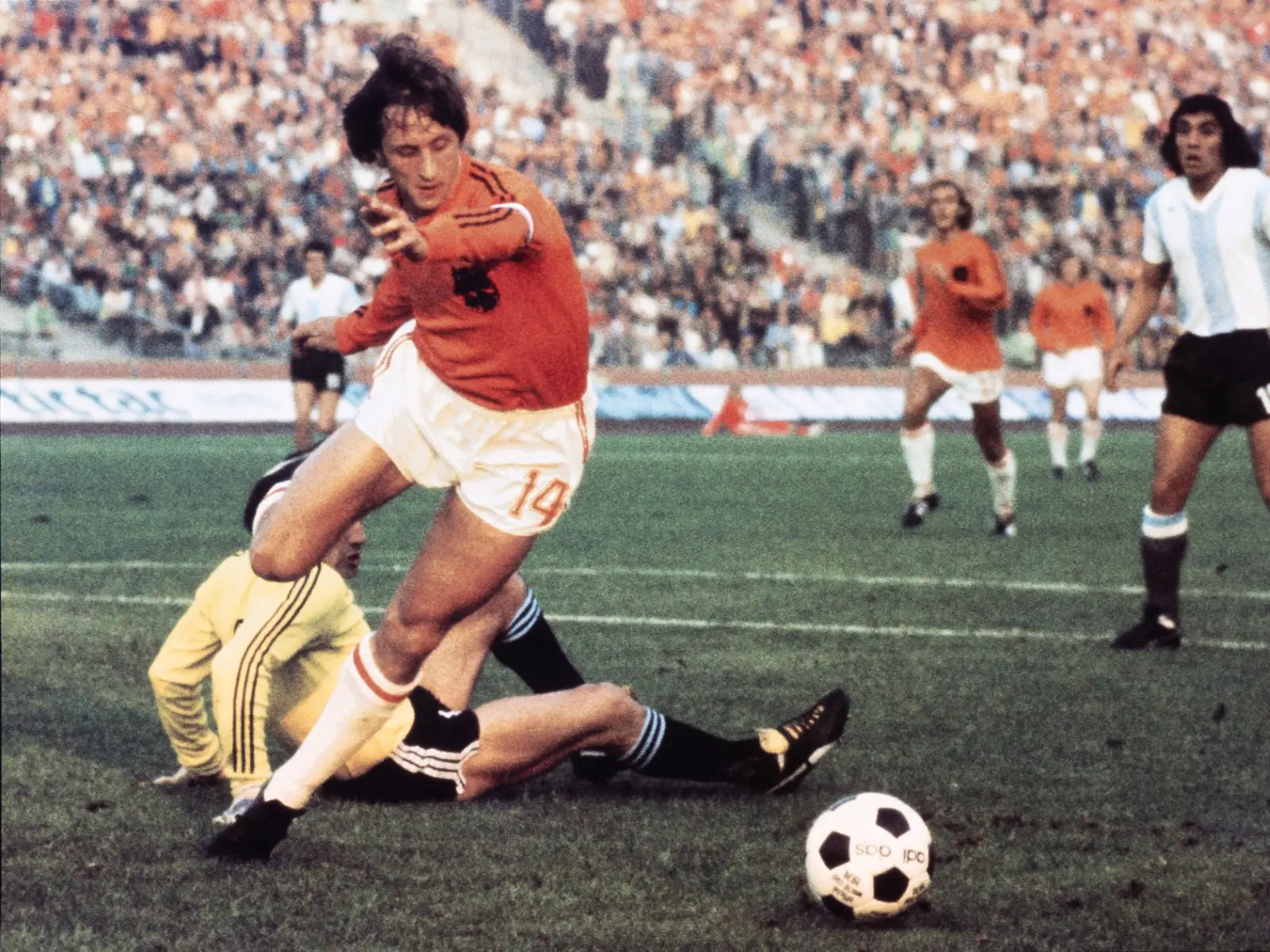
Dutch midfielder Johann Cruyff dribbles past Argentinian goalkeeper Daniel Carnevali on his way to scoring a goal during the World Cup quarterfinal soccer match between the Netherlands and Argentina on June, 26, 1974 in Gelsenkirchen Photograph: (AFP)
Johan Cruyff skipped the 1978 World Cup after a terrifying kidnap attempt in Barcelona changed his priorities, ending decades of speculation
For more than three decades, one of football's greatest mysteries surrounded Johan Cruyff's absence from the 1978 FIFA World Cup in Argentina. Widely regarded as one of the greatest players in the history of the sport, Cruyff's decision not to represent the Netherlands sparked endless speculation. The Dutch national team still reached the World Cup final despite suffering a group-stage defeat to Scotland. However, they lost 3-1 to hosts Argentina after extra time, and many believed Cruyff's absence cost the Netherlands their first World Cup title.
At the time, several theories emerged. Some suggested he had fallen out with the Dutch football association over sponsorship issues, while others believed he was boycotting Argentina because of the country's military dictatorship. Years later, Cruyff finally revealed the real reason. The former Ajax and Barcelona superstar disclosed that he and his family had survived a terrifying kidnap attempt at their home in Barcelona just months before the World Cup.
According to Cruyff, armed criminals broke into the family's apartment during the night, held them at gunpoint and tied up both him and his wife in front of their children. The traumatic incident completely changed his priorities and ultimately led him to step away from international football. In an interview with Catalunya Radio, Cruyff said, “You should know that I had problems at the end of my career as a player here and I don't know if you know that someone [put] a rifle at my head and tied me up and tied up my wife in front of the children at our flat in Barcelona.”
Also Read: Ishan Kishan replaces Abhishek Sharma as world no 1 T20 batter in latest ICC T20I batting rankings
)
Dutch midfielder Johann Cruyff dribbles past Argentinian goalkeeper Daniel Carnevali on his way to scoring a goal during the World Cup quarterfinal soccer match between the Netherlands and Argentina on June, 26, 1974 in Gelsenkirchen Photograph: (AFP)
Although the kidnap attempt was unsuccessful and Cruyff managed to escape unharmed, the emotional impact remained profound. He explained, “The children were going to school accompanied by the police. The police slept in our house for three or four months. I was going to matches with a bodyguard.” He added, “All these things change your point of view towards many things. There are moments in life in which there are other values.” And continued, "We wanted to stop this and be a little more sensible. It was the moment to leave football and I couldn't play in the World Cup after this."
Cruyff was living in Barcelona with his wife, Danny Coster, and their three children when the incident occurred in late 1977. Following his decision to skip the World Cup, many supporters unfairly blamed his wife, believing she had persuaded him not to travel to Argentina. Cruyff later addressed those rumours after they resurfaced in a book by former Barcelona teammate Carles Rexach, which claimed his family heavily influenced his decisions.
In the Netherlands, many still believe that Cruyff's presence could have changed history and helped the Dutch lift their first World Cup trophy. Dutch football journalist Marteen Wijffels said, “If he had played we could have won the World Cup. He would have made us stronger. I think people were very disappointed at the time he did not go.” However, Scotland legend Archie Gemmill, whose unforgettable solo goal secured a famous 3-2 victory over the Netherlands during the tournament, had a different view.
He said, "If he had played, it would not have made a blind bit of difference. Maybe we would have beaten them 7-2 instead of 3-2. We won the game, and that is it."
Cruyff enjoyed one of the most remarkable careers in football history. He made his Ajax debut at just 17 years old and helped the Dutch club win three consecutive European Cups. He later starred for the Netherlands at the 1974 World Cup, leading the famous "Total Football" side to the final before losing to West Germany. After moving to Barcelona as a player, he returned to the club as manager and guided the Spanish giants to their first European Cup in 1992. During the 1970s, he also won the Ballon d'Or three times. Barcelona-based football commentator Graham Hunter described Cruyff's legacy by saying, "As a footballer, Cruyff was elegant, visionary and skilled beyond measure. He ranks third among the best footballers ever, after Pele and Maradona."
Cruyff never confirmed whether the attempted kidnapping also influenced his decision to leave Barcelona in 1978. His spokesman, Joan Patsi, later confirmed the incident, saying, “Johan had asked police for protection for sometime before this as he had been receiving threats. It is true this happened.” He added, "Another reason he decided not to go to the World Cup was he did not feel he was at his best and you have to be 100%."
Trending Stories
)
)
)
)
)
)
)
)
)
)
)
)
&im=FitAndFill=(700,400))
)
&im=FitAndFill=(700,400))
)
)
)
)
)
)
&im=FitAndFill=(700,400))
)
)
)
)
)
)
)
)
)
)
)
)
)
)
)
)
Just a few years later, Barcelona experienced another shocking kidnapping when Spanish striker Quini was abducted in 1981 and held for ransom before eventually being rescued by police. Cruyff's decision remained one of football's biggest mysteries for decades, but his eventual explanation revealed that family and personal safety mattered far more than even the world's biggest sporting stage.

