Myanmar’s National Unity Government seeks formal engagement with India

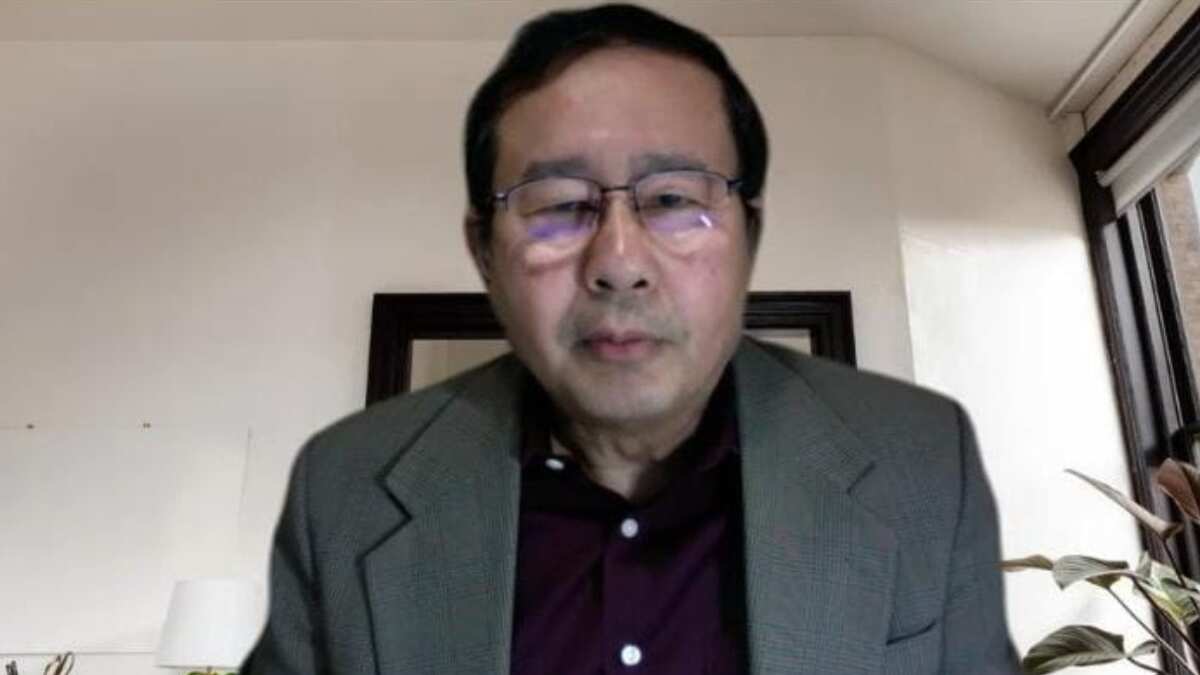
Zaw Kyaw
Amid Myanmar's escalating crisis, the National Unity Government (NUG) is actively seeking formal engagement with India, emphasising the urgency of the situation. Zaw Kyaw, spokesperson for the Office of the President, NUG, conveyed the NUG's plea in an interview with WION's diplomatic correspondent Sidhant Sibal. Kyaw urged India to reassess its engagement with the military junta and opt for a conversation with the NUG.
"The Indian government should reevaluate their engagement (with the military) and that this is a time to engage with us formally. And then like, like other countries are doing, formal engagement will be the next steps towards solving the problems," stated Kyaw. Established by democratically-elected politicians ousted by the 2021 coup, the NUG sees itself as Myanmar's govt in exile.
Highlighting recent victories, Kyaw underscored the significant territorial gains achieved by the resistance forces and the People's Defence Force, the armed wing of the NUG. "Resistance forces have been able to liberate more than 60% of Myanmar's territories from the military regimes, military junta," Kyaw pointed out. "Since 2023, late October, they were able to capture more than 50 towns and thousands of military bases including the strategicposts," he added.
Full interview transcript:

WION: What is the National Unity govt of Myanmar?
Zaw Kyaw: The national unity government of Myanmar is the legitimate government of Myanmar. As you know, we had free and fair elections in 2020 November, and the military staged a coup against the democratically elected government on February 1, 2021. In February, several days later, the parliamentarians were able to convene the Zoom meet of the parliament and then elected the committee to represent the Parliament. At that meeting, Parliament meeting, over 80% of the elected MPs attended. This unity government also has different ethnic representatives. So in short, the NUG Govt is the legitimate government, the most inclusive government in Myanmar's history. Our government is operating inside the country as well, the acting President and acting PM are inside Myanmar and operating in the country.
WION: What is the situation in Myanmar?
Zaw Kyaw: So over three years ago, the military junta led by military chief Min Aung Hlaing staged a coup against the civilian govt and the whole country peacefully protested against the coup. Unfortunately, in a violent crackdown the military killed peaceful protesters on the streets of Myanmar. NUG was formed and the people picked their own arms wherever they could, and they defended themselves. Our government formed PDF or People's Defence Forces on May 5, 2021, to protect civilians. We are staging resistance politically, militarily, diplomatically, economically. Our military front got momentum in late 2023, and we are in a position to stage an offensive against the military forces, together with ethnic groups and drive operations against the military. Not only border towns, but resistance forces have been able to liberate more than 60% of Myanmar's territories from the military regime, the military junta. Since 2023, late October, they were able to capture more than 50 towns and thousands of military bases including the strategy posts, and most of the border towns are now under resistance controls. The latest one is Myawaddy, on the Myanmar-Thailand border. It is one of the most important border towns in terms of trade.
WION: You said, 60% of the country is now under the resistance forces..
Zaw Kyaw: Yes, over 60% of our territories are under resistance forces.
)
ICC plans T20I expansion and fewer ODIs in 2027–2031 FTP cycle: Report
)
El Niño 2026 heats up to become strongest in 1,000 years
)
Erdogan again raises Kashmir issue at UNGA, calls for dialogue under UN Charter
)
Four female students raped during 'Red Zone' at California university. What we know
)
Nor'easter could batter 13 US states this week. What you should know
)
Major League Soccer referee sacked for sexist comment about female match referee
)
IND vs JPN, one-off T20I: Japan captain Kendel on pushing India to the brink - ‘It was special’
)
IND vs JPN T20I: How an overturned wide became point of difference between India's win and a tie
&im=FitAndFill=(700,400))
New OTT releases this week (September 21-27, 2026): Shaque: Trust No One, Hunkkaar, Don’t Be Shy- 5 new titles coming to Netflix, Prime Video and more
)
Yemen clashes kill 154 people in two days as cornered Saudi battles Houthi offensive | Gravitas
)
81st UN General Assembly: Burnham announces UK-US AI defence tie-up
)
'What kind of confession is this?': Pakistan PM Shehbaz Sharif’s 'terrorists would be roaming New York' remark goes viral, raises alarm online. Watch
)
WION Iconic Tourism Summit and Awards 2026: Key voices to discuss India’s tourism future
)
Anne Hathaway to run in supporting race for Nolan's epic
)
Infections transmitted from pregnant woman linked to autism risk
)
From Gaddafi tearing up UN Charter to Trump’s ‘escalatorgate’: Most unforgettable UNGA moments
)
US-China tech war: Businesses in the front line
)
'Taiwan and human rights are red lines': China warns US ahead of Xi-Trump visit
)
Bomb scare in New York amid UNGA: Suspicious suitcase found near UN headquarters
)
Asia prepares for record El Nino, food shock
)
Forget apps: Qualcomm CEO says AI agents will change how we use smartphones
&im=FitAndFill=(700,400))
National Film Awards 2026: Kartik Aaryan, Mammootty, Yami Gautam, Randeep Hooda and other key winners
)
IIT Bombay professor Suryanarayana Doolla sent on leave amid Sahil Wakode death probe
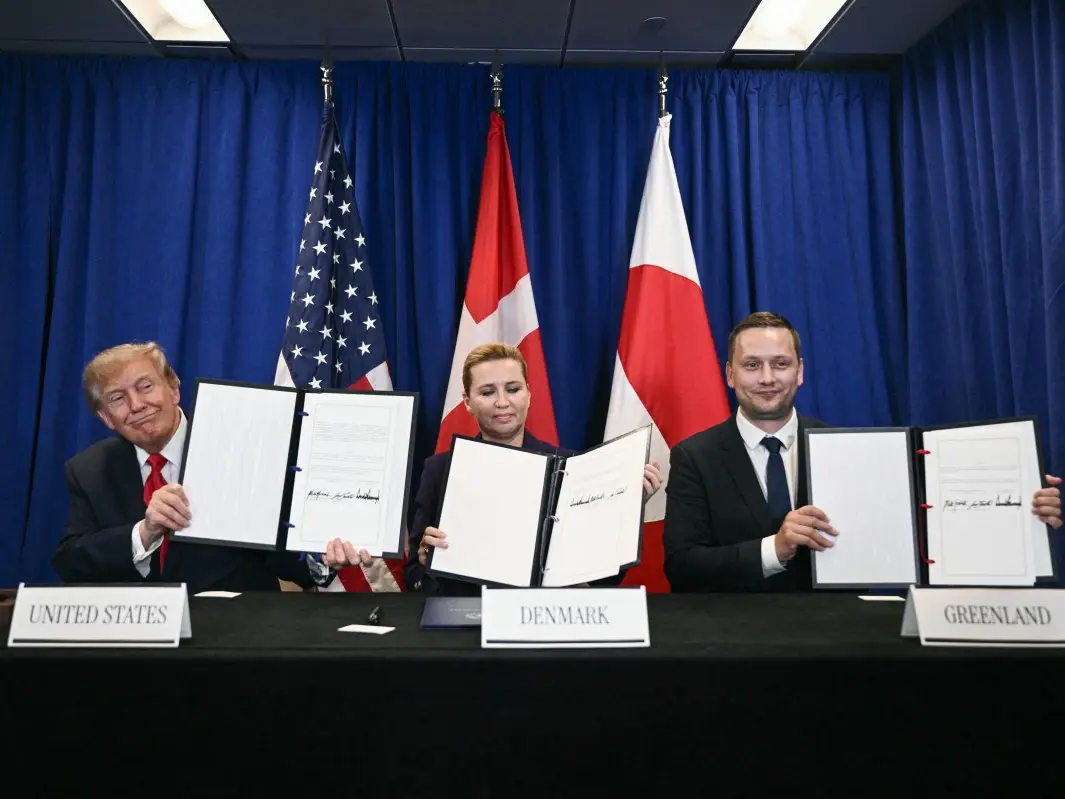)
Trump signs Greenland security deal with Denmark, paving way for two new US military bases
)
Mikel Arteta verbally agrees to three-year extension with Arsenal after title-winning Premier League season
)
Over 4,200 books withdrawn from circulation in J&K colleges, 94% from Kashmir
)
WION Iconic Tourism Summit and Iconic Awards 2026: India's travel economy leaders gather in Delhi
)
Elephants hide behind trees, stage surprise attack on poachers targeting rhinos in South Africa
)
US and China vie for AI dominance as calls grow for regulation | Gravitas
)
Explainer: Why rare-earth export licences and Board of Trade are US priorities ahead of Trump-Xi summit
)
Gravitas | Boosting NHS productivity could save 20,600 lives in UK annually: Report
)
Cyclone Arnab: Landfall expected before midnight tomorrow as IMD issues orange alerts across six states
)
Trump calls on nations to quit ‘rogue’ and ‘out-of-control’ International Criminal Court, rips UN
)
Trump revives India-Middle East-Europe economic corridor as India emerges central to West Asia’s future: What is it?
)
Trump-Xi summit: From trade to Taiwan, what will the US and Chinese presidents discuss in Washington?
)
Justice eludes Air India 1985 bombing victims as Canada probe goes 'inactive' | Gravitas
)
WION Iconic Tourism Summit: Seychelles envoy says India partnership is important for Seychelles
WION: What is the link between resistance forces, and the National Unity govt
Zaw Kyaw: Under the NUG, we have the People's Defence Forces. We organised the PDF, they have over 330 battalions under us. So they have a military code of conduct which is in accordance with international humanitarian law, so the armed forces must obey and follow the military code of conduct. We have different resistance forces across the country. We have ethnic resistance forces and local defence forces. NUG has tried to engage with all the resistance forces, especially ethnic minorities. We operate with ethnic resistance forces. We operate not only on the border but also inside, the central part of Myanmar. Even in Naypyidaw, the nerve centre, the resistance forces were able to attack. They staged a drone attack on April 4th. The forces were able to attack military strongholds and elite Officers' Training places like the Defence Service Academy. Because of the coordinated effort and unity, we're able to penetrate the so-called most safe places and most heavily guarded places. The resistance fighters and freedom fighters must obey and follow that military code of conduct. So this is the way. We carefully targeted legitimate military targets and we tried to avoid or minimise civilian casualties. On the other hand, militaries are targeting, intentionally targeting civilians during these conflicts.
WION: So what kind of help are you expecting from the international community? Have you reached out to the international community and are the members of the international community supporting the national unity government?
Zaw Kyaw: Diplomatically, we are receiving strong support from the international community, especially for the Western countries. We reach out to the international community especially when we would like to start out, by having positive engagement with our neighbours. Those are very important regional countries, our neighbours and the international community. So we have a lot of sympathy from the international community. The junta takes out air strikes against civilians. We receive political and diplomatic support. The military was not able to get its representative at the UN. So we have received very little support from the international community when it comes to material support. So this is the spring revolution, it is the people's revolution. We are winning on all fronts, including the military because of the people's support. Yes, international support and diplomatic support are very important, especially the economic sanctions against the junta. And the target is sanctions against our own military leaders. This is effective, this is helpful but material support we receive almost none. The international community provided humanitarian assistance in our country. Almost 3 million people are displaced because of the violence. Over 1/3 of the population, we have almost 60 million people, over 1/3 of the population require humanitarian assistance. Humanitarian assistance going through the UN is not effective because of the junta. Almost all the displaced people are in resistant controlled areas. We are pushing the international community to at least support the effective humanitarian assistance to the vulnerable people. We are pushing the international community to take strong action against the military junta. For example, targeted sanctions are helpful but also accountable because they committed serious international crimes.
WION: Have you reached out to India?
Zaw Kyaw: We reached out to all our neighbours. Our neighbours are very important, for example, India. We share a long border with India. We have shared the culture, people to people relationship for 2000 years. Our culture is very, very interlinked. From Chin State, refugees have fled to the Indian border, like the states of Mizoram and Manipur. We really appreciate the people of India especially the local authorities, and their generosity in helping the refugees. But we hope that the Indian Government will engage with the NUG, the resistance forces. Right now we've been receiving the reports that the Indian Government is engaging with the military junta. So we are very sad and disappointed to see that. But we understand that India has to engage with all the stakeholders, but we acknowledge that what we are asking of India, not to provide military support to the junta. India is one of the major arms suppliers to the military junta, in addition to Russia and China. We urge the Indian government not to provide military supplies or support to the junta. Engage with NUG, ethnic organisations, and provide humanitarian support.
WION: But any engagement happening with the Indian govt?
Zaw Kyaw: I have no liberty to mention the details, at this stage. I will say that we are conducting and engaging in that silent diplomacy. We have different communication channels. We are quite open for any kind of communication channel.
WION: Does any country recognise NUG?
Zaw Kyaw: Not officially recognised but formal engagement. In the past none of the countries, when we formed NUG, had any formal engagement. Now many countries arepublicly engaging with the NUG, including regional countries. That is a positive sign. We need engagement to find solutions.
WION: And these countries are..?
Zaw Kyaw: Some ASEAN countries, for example. Since the coup, violence has increased day by day. This is not Myanmar's internal problem any more, it is for regional stability. Engagement with all our neighbours is a NUG priority. Bangladesh is hosting refugees from the country. It is impacting regional stability.
WION: What is the situation at the India-Myanmar border?
Zaw Kyaw: We had a very good relationship when the NLD was in power. Myanmar wants to have a good relationship with India, not only politically but also economically. It's important for economic ties. Since the coup, things have gone backwards. Most of the border area is controlled by resistance forces, at Chin state, Chin resistance forces, who are our allies. So those are the areas that are controlled by the resistant forces. The Indian government should reevaluate their engagement and that this is a time to engage with us formally. And then like, like other countries are doing, formal engagement will be the next step towards solving the problems, especially the border issues or issues we have to talk about, we have to have a dialogue. Building a wall is not a solution. It will be very costly, but once we have peaceful democratic reform, that money should go into investment. So building the wall is not a solution. But we understand this as the Indian government has to protect their own interests. But one thing that I like to suggest is helping and supporting us with political solutions that reflect the will of the people of Myanmar. That will be the best guarantee for the border security as well as the economic development.