Sperm-egg fusion DECODED: Like a key that unlocks a gateway

Sperm and egg
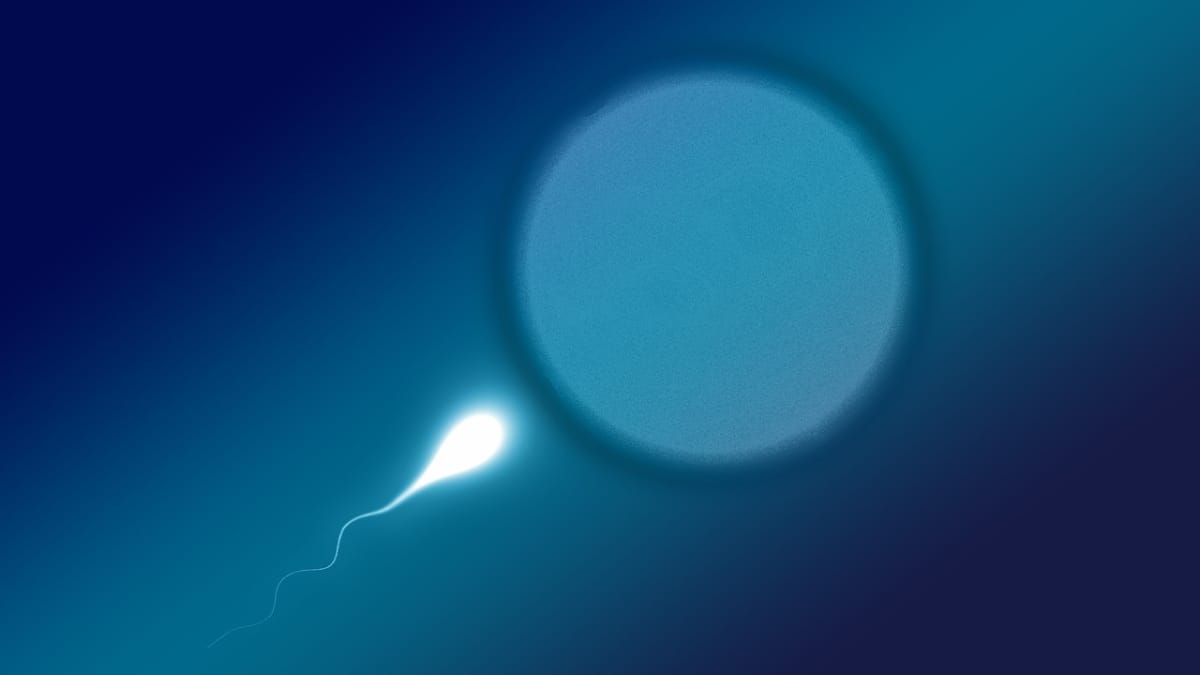
A sperm and an egg come together like a lock and key, new research carried out by scientists in Austria suggests. Their study carries exciting clues about how fertilisation works, what happens when a sperm and egg come together and it might be the exact same phenomenon across the animal kingdom, from fishes to people.
"We discovered this mechanism that's really fundamental across all vertebrates as far as we can tell," co-author Andrea Pauli from the Research Institute of Molecular Pathology in Vienna, said.
The study was published Thursday in the journal Cell.

They analysed zebrafish, mice, and human cells as part of the study which revealed that a lock and key mechanism is at play during fertilisation. Three proteins on the sperm join to form a type of key that unlocks the egg, allowing the sperm to attach.
The study authors further say that it has been this way over millions of years of evolution.
Nobel Prize winning tech helped make revelation
)
Nigeria: Protesters take to the streets, police fire shots
&im=FitAndFill=(700,400))
Meet top 5 Indian batters with fastest T20I centuries
)
Mark Carney mimics Trump in hilarious moment over C$70 billion clean-energy investment; room erupts in laughter
)
Gaza under attack: Health chief's son killed in IDF strikes
)
Inspired by podcasts and Meghalaya murder case: How Siya allegedly planned Ketan Agarwal’s Lohagad fort murder
)
Pentagon revives mandatory testosterone testing for male troops aged 30 and above
&im=FitAndFill=(700,400))
‘Not the US or China’: These are the countries leading the world in arable land
)
Africa is splitting, and a lot sooner than estimated, giving way to a new ocean
)
Trump wants to rename ‘Artificial Intelligence’, gives 3 options: Which one would you pick?
)
Arvind Kejriwal, family members, Delhi CM Rekha Gupta get SIR notices
)
The Verdict | When precision fails: US commits war crime in Minab school strike, UN finds
)
Trump announces ‘AI Force’ as debate grows over AI risks and regulation
)
Harry Brook targets long reign at top of T20I rankings after Sri Lanka sweep
)
US-Iran war: Tehran sets seven conditions to re-engage in talks with US
)
Russia's deadly Ukraine strikes kill 2 in Sumy, hit Dnipro mall
)
Trump 2.0: Dark days ahead for America’s ‘imperial presidency’
)
US-Iran war: Tehran draws red lines — seven demands before any peace talks
)
Saudi vs Houthis: Houthis claim missiles & drones used in attack on key Saudi sites
)
9 women found dead near Johannesburg: South Africans rally, demand 'enough' to femicide
)
‘End of my career...’: NSA Doval recalls tense Sikkim mission when China captured Indian intelligence team
)
‘Will go to any extent’: Pakistan vows to defend Saudi Arabia amid Houthi attacks
)
Iran sets 7 conditions to end war with US: What are Tehran’s demands?
)
China may have gained access to US's classified F-35 jets; parts meant for repairs diverted to Hong Kong, sparking Pentagon inquiry
66 years of the Indus Waters Treaty: How India and Pakistan settled a bitter river dispute
)
Flying cars in UAE: Ras Al Khaimah signs deal with Chinese company to test new transport
)
Delhi voter roll shake-up: 3.31 million electors flagged in SIR review
)
Russia holds first parliamentary elections since the beginning of the Ukraine war
)
Cochin shipyard starts building Indian Navy's next-gen missile vessels
)
Russia-Europe tensions: Polish PM warns Russian attacks could test NATO's unity
)
Reacher star Alan Ritchson opens up about alleged blackmail, suicide attempt during difficult period
)
Raphinha hat-trick powers Barcelona to 3-1 win over Sevilla in La Liga
&im=FitAndFill=(700,400))
How many F-35s does Britain, Japan and Israel have?
)
Ed Sheeran addresses Macklemore's removal, Gaza conflict during Philadelphia concert: 'I cannot hide how I feel'
)
Trump defends AI amid growing alarm, announces new 'AI force' and promises an 'AI czar'
)
Trump bans CNN, MS NOW and Politico from White House over ‘FAKE NEWS’
)
Earlier studies had shown the presence of two proteins, one on the surface of the sperm and another on the egg's membrane. Pauli's lab worked with international collaborators and used Google DeepMind's artificial intelligence tool AlphaFold to identify the new protein that works to establish the first molecular connection between sperm and egg.
Also Read:Life might thrive under frozen water on Mars, study says
Notably, the developers of this tool were recently awarded a Nobel Prize in Chemistry.
Pauli says that earlier it wasn't known how the proteins "worked together as a team in order to allow sperm and egg to recognise each other."
Scientists still have more to learn about the sperm and the egg as they are yet to decode how the sperm gets inside the egg after attaching to it.
Pauli says learning more about the fertilisation process in detail can help understand infertility better and develop new birth control methods.

