
&imwidth=800&imheight=600&format=webp&quality=medium "Hidden system, big impact: THIS forgotten organ could predict how long you live, study finds")
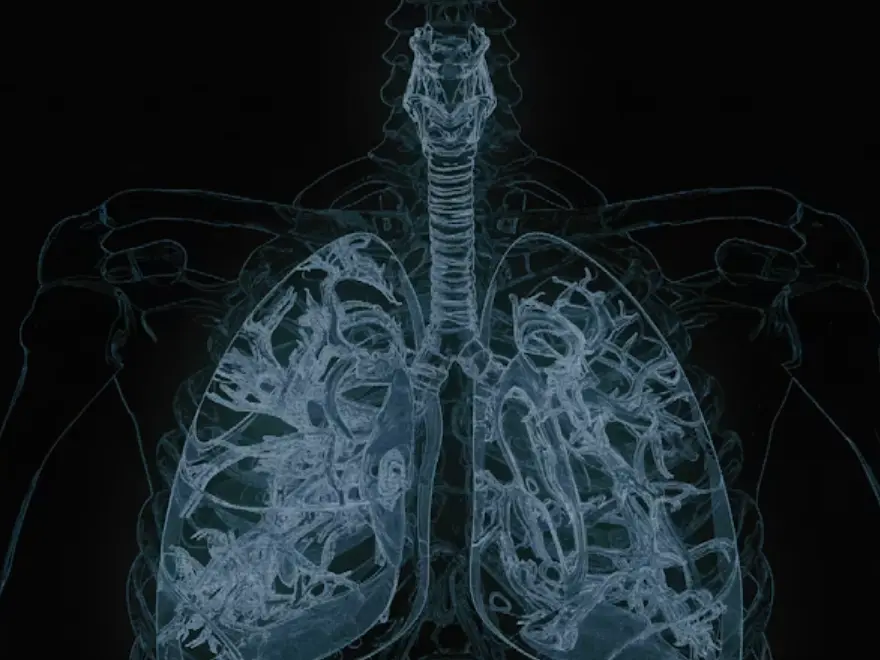
Scientists at Mass General Brigham have discovered that the thymus, a small immune system organ which is believed to lose its relevance after childhood, likely plays a significant role in adult health. Two new studies have revealed that adults with healthier thymuses are expected to live longer and are less likely to develop serious diseases. In addition, they also suggested that thymic health might influence how well cancer patients respond to immunotherapy.
The findings were published in the issue of "Nature and challenge decades of assumptions about the thymus". The results suggested that the organ remains significant throughout adulthood and could eventually assist in preventing diseases, strategies and decisions of cancer treatment.
"The thymus has been overlooked for decades and may be a missing piece in explaining why people age differently, and why cancer treatments fail in some patients," said Hugo Aerts, PhD, corresponding author on the papers and director of the Artificial Intelligence in Medicine (AIM) Program at Mass General Brigham. "Our findings suggest thymic health deserves much more attention and may open new avenues for understanding how to protect the immune system as we age."

How thymus function in our body?
The chest-located thymus trains disease-fighting T cells; however, its post-puberty shrinkage leads scientists to assume it plays a minimal role in adult health. Consequently, large population studies historically ignored the organ. While past research linked T cell diversity to ageing and fading immunity, those studies were small and limited to blood samples.
Breaking this trend, a new, broader study analysed data from over 25,000 adults in a national lung cancer screening trial, alongside more than 2,500 healthy participants from the long-running Framingham Heart Study to better understand the organ's long-term health impact.
Trending Stories
&im=FitAndFill=(700,400))
How fast can the Sukhoi Su-30 fighter jet really fly?
)
South Korea plans for military deployment in Strait of Hormuz amid US pressure
)
Nigerian Navy discovers 99,000 litres of suspected stolen, illegally refined products as it intensifies anti-crude oil theft operations
)
Who is Aditi Paudel? 17-year-old becomes Japan's first literacy ambassador
&im=FitAndFill=(700,400))
Why US tanks can spin their heavy turrets much faster than Russian tanks
)
Man pushes Russian humanoid robot. Watch what happens next
)
US Open 2026: Auger-Aliassime out but Swiatek, Osaka, and Gauff advance into third round
)
Nobel laureate Machado says Venezuela’s ‘illegitimate’ regime has no right to strike US oil deal
)
The Verdict: Peace for Iran, pressure on Afghanistan: Pakistan’s contradictory diplomacy
)
Netherlands shifts 86 tonnes of gold reserve to UK citing geopolitical risks
)
Kenya vs Tata Chemicals: Why President William Ruto ordered company to stop operations
)
Breaking | Vance takes the podium: First White House briefing since Leavitt's exit
)
Indian agencies uncover hawala, shell firms and fake trade used to hide illicit money, FATF says
)
Inside Iran's shadow fleet: How Tehran dodges the US blockade at sea
)
Bangladesh batter Towhid Hridoy creates history with 350 not out in South Africa
&im=FitAndFill=(700,400))
Krishna Janmashtami 2026: From Dhaniya Panjiri to Makhana Kheer- 5 best sweet dishes perfect for celebrating Lord Krishna’s birth
)
ISRO stages comeback with GSLV-F17/EOS-05 success; targets six more launches
)
Lollapalooza India 2027: From Olivia Dean to KATSEYE, check full lineup, dates and tickets
)
‘I wouldn’t call it a war,’ says JD Vance on ongoing conflict with Iran
)
Iran's army conducts drone & missile attack on US bases
)
Happy Krishna Janmashtami 2026 wishes: 30+ messages, quotes, greetings, and WhatsApp status ideas to share
)
Husband uses secret camera to record wife’s affair, wins divorce case, ends up in jail for spying
)
Suvendu Adhikari threatens to cut school aid over refusal to sing full Vande Mataram
)
At least 2 killed in Minneapolis shooting, suspect also dead
&im=FitAndFill=(700,400))
Why Russian fighter jets use bulky, low-pressure tyres compared to US jets
&im=FitAndFill=(700,400))
Why US tanks weigh over 20 tons more than Russian tanks
)
Major AI platforms ChatGPT, Claude, and Grok hit by simultaneous service disruptions
)
NATO troops gather in Arctic, Russia threatens nuclear retaliation
)
Manipur violence: 25 houses torched in Manipur’s Kangpokpi a day after 10 homes were burnt along Imphal-Tamenglong road
&im=FitAndFill=(700,400))
New Friday OTT releases (September 4, 2026): GDN, Dhamaal 4, Jagamae Sangeetham- Watch 6 new movies and TV shows on Netflix, Prime Video and more
)
Iran attacks US bases in Kuwait & UAE, supersecret missile project in focus | Gravitas
)
Influencer shows off what he claims is Apple's first foldable iPhone 18 Ultra
AI Reveals Links to Longevity and Disease Risk
Using AI, the researchers measured the size, structure, and composition of the thymus to evaluate routine CT scans, creating a "thymic health" score. Researchers have also found that people with healthier thymus glands had markedly better long-term health outcomes. Those with higher thymic health scores were about 50% less likely to die from any cause, 63 per cent less likely to die from cardiovascular disease, and 36 per cent less likely to develop lung cancer compared with those with poorer thymic health.
The associations remained strong even after adjusting for age and other health factors. Scientists believe declining thymic health reduces T-cell diversity, weakening the immune system's ability to fight diseases. Chronic inflammation, smoking, and higher body weight were identified as key factors linked to poorer thymic health.
In a separate study, after examining CT scans and clinical outcomes from over 1,200 cancer patients treated with immunotherapy, the team found that patients with healthier thymuses tended to respond better to treatment. They experienced about a 37 per cent lower risk of cancer progression and a 44 per cent lower risk of death, even after adjustment for differences in patients, tumours, and treatment approaches. These findings also underscore a potentially important role, along with previously underrecognised, for the thymus in finding how effectively modern cancer immunotherapies work.
Scientists react to assessing thymic health
Researchers caution that further studies are needed to confirm the findings, and the imaging method used to assess thymic health is not yet suitable for routine clinical use. While lifestyle factors were linked to thymic health, it remains unclear whether changing them can improve thymus function.
Ongoing research is also examining whether incidental radiation exposure during lung cancer treatment affects thymic health and patient outcomes. "Improving our understanding and monitoring of thymic health could eventually help physicians better assess disease risk and guide treatment decisions," said Aerts.

