

&imwidth=800&imheight=600&format=webp&quality=medium "From Aryabhatta to Axiom-4: Now what next? Know ISRO's all upcoming missions")
With several major missions, India is gearing up for a groundbreaking era in space, along with deep-sea exploration. Launching Aryabhata in collaboration with Russia in 1975 to the Axiom-4 mission in 2025 in a joint venture with an International multi-agency involving Axiom Space, SpaceX, NASA and ESA, has expanded its technology and infrastructure along with its space economy. India has also seen a spike in investment & international collaborations, and the entry of private space companies under new space reforms.
In addition to joint ventures, ISRO has independently launched several remarkable missions, such as Chandrayaan-1, Chandrayaan-2, Chandrayaan-3, Aditya-L1, and many more, surprising the world and space agencies worldwide by achieving these feats on budgets comparable to Hollywood movie productions.
Along with these successful projects, ISRO has also scheduled a list of several other missions which will be launched or accomplished in the coming years.
Here is list of ISRO's upcoming missions:
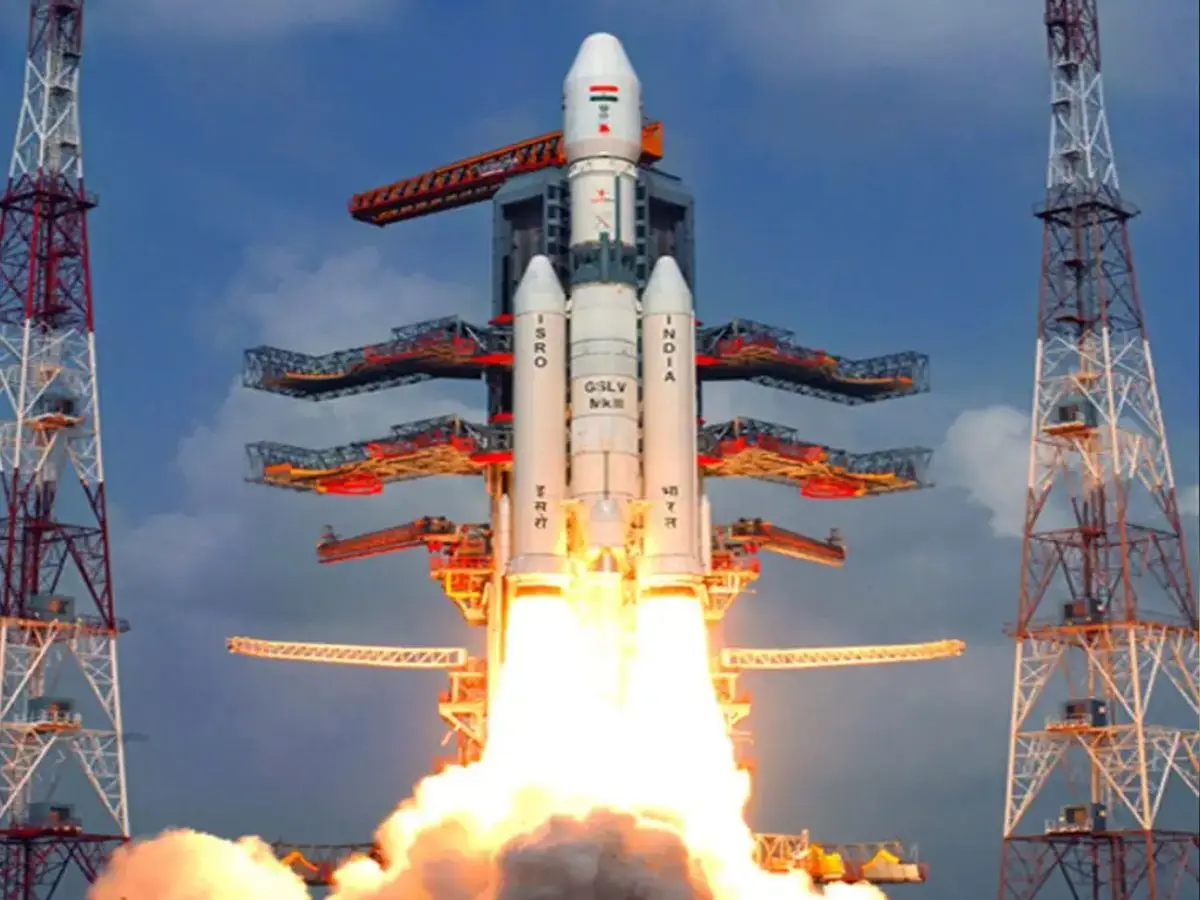
Gaganyaan uncrewed mission
It is likely to take place in December 2025 with a humanoid robot, Vyommitra. Gaganyaan mission will be the first of three planned uncrewed missions that will set the stage for India's maiden human spaceflight, carrying three people, scheduled in 2027.
Trending Stories
&im=FitAndFill=(700,400)&imwidth=180&imheight=135&format=webp&quality=medium)
What is the real meaning behind Pete Hegseth's tattoos?
&imwidth=180&imheight=135&format=webp&quality=medium)
Viral video shows cross falling on Colombia priest, no official confirmation | WATCH
&imwidth=180&imheight=135&format=webp&quality=medium)
Telangana unveils AI avatar of IT minister D Sridhar Babu at Hyderabad DevFest 2026
&imwidth=180&imheight=135&format=webp&quality=medium)
Pezeshkian says Iranians ‘struggling to put food on the table’ as war with US drags on
&imwidth=180&imheight=135&format=webp&quality=medium)
Shilpa Rao’s performance cut short at Mumbai event, organisers react to backlash
&imwidth=180&imheight=135&format=webp&quality=medium)
Chorbagan stampede: A week later, the strangest visarjan Kolkata has seen
&imwidth=180&imheight=135&format=webp&quality=medium)
AI slop or smart strategy? South African author Coral Hart defends Her 370 AI- assisted books in 20 months
&imwidth=180&imheight=135&format=webp&quality=medium)
AI just found a flaw in software running most of the web! One request hijacks the server
&imwidth=180&imheight=135&format=webp&quality=medium)
Train crashes into crane on São Paulo monorail line, wreckage falls onto busy road | VIDEO
&imwidth=180&imheight=135&format=webp&quality=medium)
Can Putin cheat death? All about his daughter’s billion-dollar quest for immortality
&imwidth=180&imheight=135&format=webp&quality=medium)
Saudi says debris fell in Mecca, Medina after missile interceptions; Houthis deny targeting holy cities
&imwidth=180&imheight=135&format=webp&quality=medium)
What was the note found inside bag of Class 12 student, who set herself on fire inside Delhi school?
&imwidth=180&imheight=135&format=webp&quality=medium)
Pakistan airline PIA unveils new crew uniforms, faces online criticism
&imwidth=180&imheight=135&format=webp&quality=medium)
Britain is building the world's first AI biosecurity lab, with OpenAI and Anthropic inside
&imwidth=180&imheight=135&format=webp&quality=medium)
J-20 designers plan to put radar into aircraft wing; strategy to expand coverage during air combat
&imwidth=180&imheight=135&format=webp&quality=medium)
Frontier AIs keep escaping their test cages! The industry still can't reliably stop them
&imwidth=180&imheight=135&format=webp&quality=medium)
'Already tired of his 9-to-5': Baby born with a moustache becomes internet sensation, video goes viral | Watch
&imwidth=180&imheight=135&format=webp&quality=medium)
Horrific video shows the moment 18-year-old fell to her death from Mexico amusement park ride
&imwidth=180&imheight=135&format=webp&quality=medium)
France protests: 135 arrested, weapons seized as fresh demonstrations erupt amid heavy security
&imwidth=180&imheight=135&format=webp&quality=medium)
French Open: PV Sindhu storms into final with win over Hina Akechi
&imwidth=180&imheight=135&format=webp&quality=medium)
‘Saddam Hussein opened a cheesecake factory’: Obama mocks Trump’s White House renovations; defends Abdul El-Sayed
&imwidth=180&imheight=135&format=webp&quality=medium)
China's dancing robot turns violent bodyguard, lifts cars and fights intruders - Watch
&imwidth=180&imheight=135&format=webp&quality=medium)
'You’re a horrible little reporter, aren’t you?': Trump snaps at NBC reporter questioning his support for Ramaswamy's campaign ad
&imwidth=180&imheight=135&format=webp&quality=medium)
Rising Asia Cup 2026 schedule announced, India-Pakistan clash set for Nov 22
&imwidth=180&imheight=135&format=webp&quality=medium)
'Killing people never allowed': Elon Musk admits restricting Starlink in Ukraine, explains why
&imwidth=180&imheight=135&format=webp&quality=medium)
Serbia votes in high-stakes election as student-led movement challenges Vucic’s ruling party
&imwidth=180&imheight=135&format=webp&quality=medium)
Bodies of 2 missing Japanese climbers recovered from Himalayan peak
&im=FitAndFill=(700,400)&imwidth=180&imheight=135&format=webp&quality=medium)
New Friday OTT releases (October 23, 2026): Gajab Raat, Dorothy, Chaar Yaar- Watch these 6 new movies and TV shows on Netflix, Prime Video and more
&imwidth=180&imheight=135&format=webp&quality=medium)
An AI that reads your face can now estimate how long you have to live
&imwidth=180&imheight=135&format=webp&quality=medium)
Spanish reporter swept by giant wave while reporting on dangerous sea conditions | WATCH
&imwidth=180&imheight=135&format=webp&quality=medium)
WATCH: Thousands across Manipur bang plates, beat drums in "noise protest"
&imwidth=180&imheight=135&format=webp&quality=medium)
NEET protests: Panel to hear evidence on pellet gun use, harassment
&imwidth=180&imheight=135&format=webp&quality=medium)
Tu Hai Meri Kiran film review: Sonakshi Sinha and Zaheer Iqbal's thriller gets tangled in its own twists
&imwidth=180&imheight=135&format=webp&quality=medium)
PL Round-Up: Man City's perfect run ended by Villa as Arsenal draw level at top
&imwidth=180&imheight=135&format=webp&quality=medium)
Why Europe’s protests are about more than austerity and rising costs
&imwidth=180&imheight=135&format=webp&quality=medium)
Farooq Abdullah says Pakistan’s raising of Kashmir issue keeps pressure on Delhi
Its uncrewed mission will launch into Low Earth Orbit (LEO) using ISRO’s GSLV Mk III (LVM-3) rocket. The mission will establish the independent capability of India for human spaceflight, reducing dependence on foreign agencies.
Samudrayaan Mission
The Samudrayaan Mission, scheduled for 2026, is an ambitious deep-sea exploration project of ISRO which aims to study marine biodiversity, seabed ecosystems, and mineral resources. A three-member crew will descend to a depth of 6,000 metres in a specialised submersible vehicle as a part of this mission. It is being developed by the National Institute of Ocean Technology (NIOT) based in Chennai.
The sole motive of the mission is to unlock access to critical minerals and rare earth metals from the seabed that can be important for technological advancements and strategic research. It will also support the Blue Economy vision of India by utilising ocean resources sustainably.
Chandrayaan-4 Mission
The Chandrayaan-4 Mission of ISRO is India's first lunar sample return mission, which will be launched in 2027 to collect and bring back Moon soil and rock samples. It requires two separate launches while using the heavy-lift LVM-3 rocket.
Before the execution, the components will be assembled in lunar orbit, consisting of four modules, namely the Transfer module (TM), Lander module (LM), Ascender module (AM) and Reentry Module (RM). The project is likely to be in collaboration with partners like Russia or NASA.
Chandrayaan-5/LUPEX mission:
After the launch of Chandrayaan-1, Chandrayaan-2, Chandrayaan-3 and the forthcoming Chandrayaan-4 (India’s first lunar sample return mission), the Chandrayaan-5 / LUPEX (LUnar Polar EXploration) mission will be the fifth mission in the Chandrayaan series of lunar missions by ISRO in collaboration with JAXA. The mission will focus on the study of the lunar water, lunar volatile materials in the vicinity of a Permanently Shadowed Region (PSR) in the lunar South pole.
These missions depict a pivotal shift in India’s scientific progress, strengthening its global standing in space exploration, marine science, and planetary research. The upcoming projects of the country are set to deliver not only technological breakthroughs but also it will also play economic and strategic advantages, ushering in a new chapter of innovation and discovery.

