
&imwidth=800&imheight=600&format=webp&quality=medium "Exclusive: NASA-ISRO NISAR satellite can survive hits from tiny space rocks")
The NASA-ISRO Synthetic Aperture Radar (NISAR) satellite is a highly sophisticated and precise Earth-imaging system. Costing well over $1.3 billion, this satellite's phenomenal imaging prowess is a result of its 12-meter large radar reflector antenna, which can send thousands of radar beams to Earth and capture their reflection. Made out of a thin and flexible material, this massive radar reflector is stowed carefully before launch and unfurled after reaching space. Though made of a delicate material, this umbrella-like antenna is capable of withstanding the impact of tiny space rocks that could potentially hit it at speeds well over 35,000kmph, a NASA official told WION.
In space, there are millions of man-made debris and naturally occurring micrometeoroids (millimetre-sized space rocks). They travel in space at hypervelocity speeds averaging 10 km/s (35,000kmph). When this space junk collides with spacecraft and satellites, it could potentially cause serious damage or catastrophic failure. This makes NISAR's massive 12-meter antenna quite a vulnerable target, but such risks have been factored in while building the most expensive civilian-use Earth-imaging satellite.
"The reflector antenna (mesh) isbuilt to be robust against micrometeoroids.At times, micrometeoroids can punch tiny holes on the micrometre or millimetre scale, but even in that event, the reflector is designed to hold its shape and continue doing its job," Dr. Paul Rosen, NASA-JPL's Project Scientist for NISAR told WION's Sidharth.M.P. An analysis deemed that this risk was acceptable, he added.

Why is NISAR placed in a sun-synchronous polar orbit?
Conventional Earth-imaging satellites click detailed colour photos of Earth, very similar to what a high-end camera does. As in the case of photography, the most detailed images from conventional Earth-imaging satellites are obtained during the daylight hours. To ensure repeated and reliable imagery of its target area in daylight conditions, such conventional Earth-imaging satellites are placed in orbits that are in sync with the Sun's angle. This is known as a Sun-Synchronous Polar orbit (SSPO).
In comparison, a radar-imaging satellite works in a totally different manner. Instead of giving an optics-based picture (like a photograph), radar satellites constantly beam radar waves onto the Earth. The features on Earth's surface (buildings, trees, mountains, water bodies, roads, glaciers) reflect these radar waves back to the satellite. By collecting and processing the reflected radar waves, radar-imaging satellites deliver imagery during day and night, in all weather conditions. Due to their all-weather, round-the-clock imaging capability, radar-imaging satellites don't need to be placed in SSPO for repeated daylight imagery.
Trending Stories
)
Nigerian Navy seizes 10,000 litres of suspected illegal fuel in Rivers State crackdown
)
Did India risk its US trade deal despite softer stance at BRICS?
)
Iran, India agree to deepen humanitarian and political ties, President Pezeshkian says
)
Who is Kalyan Bainsla, accused in the Gurugram hit-and-run case involving woman biker?
)
'She married her brother': Ilhan Omar faces criminal probe over immigration fraud claims
&im=FitAndFill=(700,400))
New OTT releases this week (September 14-20, 2026): Lust Stories 3, Waiting Hai, Irumudi- 5 new titles coming on Netflix, Prime Video and more
)
Extreme warming in Indian Ocean added 695 billion tons of ice to Antarctica ice sheet
)
UK man admits drugging, raping wife for 20 years in shocking abuse case
)
Emmys 2026: Matthew Rhys wins Best Actor twice, sets historic 78-year record
)
Indian-origin woman, Nepali-American friend crushed to death by subway train in New York
)
Plane carrying prominent figure crashes at Libya’s Misrata airport: Report
)
Ecstasy tablets are rage in 'drug haven' Libya | Gravitas
)
Turkish Airlines plane flies through a storm three times, triggering severe turbulence
)
Trump downplays China's alleged 'help' to Iran in strike on Jordan base | Gravitas
)
Legendary costume designer Bob Mackie dies at 87: A look back at his iconic legacy
)
Emmys 2026 In Memoriam: Catherine O’Hara honoured by on-screen children Macaulay Culkin, Annie Murphy, Dan Levy; Dolly Parton, Rob Reiner remembered
)
Pakistan puts Pak Rs 70 lakh bounty on UN terrorist Masood Azhar; move draws skepticism in Delhi
)
Dodgers beat Reds for playoff berth in bid for third consecutive World Series
)
Saudi Arabia discovers 110 million tonnes of Uranium-rich ore in Madinah region
)
BCCI VP Rajeev Shukla says Mohsin Naqvi 'did not object' India refusing trophy from ACC chief
)
'Now Trump is copying us': Shivakumar links US $5,000 plan to Congress guarantees
)
'Huge destructive power': North Korea calls its latest missile launches 'live-fire drill' even as US dismisses 'immediate threat'
)
‘US ensuring global energy supplies’: Trump demands reimbursement for securing Strait of Hormuz
)
Gurugram hit and run case: Police arrest car driver Kalyan Bainsla, book him for attempt to murder
)
Trump loses Supreme Court battle over mail ballots ahead of US midterms: What happened?
)
Sent home midway from UK tour, Pakistan's Salman Agha hits 300* in domestic return
)
Emmy Awards 2026: Widow's Bay and The Pitt win in lead categories- check out the complete list of winners
&im=FitAndFill=(700,400))
Why Chinese PL-15 air-to-air missiles use dual-pulse motors compared to European interceptors
)
Emmys 2026: Michael J Fox honoured with Bob Hope Humanitarian Award for Parkinson’s advocacy
)
What is Hyrox, in news for athlete who soiled herself, but kept running and using common equipment?
&im=FitAndFill=(700,400))
Emmys 2026 Red Carpet: Zendaya, Nicole Kidman and Julia Garner lead the glamour peak
)
Ukraine strikes Syzran Oil Refinery deep inside Russia, fires erupt
)
Former Pak PM Imran Khan's ex-wife Jemima Goldsmith marries Australian financier: Who is Cameron O'Reilly
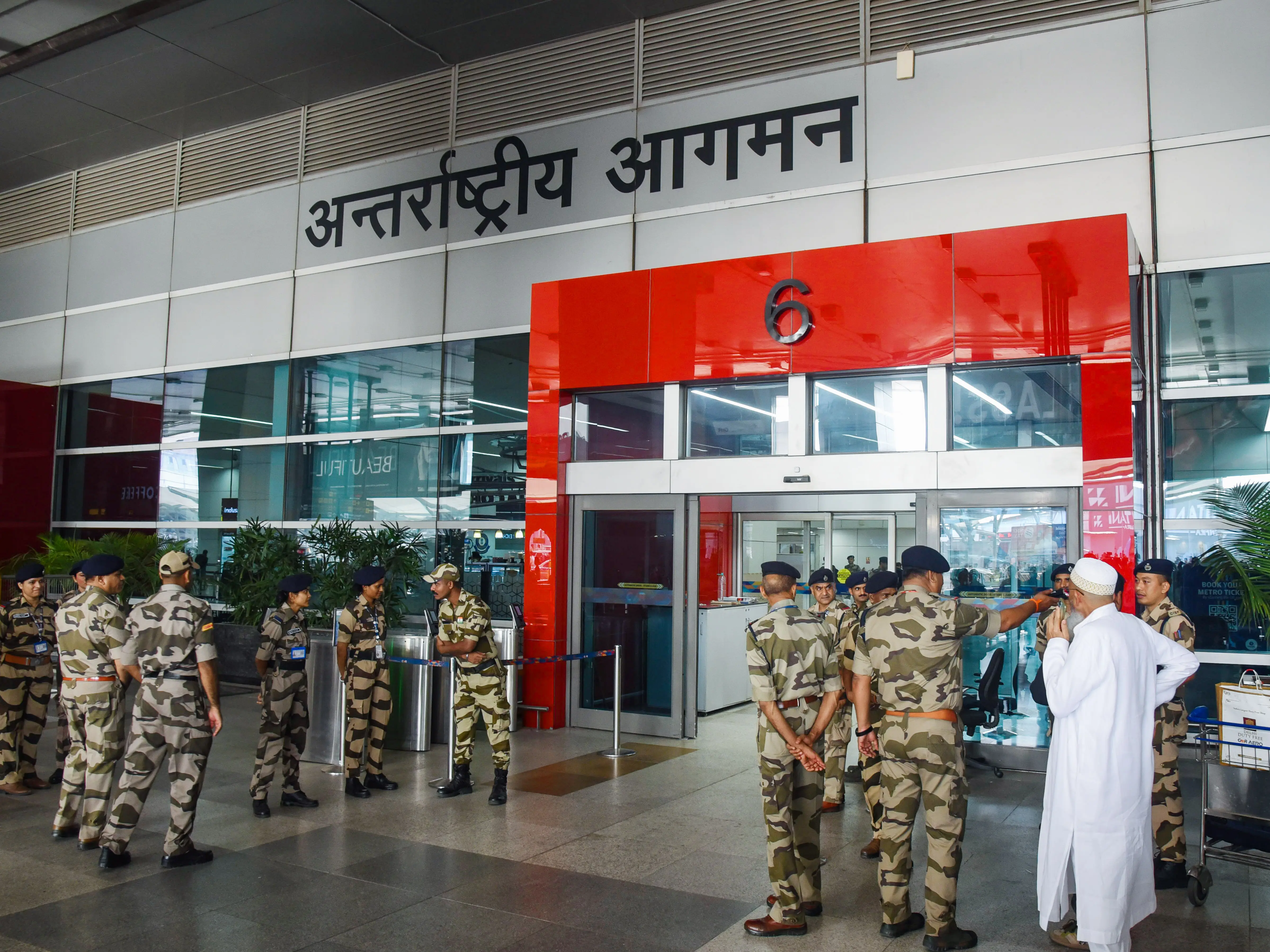)
3 Italians fly from Delhi to Munich without immigration clearance; Air India gets notice on major security lapse
)
UPI payments up to Rs 2,000 to stays free, but bigger transactions may soon cost you: Govt
)
China thinned Himalayan troop presence in 2025, India defence report says; terms border situation 'stable'
)
Russia proposes to build 360 kmph Ivolga FG trains in India: What happened on sidelines of BRICS
)
Video of Pakistani lawmaker struggling to read English tribute to Jinnah goes viral - WATCH
)
Delhi govt to roll out ₹13,820 crore development projects under Seva Sankalp Abhiyan: CM Rekha Gupta
)
800 million years old - Scientists discover 'fingerprints' of supercontinent Gondwana in ancient rocks
However, NISAR is being placed in an SSPO. When queried about the reasoning behind this, Dr. Rosen told WION that NISAR's Sun-synchronous polar orbit at 6 am and 6 pm provides uniform power to its solar panels, minimises exposure to the ionosphere (which can cause disruptions), and sets consistent times of day for data collection, which is important for science.
24/7 Earth-monitoring for several years by NISAR
Typically, an Earth-imaging satellite would have to capture images only when passing over its area of interest or region of study. When not flying over the area of interest, the imaging equipment can be turned off and put to rest. That's where NISAR stands out - its job is to capture earth imaging data round-the-clock, over its operational life of more than three years. NASA says NISAR will be capable of mapping the Earth's land and ice-covered surface twice in a period of twelve days. While NISAR is expected to have a minimum mission life of three years, it is likely to perform its duties for five years or longer. Satellite life depends on how much fuel it carries on board, the design life of its electronic components, and other technical parameters.
NISAR is the first satellite mission to collect radar data in two microwave bandwidth regions, called the L-band and the S-band, to measure changes of our planet’s surface, including movements as small as a centimetre. This allows the mission to observe a wide range of Earth processes, from the flow rates of glaciers and ice sheets to the dynamics of earthquakes and volcanoes. NISAR will map the entire globe in 12 days.
NISAR to be launched at 5:40 pm, Indian time
The countdown to the billion-dollar NASA-ISRO Synthetic Aperture Radar satellite launch commenced at 14:10 hours Indian time, Tuesday, (July 29) at the Indian spaceport Satish Dhawan Space Centre (SDSC-SHAR). At 17:40hrs, Indian time, Wednesday, 30th July, the Indian GSLV-F16 rocket carrying the Earth-imaging satellite is scheduled to liftoff from the second launchpad of India's lone spaceport.
About the NISAR satellite and the GSLV rocket
The NISAR satellite weighs 2,400kg and sits atop ISRO's 52-meter-tall GSLV rocket, a three-staged launch vehicle that is powered by solid, liquid, and cryogenic fuels. The rocket is expected to place the satellite into orbit almost 19 minutes after liftoff, around 18:00 hours IST.
Costing well over a billion US dollars, the NISAR satellite is the first such collaborative mission between the Indian and American space agencies. While NASA has revealed that they've spent $1.2bn on NISAR, ISRO has not officially revealed its financial contribution. Estimates say ISRO is likely to have spent around $100mn. The vast difference in expenditure is said to be owing to the differences in accounting.
Notably, the estimated $1.3bn (₹11,294cr approx) cost of the NISAR mission is almost as much as the annual budget of the Indian Space Agency, ISRO. In recent years, ISRO's annual budget has hovered between $1.3 and $1.5 billion. Therefore, it would be fair to say that there is a lot riding on ISRO's GSLV rocket-literally and figuratively.
