Shehbaz Sharif misuses UNGA speech to peddle Kashmir propaganda, slam India’s Indus Treaty move — stays silent on Pakistan terror links

&imwidth=600&imheight=450&format=webp&quality=medium "Shehbaz Sharif misuses UNGA speech to peddle Kashmir propaganda, slam India’s Indus Treaty move — stays silent on Pakistan terror links")
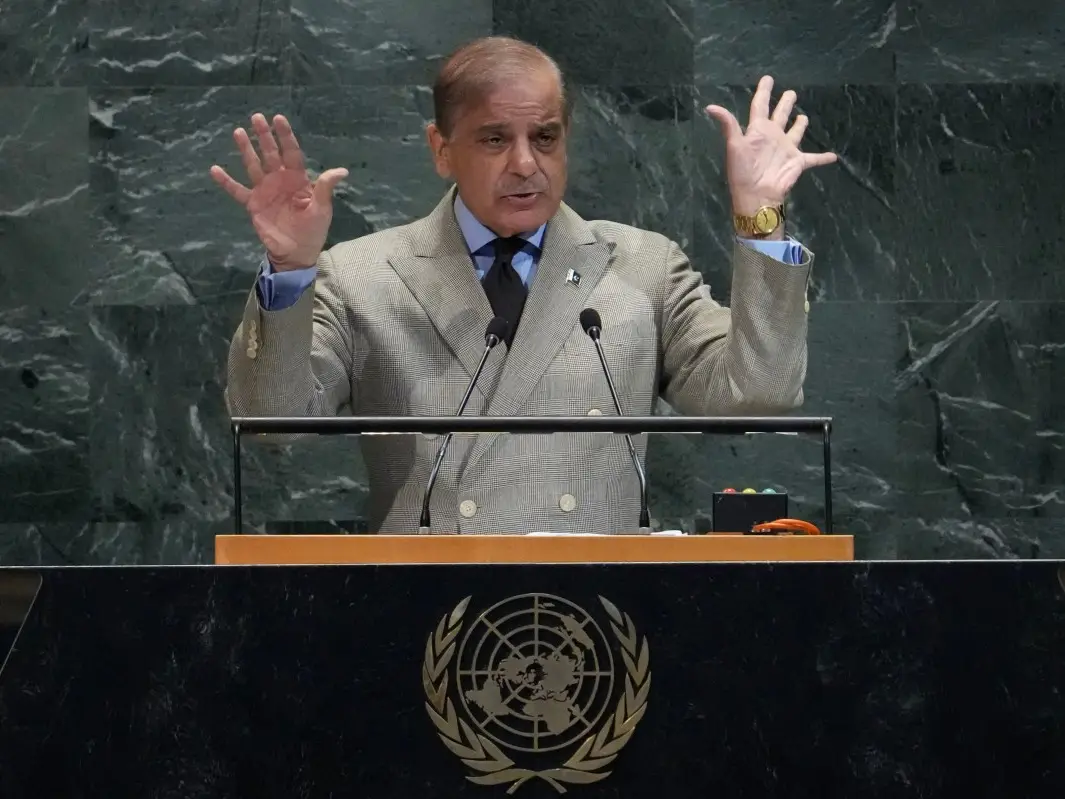
Pakistan's Prime Minister Muhammad Shehbaz Sharif speaks during the General Debate of the United Nations General Assembly at UN headquarters in New York City on September 26, 2025. Photograph: (AFP)
At the United Nations General Assembly (UNGA) on Friday, Pakistan Prime Minister Shehbaz Sharif used his speech to slam India's decision to suspend the Indus Waters Treaty, labelling the action as "illegal". He also mentioned Kashmir, saying this…
Pakistan Prime Minister Shehbaz Sharif on Friday (Sep 26) used his address at the United Nations General Assembly (UNGA) to cry foul about New Delhi's decision to suspend the Indus Waters Treaty and accuse India of violating the agreement. Calling the action “illegal” and a threat to peace in the region, Sharif, who also used his speech to pander to US President Donald Trump, made no mention of India’s central demand — that Islamabad must take credible steps to stop cross-border terrorism before the treaty was reinstated. New Delhi announced the suspension earlier this year as a countermeasure after the Pahalgam terror attack in April killed 26 civilians, an attack India has blamed on groups operating from Pakistani soil.
Sharif labels abeyance an 'act of war'
“India's unilateral and illegal attempt to hold the Indus Water Treaty in abeyance defies the provisions of the treaty itself as well as the norms of International law,” Sharif said. “Pakistan has made it abundantly clear that we will defend the inseparable right of our people on these waters. To us, any violation of the treaty represents an act of war,” he added.
Sharif also used his UN platform to once again ignore India's sovereignty and borders, and raised the issue of Kashmir, promising that Pakistan would continue to back the region. “I wish to assure Kashmiri people that I stand with them, Pakistan stands with them, and one day soon India's tyranny in Kashmir will come to a halt,” he declared.
Also read | Melania Trump snubs Olena Zelenska at UNGA; ignores Ukrainian first lady’s plea for abducted children
Trending Stories
&imwidth=280&imheight=210&format=webp&quality=medium)
&imwidth=280&imheight=210&format=webp&quality=medium)
&imwidth=280&imheight=210&format=webp&quality=medium)
&imwidth=280&imheight=210&format=webp&quality=medium)
&imwidth=280&imheight=210&format=webp&quality=medium)
&imwidth=280&imheight=210&format=webp&quality=medium)
&imwidth=280&imheight=210&format=webp&quality=medium)
&imwidth=280&imheight=210&format=webp&quality=medium)
&imwidth=280&imheight=210&format=webp&quality=medium)
&imwidth=280&imheight=210&format=webp&quality=medium)
&imwidth=280&imheight=210&format=webp&quality=medium)
&imwidth=280&imheight=210&format=webp&quality=medium)
&imwidth=280&imheight=210&format=webp&quality=medium)
&imwidth=280&imheight=210&format=webp&quality=medium)
&imwidth=280&imheight=210&format=webp&quality=medium)
&imwidth=280&imheight=210&format=webp&quality=medium)
&imwidth=280&imheight=210&format=webp&quality=medium)
&imwidth=280&imheight=210&format=webp&quality=medium)
&imwidth=280&imheight=210&format=webp&quality=medium)
&imwidth=280&imheight=210&format=webp&quality=medium)
&im=FitAndFill=(700,400)&imwidth=280&imheight=210&format=webp&quality=medium)
&imwidth=280&imheight=210&format=webp&quality=medium)
&imwidth=280&imheight=210&format=webp&quality=medium)
&imwidth=280&imheight=210&format=webp&quality=medium)
&imwidth=280&imheight=210&format=webp&quality=medium)
&imwidth=280&imheight=210&format=webp&quality=medium)
&imwidth=280&imheight=210&format=webp&quality=medium)
&imwidth=280&imheight=210&format=webp&quality=medium)
&imwidth=280&imheight=210&format=webp&quality=medium)
Indus Waters Treaty
The Indus Waters Treaty, signed in 1960 with World Bank mediation, has long been described as one of the most enduring agreements between the two nuclear-armed neighbours. It divided control of six rivers in the Indus basin: the Ravi, Beas, and Sutlej to India, and the Indus, Jhelum, and Chenab to Pakistan. Despite wars and decades of hostilities, the treaty has survived.
India’s government has defended its decision to put the treaty on hold, saying Pakistan has consistently manipulated the mechanism of arbitration to distract from its sponsorship of terrorism. Officials in New Delhi maintain that placing the treaty in abeyance is within India’s sovereign rights under international law, and have linked any future revival of the agreement to “verifiable cessation” of cross-border terrorism.

