Guardians of the frontier, protectors of nature: An insider's account of the Indian army and veterans rejuvenating the Thar desert

&imwidth=600&imheight=450&format=webp&quality=medium "Guardians of the frontier, protectors of nature: An insider's account of the Indian army and veterans rejuvenating the Thar desert")
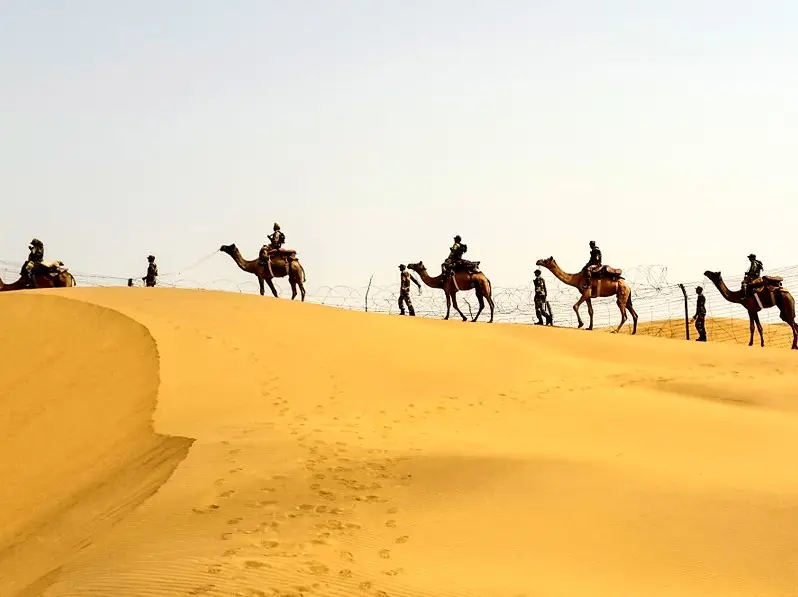
Representational Image Photograph: (creative commons)
Indian Army veterans, the Amaraah Foundation and local authorities transformed a wildlife rescue centre in Bikaner, highlighting how military expertise is supporting conservation in Rajasthan's Thar Desert.
When we hang up our uniforms, the oath to serve the nation does not expire; it merely finds a new canvas. In the scorching expanse of the Thar Desert, where temperatures regularly breach the 50-degree mark, a quiet revolution is taking place. It is a story of jointsmanship and civil-military liaison, in which the Indian Army and its veterans have stepped up to serve as the ultimate shield for our nation's most vulnerable: the wildlife of the desert ecosystem.
Healing the Lifeline of the Desert
My journey into this latest chapter began when, in May 2026, Amaraah Foundation, New Delhi, led by its deeply compassionate, animal-loving Managing Trustee, Mrs Jyotsana Sharma, expressed a desire to assist DCF Sandeep K. Chalani. The challenge was clear. His Wildlife Rescue Centre in Bikaner desperately needed medical succour and permanent assets for distressed animals. Amaraah Foundation had to enable it. As the CSR Consultant for the Foundation, it fell to me to bridge the gap between intent and execution.
The Foundation is funded entirely as a corollary of a multi-business Select Group, New Delhi, led by her husband, the equally and exceptionally compassionate Chairman and MD, Mr Arjun Sharma. Its core work is the daily feeding, medical care, and sterilisation of over 500 stray dogs and cats across NCR, besides support to Gaushalas and bird-rescue NGOs.
It is, in every sense, a voice for abandoned animals in distress. Amaraah Foundation is itself just one strand of this family’s much wider legacy of giving. Their philanthropy spans the Inder Sharma Foundation, which has granted nearly 250 scholarships in Travel and Tourism education; the Pandit Kanshi Ram & Pandit Kripa Ram Charitable and Welfare Trust, which has run a free rural dispensary in Punjab since 2006 and enabled 1,654 cataract surgeries for the financially humble rural population of Gurdaspur; personal support to The Earth Saviours Foundation for over 1,200 abandoned elderly and destitute individuals; outreach to NGO Aarohi in Uttarakhand, a 300 Native tree forest in the lower Aravallis at Manesar, the Rotary Naqshband Institute for the Physically Challenged, and various children's cancer-care and blind-welfare organisations.
It is this same ethics of quiet, sustained service that shaped how swiftly Bikaner's rescue centre came together, not as an isolated gesture, but as one more chapter in the family's decades-old habit of showing up for those who cannot ask. Leveraging the unbreakable bonds of our military brotherhood, I reached out to a Senior Engineer Officer, who was my ex-cadet from my days as Adjutant at the National Defence Academy (NDA) and is now also my Echo Squadron type.
Trending Stories
&imwidth=280&imheight=210&format=webp&quality=medium)
&imwidth=280&imheight=210&format=webp&quality=medium)
&imwidth=280&imheight=210&format=webp&quality=medium)
&imwidth=280&imheight=210&format=webp&quality=medium)
&imwidth=280&imheight=210&format=webp&quality=medium)
&imwidth=280&imheight=210&format=webp&quality=medium)
&imwidth=280&imheight=210&format=webp&quality=medium)
&imwidth=280&imheight=210&format=webp&quality=medium)
&imwidth=280&imheight=210&format=webp&quality=medium)
&imwidth=280&imheight=210&format=webp&quality=medium)
&imwidth=280&imheight=210&format=webp&quality=medium)
&imwidth=280&imheight=210&format=webp&quality=medium)
&imwidth=280&imheight=210&format=webp&quality=medium)
&imwidth=280&imheight=210&format=webp&quality=medium)
&imwidth=280&imheight=210&format=webp&quality=medium)
&imwidth=280&imheight=210&format=webp&quality=medium)
&imwidth=280&imheight=210&format=webp&quality=medium)
&imwidth=280&imheight=210&format=webp&quality=medium)
&imwidth=280&imheight=210&format=webp&quality=medium)
&imwidth=280&imheight=210&format=webp&quality=medium)
&imwidth=280&imheight=210&format=webp&quality=medium)
&imwidth=280&imheight=210&format=webp&quality=medium)
&imwidth=280&imheight=210&format=webp&quality=medium)
&imwidth=280&imheight=210&format=webp&quality=medium)
&imwidth=280&imheight=210&format=webp&quality=medium)
&imwidth=280&imheight=210&format=webp&quality=medium)
&imwidth=280&imheight=210&format=webp&quality=medium)
&im=FitAndFill=(700,400)&imwidth=280&imheight=210&format=webp&quality=medium)
&imwidth=280&imheight=210&format=webp&quality=medium)
&imwidth=280&imheight=210&format=webp&quality=medium)
&imwidth=280&imheight=210&format=webp&quality=medium)
&imwidth=280&imheight=210&format=webp&quality=medium)
&imwidth=280&imheight=210&format=webp&quality=medium)
The response was classic Indian Army--swift, precise, and efficient. Within 48 hours, a representative from the Bikaner Engineers had delivered an exceptionally detailed site report. A local contractor of repute was engaged, and through daily remote monitoring, we converted an abandoned animal mortuary into a fully equipped, modern Treatment Room by May 31.
By July 2, 2026, a brand-new Recovery Room stood beside it, built precisely to DCF Chalani's specifications. A quarterly medicine support package worth ₹20,000 was also assured, and has been delivered on schedule for the quarter ending September 2026.
This effort mirrors parallel initiatives by the Army's Konark Corps, which recently desilted abandoned desert water structures, transforming dry terrain into what locals now call a "lifeline of blooms" for chinkaras, desert foxes, and migratory birds.
A Nationwide Legacy of Green Warriors:
What we achieved in Bikaner is part of a much larger, time-honoured tradition. As veterans, we are uniquely positioned to lead ecological conservation across India:
The Ecological Task Force (ETF): For decades, the Territorial Army's ETF — manned almost entirely by military veterans — has been India's premier green force. From stabilising shifting sand dunes along the Indira Gandhi Canal in Rajasthan to reforesting the degraded hills of Mussoorie, these veterans have planted millions of trees, turning barren landscapes into thriving ecosystems.
The Ladakh Ecological Conservation Force: More recently, in the fragile high-altitude cold desert of the north, veterans have been mobilised into specialised units to combat illegal off-roading, prevent habitat destruction, and protect endangered species like the snow leopard and the black-necked crane. Whether on active duty or in veteran life, our military training in discipline, logistical expertise, and sheer willpower makes us natural guardians of Mother Nature.
The collaboration between Amaraah Foundation, local Bikaner authorities and the Indian Army proves that when the spirit of jointsmanship is applied to conservation, we don't just protect borders, we protect universal life itself.