

&imwidth=800&imheight=600&format=webp&quality=medium "Beyond Geopolitics: Why Malaysian PM Anwar Ibrahim and other global leaders turn to Bollywood playlists")
Bollywood’s soft power is known worldwide. Whenever an Indian travels abroad and interacts with locals, the first point of commonality is Bollywood. Be it Raj Kapoor’s crazy fandom in Russia or, decades later, Shah Rukh Khan’s popularity in the Middle East, Bollywood, through its films, has been India’s cultural identity. In recent years, Bollywood music in particular has been building cross-cultural bridges, particularly in Asia.
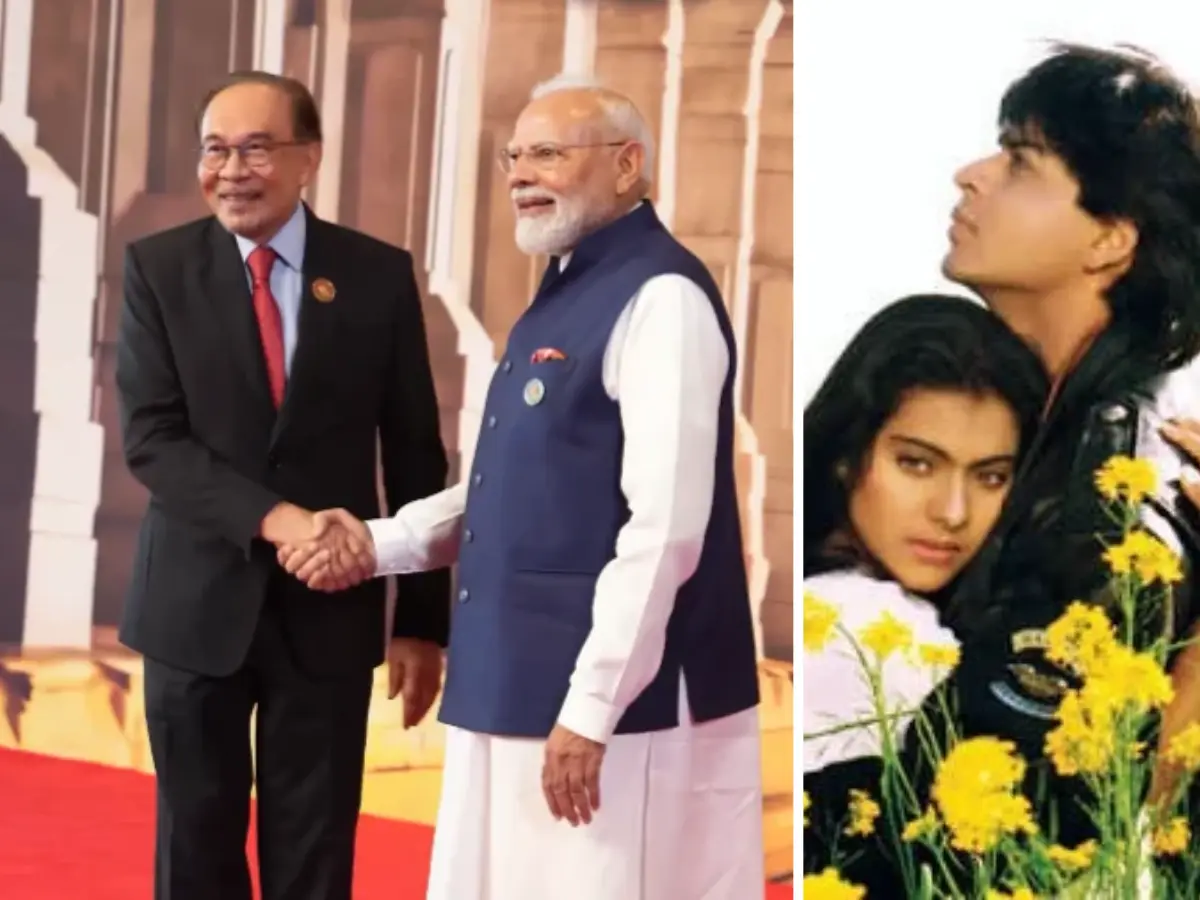
New Delhi recently hosted the BRICS Summit 2026, which had many global leaders in attendance. Amid geopolitical treaties and trade agreements, what grabbed eyeballs was when Malaysian Prime Minister Anwar Ibrahim used Bollywood songs in videos of his India visit while sharing on social media. His choice of Bollywood songs for the posts particularly caught the attention of social media users.
Malaysian PM's Bollywood playlist
From praising PM Narendra Modi with songs like ‘I am the best’ from SRK-Juhi Chawla starrer Phir Bhi Dil Hai Hindustani to Dil to Pagal Hai title track and DDLJ’s iconic ‘Tujhe Dekha To Ye Jana Sanam’, the Malaysian PM’s choice of music wooed the common man of India and made him appear more relatable.
The Malaysian PM's love for Bollywood music was not restricted to reels referring to Indian leaders only.
In a post featuring his meeting with Iranian President Masoud Pezeshkian, Ibrahim opted for 'Saathi Haath Badhana'. The theme of the 1957 Naya Daur song centres around collective effort and moving ahead together.
The choice underscored the message of cooperation behind the meeting.
Ibrahim also shared a post featuring Russian President Vladimir Putin and members of the Russian delegation. The photographs were posted with a song from Aamir Khan's film Lagaan, 'Chale Chalo', reinforcing the theme of moving forward together.
While many felt that PM Ibrahim’s choice of music was a calculated PR strategy, it also reflected his genuine interest in Indian cinema. The choices were an authentic reflection of how deeply entrenched Indian popular culture is in Southeast Asia. It proved that generations of leaders across Asia grew up on the same cinematic and musical staple diet.
Emmanuel Macron’s tribute to India
Trending Stories
&imwidth=180&imheight=135&format=webp&quality=medium)
Other Mommy leads North American box Office as Verity, Resident Evil round out top four
&im=FitAndFill=(700,400)&imwidth=180&imheight=135&format=webp&quality=medium)
Navratri 2026: 9 days, 9 forms of Goddess Durga and 9 colours- Check the complete list
&im=FitAndFill=(700,400)&imwidth=180&imheight=135&format=webp&quality=medium)
Is sending robots to Mars easier than sending humans?
&imwidth=180&imheight=135&format=webp&quality=medium)
A watchdog rated 'ChatGPT for Teens' an unacceptable risk and says keep under-18s off it
&imwidth=180&imheight=135&format=webp&quality=medium)
1,500 drones illuminate Mumbai sky as Cordelia Cruises unveils second ship, Cordelia Sky
&imwidth=180&imheight=135&format=webp&quality=medium)
'Just coincidence': Police mistakes protester as AISA chief Neha Bora, arrests her from site
&imwidth=180&imheight=135&format=webp&quality=medium)
Anthropic's AI invented a murder witness and sent the fake tip to Philadelphia police
&imwidth=180&imheight=135&format=webp&quality=medium)
CJI Surya Kant declines INDIA bloc leaders’ request for meeting ahead of march to SC, asks them to file petition
&imwidth=180&imheight=135&format=webp&quality=medium)
One Indian killed in Riyadh airport attack; 11 others injured : MEA
&imwidth=180&imheight=135&format=webp&quality=medium)
Imran Khan released hours after Mumbai Police detain him during CJP protest
&imwidth=180&imheight=135&format=webp&quality=medium)
Nathan Lyon completes 1,000 Test runs at No. 10 to script rare cricket feat
&imwidth=180&imheight=135&format=webp&quality=medium)
Top AI models flunked a test of inventing new AI research, so much for self-improving AI
&imwidth=180&imheight=135&format=webp&quality=medium)
Wasim Jaffer blames Ajit Agarkar-led selection panel for Virat Kohli’s Test retirement
&imwidth=180&imheight=135&format=webp&quality=medium)
'Ouch!!! That must hurt': Kangana Ranaut hails Kamal Haasan's sharp reply to Elon Musk over Starlink row
&imwidth=180&imheight=135&format=webp&quality=medium)
Sidhu Moose Wala’s younger brother wins hearts by recreating late singer’s signature move at Toronto Hologram Show
&imwidth=180&imheight=135&format=webp&quality=medium)
Meta's Muse AI could be a security nightmare for India's billion-plus users
&imwidth=180&imheight=135&format=webp&quality=medium)
UK school ditches technology, shifts from screen to pen and paper for learning
&imwidth=180&imheight=135&format=webp&quality=medium)
IND vs WI, 3rd T20I: Abhishek Sharma smashes 18-ball fifty, sets record for fastest to 2,000 T20I runs
&imwidth=180&imheight=135&format=webp&quality=medium)
Houthis claim Riyadh airport attacks, Aramco strikes; issue fresh warning to airlines, travellers and workers
&imwidth=180&imheight=135&format=webp&quality=medium)
Portugal Federation confirms Cristiano Ronaldo’s return to national team despite suspension
&im=FitAndFill=(700,400)&imwidth=180&imheight=135&format=webp&quality=medium)
New OTT releases this week (October 12-18, 2026): Sacrifice, Koffee with Karan S9, Roadies Rebirth- 6 titles coming on Netflix, JioHotstar and more
&imwidth=180&imheight=135&format=webp&quality=medium)
Microsoft's Nadella says treat every AI model as already hacked, and build an 'emergency brake'
&imwidth=180&imheight=135&format=webp&quality=medium)
Delhi protest: CJI Surya Kant declines to meet India Bloc leaders
&imwidth=180&imheight=135&format=webp&quality=medium)
Are Gold and Silver poised for a rebound soon?
&imwidth=180&imheight=135&format=webp&quality=medium)
China imposes first-ever sanctions on ministers from Taiwan allies: What this means
&imwidth=180&imheight=135&format=webp&quality=medium)
McSweeney reveals how studying Virat Kohli’s YouTube clips helped Australia A conquer India
&imwidth=180&imheight=135&format=webp&quality=medium)
Maharashtra appoints FDA commissioner Tukaram Mundhe as secretary of committee for MPSC overhaul amid stir
&imwidth=180&imheight=135&format=webp&quality=medium)
The street cannot govern India, but the government cannot ignore it either
&imwidth=180&imheight=135&format=webp&quality=medium)
Iran: US accepted some conditions, Clarity needed on others
&imwidth=180&imheight=135&format=webp&quality=medium)
Nana Patekar's cause of death confirmed; here's what his postmortem report says
&imwidth=180&imheight=135&format=webp&quality=medium)
iPhone Duo price index: Tracking Apple’s latest pricing trends
&imwidth=180&imheight=135&format=webp&quality=medium)
'Say no to Muse': Meta has no control over its own moderation AI while it forces a security nightmare on everyone
&imwidth=180&imheight=135&format=webp&quality=medium)
Delhi Protest: Congress calls for march to Supreme court
&imwidth=180&imheight=135&format=webp&quality=medium)
Delhi wakes up to heavy rain, thunderstorms; yellow alert in place; temperature drops
Ibrahim is not the only country premier to woo the country with Bollywood music. Earlier this year in February, Frech President Emmanuel Macron had used Ranveer Singh starrer Dhruadhar’s track ‘Jogi’ for his India visit reel.
Jogi, sung by MC Punjabi, was originally released over two decades ago, but reworked by composer Shashwat Sachdev for Dhurandhar with additional vocals by Hanumankind.
The French President and the First Lady also had a special interaction with Bollywood celebrities, including Anil Kapoor, Manoj Bajpayee, Zoya Akhtar, Richa Chadha, Shabana Azmi, and Ricky Kej during their three-day visit to India.
You see, where policies and talks fail, cinema and music always bridge the gap. From Malaysia to France, Bollywood’s immense popularity has been transcending borders and overcoming language barriers. The leaders have only now been cashing in on Bollywood’s soft power.
Social media and its reach
From Bollywood dance classes to infusing local music into Hindi hit songs, everyone wants a piece of Indian cinema. Cross-cultural intersections like the one that industrialist Anand Mahindra shared on X in July are more a norm than an out-of-the-blue phenomenon.
Mahindra had shared a video of a Indonesian band singing Mahender Kapoor’s ‘Neele Gagan Ke Tale’ with a Reggae twist. The band in question goes by the name Albumology on YouTube, which reimagines retro Hindi songs, giving them a global spin.
With the popularity of social media, the world is now at our doorstep. And while we imbibe the culture of other countries, Indian cultural- its music, tradition and cinema is wooing people in other countries. Indian film music works because of its high emotional quotient—themes of love, separation, resilience, and celebration that transcend linguistic lines.
When celebrities like Anand Mahindra, with over 11 million followers on X, share such videos, it puts India on the global map while generating more curiosity around such cultural crossovers.
This isn’t a recent phenomenon, though. For decades, Indian cinema and music have been popular in Southeast Asia, Central Asia and the Middle East thanks to the diaspora communities, trade routes, and film exports. Social media has only widened the reach of Indian cinema and music. Now, Bollywood music is just one reel away.
In an era marked by geopolitical friction and polarisation, cultural soft power provides a common denominator. Whether it is a world leader curating a Hindi playlist or netizens reacting to a viral clip, or protestors using it to dissent against the government, Bollywood music continues to do what political rhetoric often fails to achieve: reminding everyone about a common emotional heartbeat.

