AI won’t replace pharma scientists but it will redefine their work! Here's why

&imwidth=600&imheight=450&format=webp&quality=medium "AI won’t replace pharma scientists but it will redefine their work! Here's why")
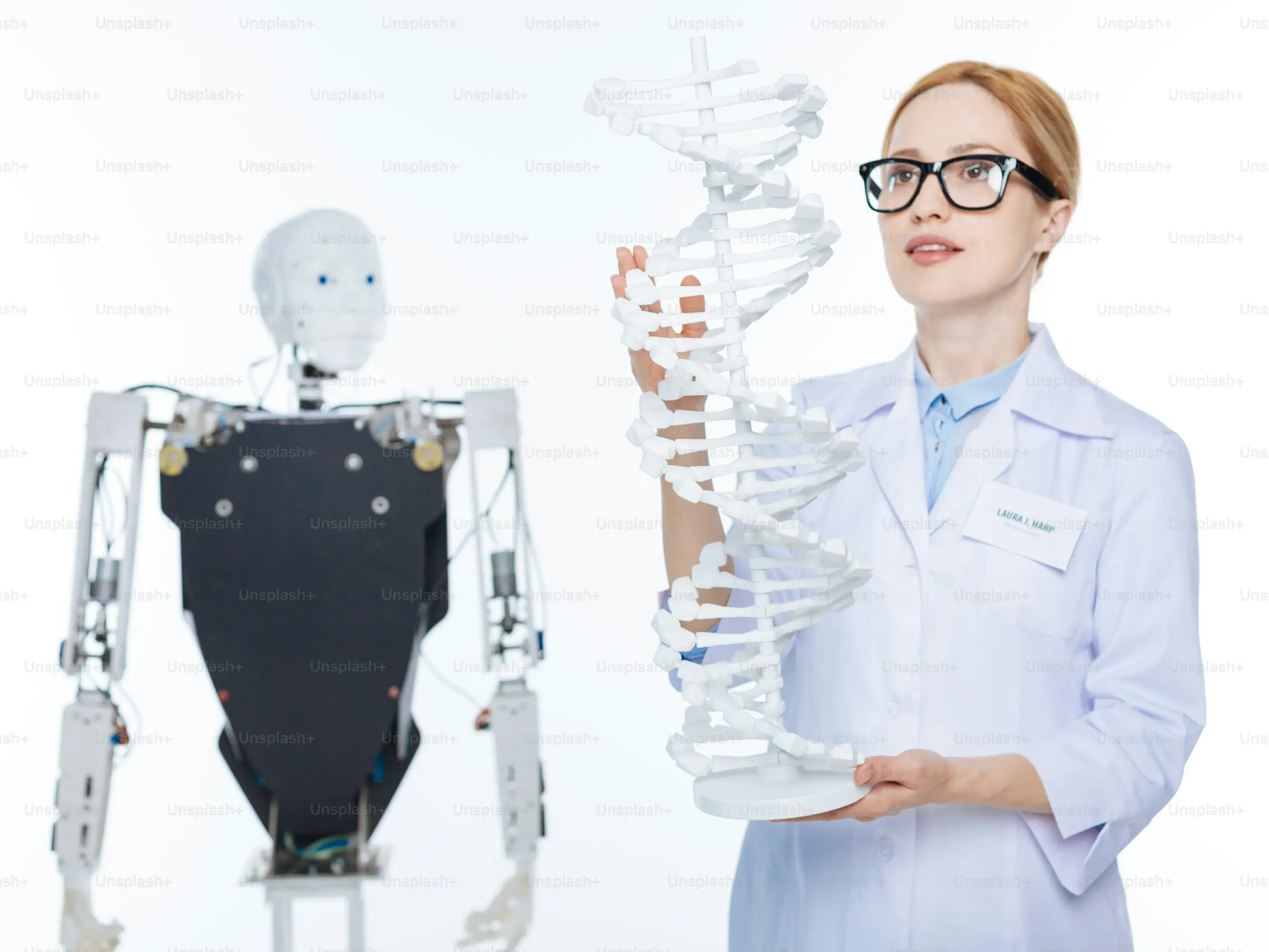
AI in pharma: How AI is changing drug discovery and compliance Photograph: (Unsplash)
AI is making an impact in the early stages of drug discovery. It can scan huge chemical and biological datasets, predict how compounds may behave, and suggest new molecular designs.
Artificial intelligence is becoming an important part of the pharmaceutical sector. It is being used in research, drug development, clinical trials, manufacturing and regulatory work. A McKinsey study estimates that generative AI alone could add between $60 billion and $110 billion each year for drug makers by speeding up discovery, trials and approvals. Another analysis suggests that AI could create as much as $350–410 billion annually by 2025 through innovation in drug development, personalised medicine and marketing.
Research and clinical trials
AI is making an impact in the early stages of drug discovery. It can scan huge chemical and biological datasets, predict how compounds may behave, and suggest new molecular designs. Exscientia’s Centaur system designed a cancer drug candidate that reached human trials in about a year, much faster than traditional methods. DeepMind’s AlphaFold has also advanced the ability to predict protein structures, which helps scientists understand disease targets.
AI is also being used in clinical trials. It can analyse medical records and other health data to find trial participants quickly. This helps address a major problem, as around a quarter of trials fail because they cannot recruit enough patients. Insilico Medicine, for example, used AI to identify a new molecule and bring it to trial in only 18 months. IBM Watson Health has been used in oncology to match patients with suitable trials. AI can also monitor data from ongoing studies, flagging safety concerns more quickly than traditional methods.
Regulators are beginning to recognise these uses. The US Food and Drug Administration has issued guidance on how AI can support decentralised trials, improving access and patient retention.
Manufacturing and operations
Trending Stories
&imwidth=280&imheight=210&format=webp&quality=medium)
&imwidth=280&imheight=210&format=webp&quality=medium)
&imwidth=280&imheight=210&format=webp&quality=medium)
&imwidth=280&imheight=210&format=webp&quality=medium)
&imwidth=280&imheight=210&format=webp&quality=medium)
&imwidth=280&imheight=210&format=webp&quality=medium)
&imwidth=280&imheight=210&format=webp&quality=medium)
&imwidth=280&imheight=210&format=webp&quality=medium)
&imwidth=280&imheight=210&format=webp&quality=medium)
&imwidth=280&imheight=210&format=webp&quality=medium)
&imwidth=280&imheight=210&format=webp&quality=medium)
&imwidth=280&imheight=210&format=webp&quality=medium)
&imwidth=280&imheight=210&format=webp&quality=medium)
&imwidth=280&imheight=210&format=webp&quality=medium)
&imwidth=280&imheight=210&format=webp&quality=medium)
&imwidth=280&imheight=210&format=webp&quality=medium)
&imwidth=280&imheight=210&format=webp&quality=medium)
&imwidth=280&imheight=210&format=webp&quality=medium)
&imwidth=280&imheight=210&format=webp&quality=medium)
&imwidth=280&imheight=210&format=webp&quality=medium)
&imwidth=280&imheight=210&format=webp&quality=medium)
&imwidth=280&imheight=210&format=webp&quality=medium)
&imwidth=280&imheight=210&format=webp&quality=medium)
&imwidth=280&imheight=210&format=webp&quality=medium)
&imwidth=280&imheight=210&format=webp&quality=medium)
&im=FitAndFill=(700,400)&imwidth=280&imheight=210&format=webp&quality=medium)
&im=FitAndFill=(700,400)&imwidth=280&imheight=210&format=webp&quality=medium)
&imwidth=280&imheight=210&format=webp&quality=medium)
&imwidth=280&imheight=210&format=webp&quality=medium)
&imwidth=280&imheight=210&format=webp&quality=medium)
&imwidth=280&imheight=210&format=webp&quality=medium)
&imwidth=280&imheight=210&format=webp&quality=medium)
&imwidth=280&imheight=210&format=webp&quality=medium)
&imwidth=280&imheight=210&format=webp&quality=medium)
&imwidth=280&imheight=210&format=webp&quality=medium)
In pharmaceutical manufacturing, AI tools help predict when machines may fail, so companies can carry out maintenance before breakdowns occur. This reduces downtime and ensures continuous production. Machine vision systems are being used to inspect drug batches and it improve speed and accuracy.
AI also supports supply chain management. It can forecast demand, manage inventory and monitor shipments in real time. Pfizer has reported that intelligent automation has improved the quality of its cold-chain logistics and reduced costs. Many companies are also testing “digital twins” of their factories, where they run simulations of production lines to spot issues before making changes. Industry surveys show that most pharmaceutical executives expect AI-driven automation to have a major effect on operations within the next five years.
Regulatory submissions
One of the biggest challenges in the sector is regulation. AI is being developed to handle narrow, high-value tasks such as literature reviews, quality checks and document formatting.
Artificial intelligence is becoming an important part of the pharmaceutical sector. It is being used in research, drug development, clinical trials, manufacturing and regulatory work. A McKinsey study estimates that generative AI alone could add between $60 billion and $110 billion each year for drug makers by speeding up discovery, trials and approvals. Another analysis suggests that AI could create as much as $350–410 billion annually by 2025 through innovation in drug development, personalised medicine and marketing.
Research and clinical trials
AI is making an impact in the early stages of drug discovery. It can scan huge chemical and biological datasets, predict how compounds may behave, and suggest new molecular designs. Exscientia’s Centaur system designed a cancer drug candidate that reached human trials in about a year, much faster than traditional methods. DeepMind’s AlphaFold has also advanced the ability to predict protein structures, which helps scientists understand disease targets.
AI is also being used in clinical trials. It can analyse medical records and other health data to find trial participants quickly. This helps address a major problem, as around a quarter of trials fail because they cannot recruit enough patients. Insilico Medicine, for example, used AI to identify a new molecule and bring it to trial in only 18 months. IBM Watson Health has been used in oncology to match patients with suitable trials. AI can also monitor data from ongoing studies, flagging safety concerns more quickly than traditional methods.
Regulators are beginning to recognise these uses. The US Food and Drug Administration has issued guidance on how AI can support decentralised trials, improving access and patient retention.
Manufacturing and operations
In pharmaceutical manufacturing, AI tools help predict when machines may fail, so companies can carry out maintenance before breakdowns occur. This reduces downtime and ensures continuous production. Machine vision systems are being used to inspect drug batches and it improve speed and accuracy.
AI also supports supply chain management. It can forecast demand, manage inventory and monitor shipments in real time. Pfizer has reported that intelligent automation has improved the quality of its cold-chain logistics and reduced costs. Many companies are also testing “digital twins” of their factories, where they run simulations of production lines to spot issues before making changes. Industry surveys show that most pharmaceutical executives expect AI-driven automation to have a major effect on operations within the next five years.
Regulatory submissions
One of the biggest challenges in the sector is regulation. AI is being developed to handle narrow, high-value tasks such as literature reviews, quality checks and document formatting.
While talking to WION, Udith Vaidyanathan, Co-founder and CEO of LogicFlo AI, explained, “In regulated industries like biopharma and life sciences, the operating mandate is fundamentally different: precision, auditability, and formal governance are non-negotiable. AI agents here act less like ‘one super-assistant’ and more like a team of specialists, each with its own expertise and rules of engagement, tuned for narrow, high-value tasks such as literature review, QC, or submission formatting. Unlike generative AI, which produces output directly, agents can retrieve relevant documents from secure systems, run automated quality checks and compliance validations, fill in metadata in submission platforms, and notify reviewers, all with a full audit trail of each step. This reduces the cognitive load on experts, allowing them to move from quarterly literature reviews to continuous monitoring, update dossiers on a rolling basis, and produce fully referenced, compliant deliverables in hours instead of weeks.”
McKinsey reports that some companies have already cut submission times in half, reducing them to 8-12 weeks from around 24 weeks. This speed matters, as each month saved on a billion-dollar drug can bring an additional $60 million in value.
Compliance and data laws
AI systems in pharma must comply with strict privacy and data protection rules. This means they are built with compliance in mind from the start. Frameworks such as HIPAA in the United States, GDPR in Europe, and GxP standards for good practice guide how the systems are designed.
Vaidyanathan said, “In regulated sectors, compliance is a design input from day one, not an afterthought. Frameworks such as HIPAA, GDPR, and GxP define the architecture, shaping how agents are built, what data they can access, and how outputs are governed. This means working within established SOPs, producing outputs with full traceability, operating in secure access-controlled environments, enforcing PHI masking or de-identification by default, and embedding human oversight so that strategic decisions remain with experts. These safeguards ensure outputs can withstand regulatory scrutiny years later, while enabling faster cycles and continuous processes such as near-real-time regulatory submissions, safety monitoring, and evidence generation, where compliance and innovation reinforce each other rather than compete.”
The US FDA and the European Medicines Agency have both issued guidance stating that AI systems must be explainable, validated and subject to human oversight. This means public AI tools that cannot meet audit and deletion requirements are not suitable for use in this sector.
The pharmaceutical industry is shifting towards AI systems that are tailored to its needs rather than generic tools. These systems are trained on company data and built into existing procedures. They carry out tasks with full audit trails and keep humans in control of strategic decisions.
By doing so, they allow experts to focus on interpretation and oversight, while routine work is automated. This approach speeds up drug discovery, regulatory processes and manufacturing while meeting compliance standards. For patients, it may mean faster access to new treatments and safer monitoring once drugs are on the market.
