Why Indian Muslims had to wait so many decades for the ban on triple talaq

Triple Talaq
After independence, progressive-secular discourses were never a dominant political discourse among Indian Muslims.
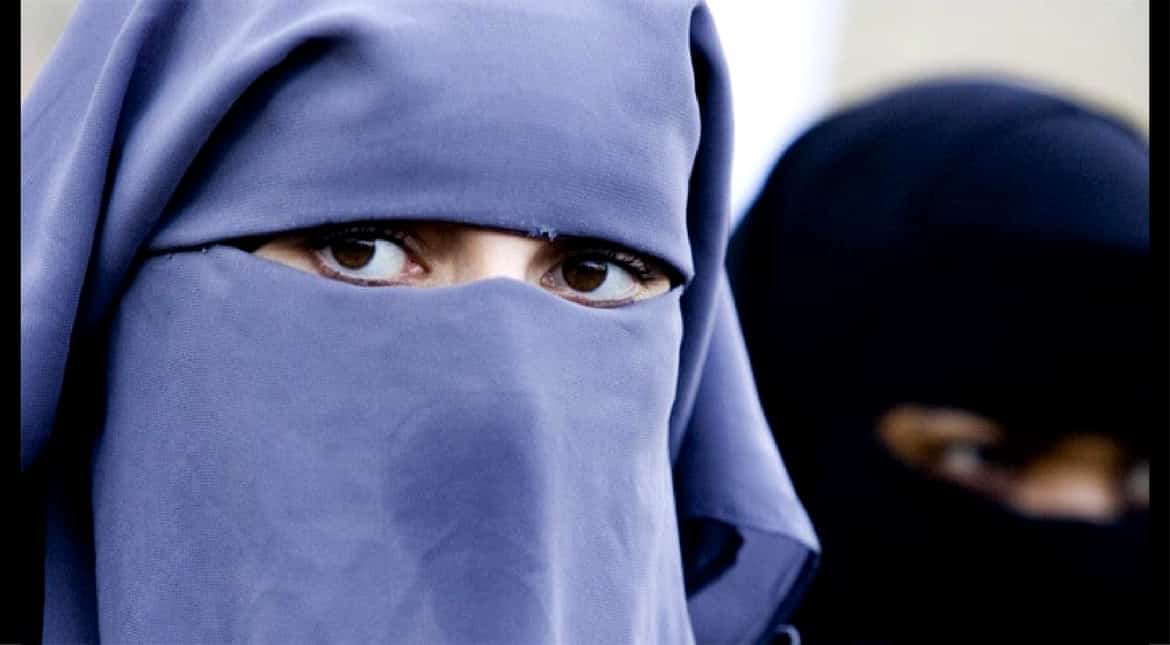
The landmark judgment of the Supreme Court of India on triple talaq is a progressive step towards building a more egalitarian, fair and gender just India. The majority verdict has termed the instant triple talaq ((talaq-e- biddat or heretical and irregular mode of divorce) void ab initio (illegal at the outset) while describing the practice as ‘manifestly arbitrary’. The majority view also unequivocally declared that the instant triple talaq went against the basic tenets of the Holy Quran and violated the Islamic law or the Shariat. The minority verdict had asked the government to frame a law within six months on the instant triple talaq. It also issued an instant injunction on suchpractice for the next six months till the new legislation is enacted along. However, the Supreme Court has issued a caveat that failing such a law, the injunction would cease to operate.

The practice of instant triple talaq has been generally followed by the Hanafi school of Sunni Islam in India, which forms a substantial majority of the Indian Muslims (about 90 per cent of the Sunni Muslims in India according to the Court judgment). Those who claim to be outside the four main schools of Sunni Islam, like the Shia Muslims and the followers of the Ahl-i-Hadith tradition do not follow the practice of instant triple talaq. In this respect, the Supreme Court judgment, citing the cases of Pakistan and Bangladesh, both of which banned instant triple talaq (Pakistan in 1961 and Bangladesh amending the 1961 Ordinance in 1985) while an overwhelming majority in these countries following the Sunni Hanafi School is extremely significant.
The Court judgment has rightly pointed out that the practice of divorce through ‘talaq-e-biddat’ was ‘prevalent in states having sizeable Muslim populations’, but it has been ‘statutorily done away with...by legislation, the world over, in Islamic, as well as, non-Islamic States’,including Turkey, Egypt, and Afghanistan where the majority of the Muslims follow the Sunni Hanafi school.
This particular judgment has long term implications for further reforms of several patriarchal aspects of the Muslim Personal Law. For instance, in matters of alimony for divorced Muslim women, polygamy, methods of remarriage (nikah halala) and inheritance. While in many Muslim countries, such a horrible practice has been banned long ago, the Indian Muslims had to wait for so many decades and that too after a judicial intervention to outlaw this inhumane practice of instant triple talaq, legitimised by the Muslim Personal Law (Shariat) Application Act of 1937.
)
'Black day' in country’s democratic history: Mamata moves SC against EC order freezing TMC name, symbol
)
Africa is splitting, and a lot sooner than estimated, giving way to a new ocean
&im=FitAndFill=(700,400))
From Abhishek Sharma to Sahil Chauhan, 5 batters with fastest T20I hundreds
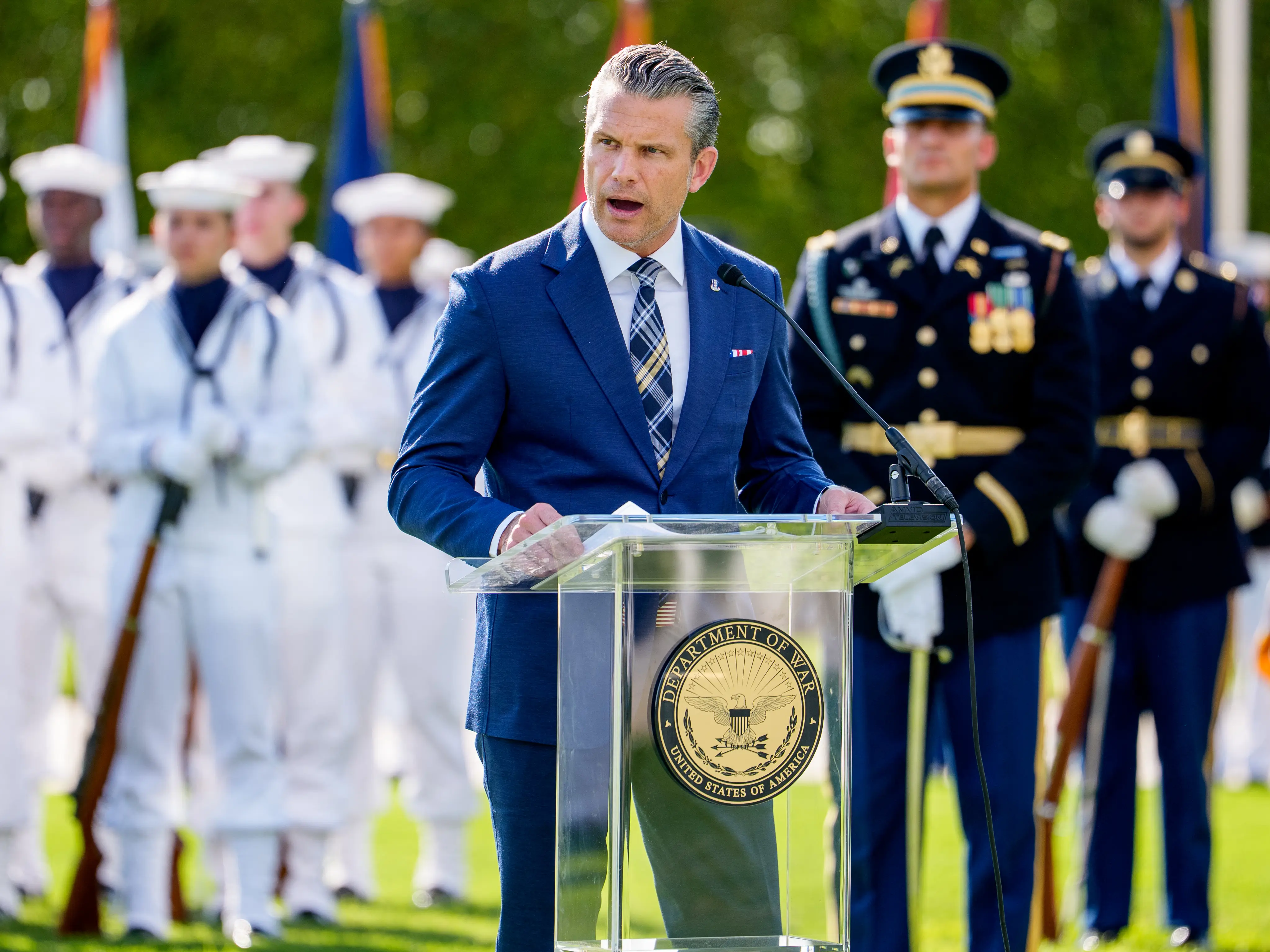)
Pentagon revives mandatory testosterone testing for male troops aged 30 and above
)
US And Denmark reach Greenland deal, Trump announces expanded military presence
)
‘Will go to any extent’: Pakistan vows to defend Saudi Arabia amid Houthi attacks
)
FACT CHECK: Why did PM Modi ask Xi ‘is it okay’ at BRICS Summit? New video reveals...
)
Trump 2.0: Dark days ahead for America’s ‘imperial presidency’
&im=FitAndFill=(700,400))
New Friday OTT releases (September 18, 2026): Lust Stories 3, You+Me, Best of the Best- 8 new titles coming on Netflix, Prime Video and more
)
India seeks to build a full semiconductor supply chain
)
Russia holds first parliamentary elections since the beginning of the Ukraine war
)
NASA research plane reaches 61,000 feet over Panama
&im=FitAndFill=(700,400))
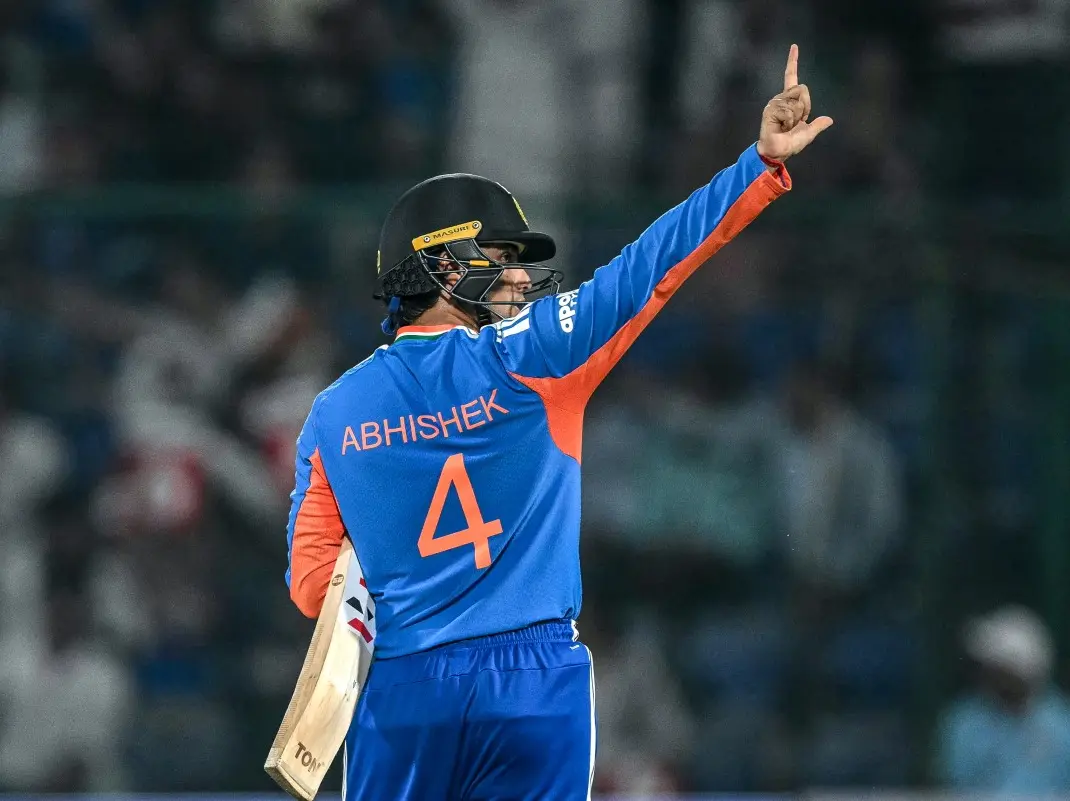
Meet top 5 Indian batters with fastest T20I centuries
)
Shivakumar attends 79th Kalyana Karnataka Utsav in Kalaburagi
)
Pyongyang dismisses US, western pressure over nuclear programme
)
The Verdict | When precision fails: US commits war crime in Minab school strike, UN finds
)
Trump signs Russia sanctions law: India faces fresh 100% tariff threat over Russian oil
)
Trump's Greenland dream comes true? POTUS announces 'Infinite Life' deal with Denmark, claims permanent US control
)
Indian Cinema bets big on mythology, brings ancient stories to modern audiences
)
'Gangsta' crab shoves knife blade at man and his dog in Florida - Watch
)
Flying cars in UAE: Ras Al Khaimah signs deal with Chinese company to test new transport
)
Who is Khalilur Rahman? All you need to know about 81st UN General Assembly President
)
Trump bans CNN, MS NOW and Politico from White House over ‘FAKE NEWS’
)
Indian activist-lawyer Prashant Bhushan's post brings focus on ‘conflict of interest’ appointments of ex-govt officials at Reliance, Adani groups
)
Brigitte Bardot’s private collection set for Paris auction; key items and prices revealed
)
Ukraine plans record $109 bn defence spending, nearly two thirds of budget amid Russia war
)
IIT Bombay student dies by suicide, was caught seeking AI help during exams
)
Godfather of AI Geoffrey Hinton gives US lawmakers a one-year warning on AI
)
Three labourers killed as DU student loses control of his car, rams into them on Dwarka Expressway
)
Google’s Gemini AI hacks real systems by guessing passwords during security test
)
Trump signs Russia sanctions bill into law, targets Moscow’s energy sector
)
China may have gained access to US's classified F-35 jets; parts meant for repairs diverted to Hong Kong, sparking Pentagon inquiry
)
Drone strikes cooling tower at Russia's Kursk Nuclear Plant, IAEA confirms
)
Why Ranveer Singh’s Dhurandhar missed India’s Oscar entry; FFI jury member reveals what happened
&im=FitAndFill=(700,400))
Meet top 5 bowlers in latest ICC T20I rankings
From the 1920s to 1970s, a significant part of the Muslim world was governed by progressive and secular forces until they were challenged by the rise of Islamism in the last four decades. By contrast, in India, the progressive-secular discourses were never a dominant political discourse among Indian Muslims. Before the partition, barring few exceptions, progressive political articulation was never dominant among Indian Muslims. The partition led to further dwindling of the prominent progressive voices among the Muslim community as some emigrated out of India. Although,Indian Muslims never had a dominant progressive political articulation within the community throughout India’s postcolonial history, yet they have largely favoured secular political formations while distancing from the communal political forces of both majoritarian and minority variety.
The absence of a progressive political leadership among Muslims in India has created conditions in which the theo-political identity of Indian Muslims has been foregrounded at the cost of class issues (education, health, employment) and citizenship identities by the conservative section of the Muslim community. This conservative section among the Indian Muslims has actually taken advantage of the silence of the silent majority of moderate Muslims, who might diligently follow Islam but are not vocal enough to protest against the misuse and misinterpretation of the Islamic religion by the conservatives on many occasions.
Although one can notice a crisis of progressive political articulation among the Muslims in India, it is certainly not absent from the Muslim community. In the past, there were progressive voices who protested against the injustices of Shah Bano and today, one can see the activism of Bharatiya Muslim Mahila Andolan, Bebaak Collective, Awaz-e-Niswaan, Sahiyar, Muslim Mahila Manch, Pehchan, Muhim, Parvaaz Sangathan etc who joined the cause of the five Muslim women petitioners—Shayara Bano, Gulshan Parveen, Ishrat Jahan, Afreen Rahman and Farha Faiz in this case against instant triple talaq. These groups are run by Muslim women and have been involved in numerous struggles for dignity, gender justice and gender equality in the last three decades.
The political implication of this judgment is too obvious. No matter how many normative appeals are being made for not politicising the Court's judgment, the fact of the matter is that it could be a talking point of a pragmatic and calculated political campaign of the BJP in future elections. Already, the BJP spokespersons are reminding about the Rajiv Gandhi led Congress government’s capitulation before the conservative Muslim leaders in the Shah Bano case, regarding alimony for divorced Muslim women during 1985-86, in contrast to their public support to this issue along with the BJP led central government’s supporting affidavit in the case against triple talaq.
Although the BJP can certainly celebrate this judgment, the track record of the RSS (BJP’s ideological mentor) and the Hindu Mahasabha is abysmal as far as the Personal Law reforms in the form of the Hindu Code Bill is concerned. Both the RSS and the Hindu Mahasabha along with some major Congress leaders vehemently opposed the Hindu Code Bill. The present judgment has clearly denied an indisputable provision to bring in a law on Muslim personal matters while setting aside the triple talaq issue from the rest of the Muslim Personal Law. But this historic judgment has definitely created conditions for further reforms of the Personal Laws for both Muslim and non-Muslim citizens of the country.
If a radical initiative for Personal Law reforms or uniform civil code is being made in the future then, it must be preceded by democratic forms of wider public debates, followed by referendum among each major religious community in the country. Neither the All India Muslim Personal Law Board nor the Sangh Parivar represents the Muslims and Hindus respectively. If laws are meant to govern the lives of the citizens then the citizens must decide how they should be governed.