Parliament clears Vande Mataram Bill, makes insult to National Song a criminal offence

&imwidth=600&imheight=450&format=webp&quality=medium "Parliament clears Vande Mataram Bill, makes insult to National Song a criminal offence")
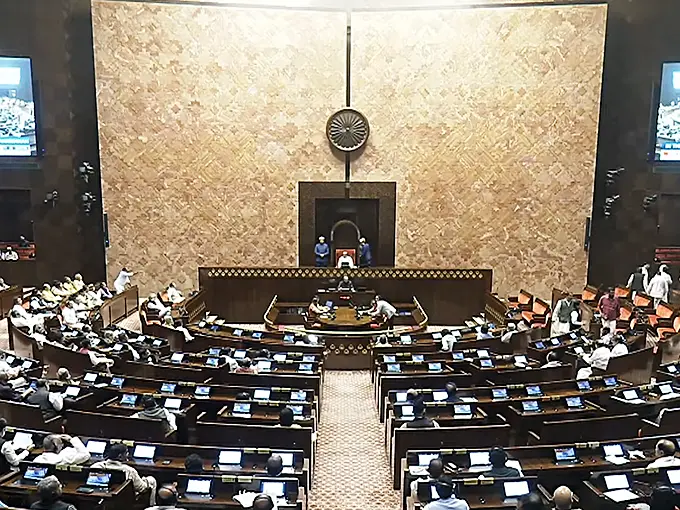
Lok Sabha proceedings underway during the Monsoon Session of Parliament, in New Delhi on Thursday. Photograph: (ANI)
Parliament passed the Vande Mataram Bill, making deliberate insult to the National Song a criminal offence and extending it legal protection similar to the National Anthem.
The amendment makes insulting the National Song, Vande Mataram, a criminal offence. It seeks to provide the song with legal protection similar to the safeguards already available to the National Anthem, Jana Gana Mana.
The legislation amends the Prevention of Insults to National Honour Act, 1971. The existing law penalises intentional disrespect towards the National Flag, the Constitution and the National Anthem. It provides for punishment of up to three years in prison, a fine, or both. Repeat offenders face a minimum one-year prison term.
The amendment extends these statutory protections to the National Song for the first time. Under the new provision, deliberate insult to Vande Mataram or intentional disruption of its singing will constitute a criminal offence.
The passage of the Bill comes in the 150th anniversary year of Vande Mataram. Bankim Chandra Chattopadhyay composed the song, which was later included in his novel Anandamath.
Also Read: 'Will take responsibility for all actions...': CRPF chief issues statement amid pellet gun row
The legislation also follows a Home Ministry order issued in January. The order directed that all six stanzas of Vande Mataram should be sung first whenever the song is played alongside the National Anthem at official functions.
Trending Stories
)
&im=FitAndFill=(700,400))
&im=FitAndFill=(700,400))
)
&im=FitAndFill=(700,400))
)
)
&im=FitAndFill=(700,400))
)
)
)
)
)
)
)
)
&im=FitAndFill=(700,400))
)
)
)
)
)
)
)
)
)
)
)
)
)
)
)
)
)
)
While presenting the Bill in the Rajya Sabha, Minister of State for Home Nityanand Rai described it as a matter of "India's soul" and cultural legacy.
Rai also traced the history of the National Song, referring to Jawaharlal Nehru's 1937 restriction of the song to two stanzas and Subhas Chandra Bose's restoration of the full version in 1938.
He further cited Sardar Patel's 1947 Independence Day broadcast order and former President Rajendra Prasad's 1950 statement that placed Vande Mataram on an equal standing with the National Anthem.
The Bill was passed by both Houses amid a stormy Monsoon Session of Parliament, with the Opposition raising slogans and disrupting proceedings over police action against students during the Cockroach Janata Party-led march on July 20. The protesters had demanded the resignation of former Education Minister Dharmendra Pradhan over the NEET UG 2026 paper leak.