Opinion: Indian dream and economics of Olympics


With a strong and stable economy and decades of sustained GDP growth rate over 5%, India has much to leverage and gain with a bid for summer Olympics.
The Olympic Games have long remained a matter of pride and prestige, not just for the host city, but for the entire nations; it is exactly the reason why nations spend billions of dollars for a month of sporting extravaganza. And it’s no surprise that host governments more often than not find themselves in a larger debate that revolves around the cost-benefit analysis of the spectacle.
Many of the economists have argued, time and again, that cost of hosting the games outweigh perceived tangible and intangible gains, and hosts often lend themselves in the pool of large debts and liabilities. Unsurprisingly, International Olympic Committee (IOC) had to award hosting rights for 2024 and 2028 summer Olympics after unanimous votes, as there was virtually no competition, with single hosting bids from Paris and Los Angeles respectively.
It wasn’t a long ago when IOC sessions had to deal with competitive bidding from multiple candidate cities, with subsequent rounds of voting and elimination, before awarding host city rights. The trend indicates that hosting Olympics is not perceived to be as lucrative as it was in the past. Viral photographs of deserted and abandoned 2004 summer Olympic venues in Athens, often referred to as ‘new ruins of Athens’ narrate the perfect story. The larger question in the debate is – “How beneficial it is for the city and the country to host a sporting extravaganza such as Olympics?”

Much of the discourse on hosting Olympics revolves around the cost and revenue analysis, and measures ‘success’ in terms of the economic viability or profitability of the games. Yes, economics is one of the most important considerations in the debate; but not the only aspect. Much of the twentieth century witnessed games being publicly funded and hosted by advanced economies, as they had better infrastructure and capabilities to stage the games. With costs associated with hosting rising, the public funding of the games became increasingly difficult. In 1972, Denver became the first city to reject the hosting rights after a public referendum that opposed additional public spending for the 1976 winter games, which were eventually hosted by Austria’s Innsbruck.
With advanced economies becoming increasingly reluctant to hosting, emerging and developing economies entered the arena and have successfully hosted the games – be it Tokyo in 1964, Mexico City in 1968, Seoul in 1988 or Beijing in 2008 and, most recently, it was Rio de Janeiro in 2016. With high GDP growth rates and growing economic activities, cities in developing world have often been ‘better’ in hosting the games than their developed counterparts with sluggish growth profile. Moreover, emerging economies have more incentives to host - as it gives them an opportunity to showcase their culture, economy and attractiveness to the world – an open invitation to global investors; it is one of the reasons why I argue India should bid for the summer games in 2032 or 2036.
India’s tryst with multilateral sporting event is often exemplified by our recent experience with Delhi Commonwealth Games and widespread corruption and mismanagement associated with it. But, it is not our only experience. We have also hosted Asian Games twice, the first edition of games in 1951 and again in 1982, and were characterised neither by corruption nor mismanagement. Being one of the fastest growing major economies India is best poised to host the games, and we must take this opportunity to showcase our best – spectacular yet affordable games. Growing reluctance among advanced economies provides a good opportunity for India to bid for the games with the lower budget.
)
Nigeria: Protesters take to the streets, police fire shots
)
US-Iran war: Tehran draws red lines — seven demands before any peace talks
)
Russia-Europe tensions: Polish PM warns Russian attacks could test NATO's unity
&im=FitAndFill=(700,400))
‘Not the US or China’: These are the countries leading the world in arable land
)
Trump says he'll build an 'AI Force' and appoint a czar, for 'high IQ' people only
)
EXCLUSIVE | Singer Hanita Bhambri on her Toxic debut, working with Vishal Mishra and more
)
Sikh bus driver assaulted, bus stolen and rammed into cars in England; video surfaces
)
Mark Carney mimics Trump in hilarious moment over C$70 billion clean-energy investment; room erupts in laughter
&im=FitAndFill=(700,400))
Before Extraordinary Minami Minami, these popular K-dramas got Japanese versions
)
'Were you here to sell chickpeas?': Wasim Akram criticises Babar Azam's captaincy
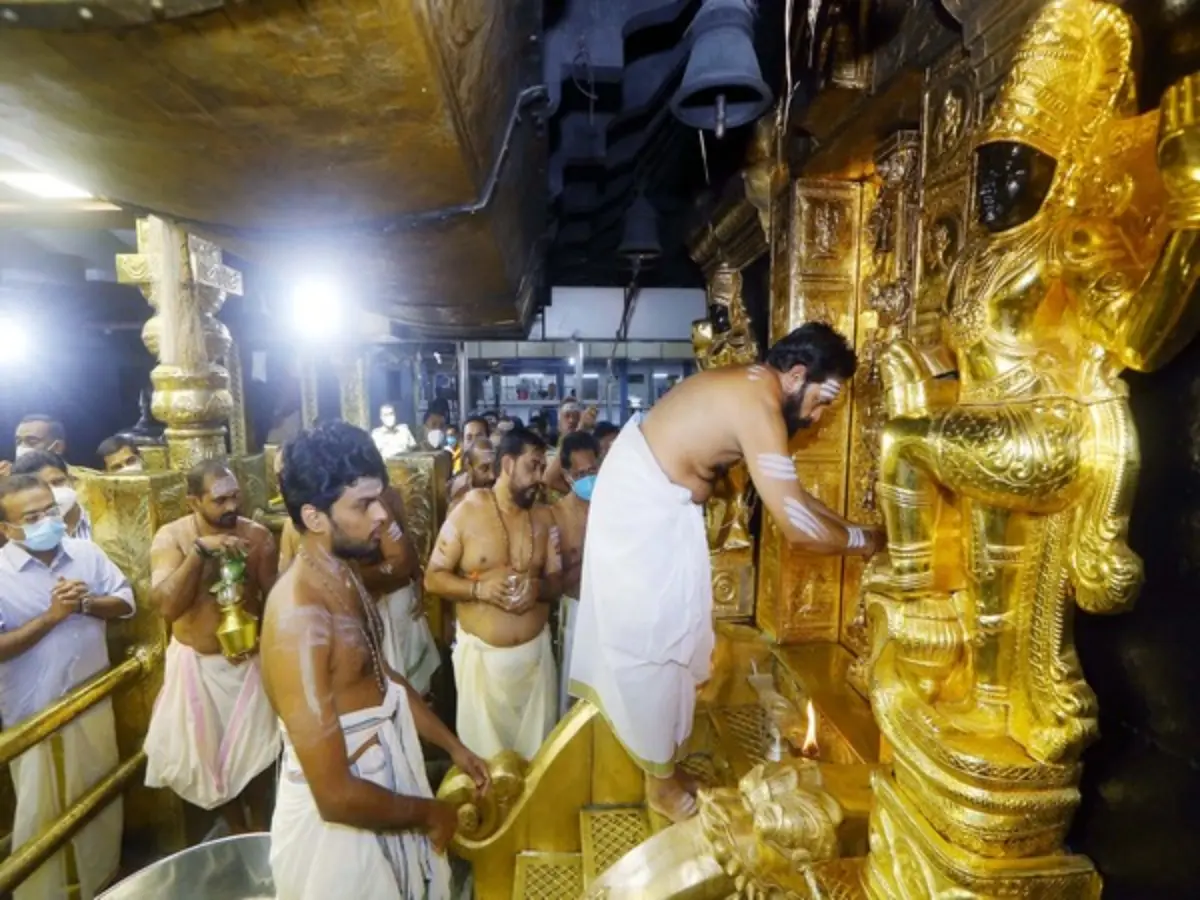)
Aravana prasadam shortage at Sabarimala temple in Kerala triggers protests, TDB questioned
)
‘End of my career...’: NSA Doval recalls tense Sikkim mission when China captured Indian intelligence team
)
Report: Iran rebuilding Taleghan 2, nuclear site tied to past weapons research, hit twice by Israel
)
Trump defends AI amid growing alarm, announces new 'AI force' and promises an 'AI czar'
)
Iran sets 7 conditions to end war with US: What are Tehran’s demands?
)
Trump announces ‘AI Force’ as debate grows over AI risks and regulation
)
China may have gained access to US's classified F-35 jets; parts meant for repairs diverted to Hong Kong, sparking Pentagon inquiry
)
Man breaks open wall hiding hundreds of books since 15 years
)
Gaza under attack: Health chief's son killed in IDF strikes
)
S Jaishankar, former Army chief among high-profile names issued Delhi SIR notices
)
Arvind Kejriwal, family members, Delhi CM Rekha Gupta get SIR notices
)
AI actress Tilly Norwood glitches mid-interview, switches from English to Chinese | Watch
)
Saudi vs Houthis: Houthis claim missiles & drones used in attack on key Saudi sites
)
Ed Sheeran addresses Macklemore's removal, Gaza conflict during Philadelphia concert: 'I cannot hide how I feel'
)
‘Will go to any extent’: Pakistan vows to defend Saudi Arabia amid Houthi attacks
66 years of the Indus Waters Treaty: How India and Pakistan settled a bitter river dispute
)
The Verdict | When precision fails: US commits war crime in Minab school strike, UN finds
)
9 women found dead near Johannesburg: South Africans rally, demand 'enough' to femicide
)
Kampala-Ankara rift deepens: Uganda suspends military ties, seeks Fred Lumbuye's extradition
)
Several petrol pumps, other businesses to refuse UPI payments above Rs 2,000 from Oct 16: Is it legal?
)
US-Iran war: Tehran sets seven conditions to re-engage in talks with US
)
Reacher star Alan Ritchson opens up about alleged blackmail, suicide attempt during difficult period
)
West Indies Squad for India Series: Hetmyer included for T20Is, Holder rested
)
China now makes advanced memory chips without the machines it was banned from buying
&im=FitAndFill=(700,400))
How many F-35s does Britain, Japan and Israel have?
)
Harry Brook targets long reign at top of T20I rankings after Sri Lanka sweep
)
Russia's deadly Ukraine strikes kill 2 in Sumy, hit Dnipro mall
)
Russia holds first parliamentary elections since the beginning of the Ukraine war
&im=FitAndFill=(700,400))
Meet top 5 Indian batters with fastest T20I centuries
)
Raphinha hat-trick powers Barcelona to 3-1 win over Sevilla in La Liga
)
Budget overruns have often been one of the reasons for the large debts for host governments. As Jasmin Guenette notes, since 1968, every Olympic Games (summer and winter) produced final costs that went over and above the estimates, e.g. 1976 Montreal games witnessed a ten-fold increase in actual costs overestimates. India’s story of cost overrun for Delhi Commonwealth Games is particularly troublesome. Reports suggest that expenses reached over INR 70,000 Cr. in 2010, from initially estimated INR 617.5 Cr. in 2002. If such is the precedence, it is difficult to argue that India can host ‘affordable’ games. Yet, this experience can also be remembered as a constant vigil for organising ‘transparent’ and ‘within budget’ games.
Many argue that a ‘low-income’ nation, such as India should rather spend on welfare schemes – from health and education to housing, and not on Olympics. Indeed, we need to spend more on welfare but that does not mean curtailing ‘aspirations’ of young and growing nation, especially when we have no reservations about spending millions on statues and memorials. In case of Olympics, at least, we are building and improving our utilities, infrastructure and sporting facilities.
Recently, India’s first and only individual Olympic gold medalist, Abhinav Bindra suggested that India should only bid to host, if we have a ‘realistic chance’ of winning 40 Gold. Host country winning more than 35 Gold Medals is also a rare feat, reached only by a handful of countries, the most recent one being China in Beijing.
Brazil clinched yellow metal only seven times in Rio (2016), Australia scored 16 in Sydney (2000), Greece scored six in Athens (2004) while Spain clinched 13 in Barcelona (1992) and the list goes on. For India, even five Gold Medals with an overall score of 20 as a host should be hailed as a good performance, given the sporting infrastructure and culture that we have as on date. The enthusiasm and excitement associated with hosting could prove to be a vital catalyst in developing a vibrant sporting culture for an otherwise cricket-enthusiast India.
With a strong and stable economy and decades of sustained GDP growth rate over 5%, India has much to leverage and gain with a bid for summer Olympics.
(Disclaimer: The opinions expressed above are the personal views of the author and do not reflect the views of ZMCL)