INS Nistar: Navy's force multiplier in the Indo-Pacific

&imwidth=600&imheight=450&format=webp&quality=medium "INS Nistar: Navy's force multiplier in the Indo-Pacific")
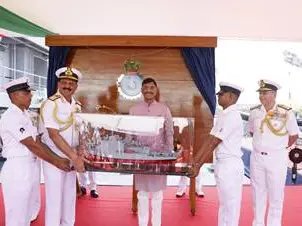
ith over 80% indigenous content, involving 120 MSMEs, it supports India’s Aatmanirbhar Bharat initiative. Photograph: (WION)
The Navy, which is part of India's maritime diplomacy, INS Nistar is a major addition to the diplomatic tool box especially in Humanitarian Assistance and Disaster Relief (HADR)
INS Nistar, the Indian Navy’s first indigenously designed and constructed Diving Support Vessel (DSV), commissioned last week will be a force multiplier for submarine support in the Indo pacific. Built by Hindustan Shipyard Limited, it enhances India’s maritime capabilities in the Indo Pacific and Indian Ocean Region, particularly for deep-sea diving and submarine rescue operations, a capability possessed by only a few navies globally. With over 80% indigenous content, involving 120 MSMEs, it supports India’s Aatmanirbhar Bharat (self-reliant India) initiative.
INS Nistar aligns with Navy's doctrine of ‘Net Security Provider’, offering help to friendly or neutral navies in case of underwater emergencies. The Indian Navy chief Admiral Dinesh K Tripathilast week said, "Nistar will provide critical submarine rescue support to the Indian Navy as well as our regional partners. This will enable India to emerge as a ‘Preferred Submarine Rescue Partner’ in this region".
The Navy, which is part of India's maritime diplomacy, INS Nistar is a major addition to the diplomatic tool box especially in Humanitarian Assistance and Disaster Relief (HADR). In 2021, India dispatched a DSRV to assist with the search for the Indonesian submarine KRI Nanggala, though the mission was halted after debris was found. India has signed submarine rescue agreements with South Africa (2024) and Singapore, offering its DSRV capabilities to littoral nations in the IOR.
In peacetime, Nistar could serve as a regional asset to assist distressed submarines from ASEAN countries or Indian Ocean littorals that lack rescue capability - strengthening regional bonds and trust. Last week's development significantly enhances Navy capabilities in Humanitarian Assistance and Disaster Relief (HADR) operations, particularly through its submarine rescue and support systems.
Joint submarine rescue exercises with countries like Vietnam, Indonesia, or Australia could build interoperability and enhance India’s standing as a dependable partner. INS Nistar could be positioned for multi-nation contingency roles, especially for smaller states like Sri Lanka, Maldives, Seychelles, or Mauritius.
The Indian Navy chief termed INS Nistar as not just a technological asset, but a crucial operational enabler. “The commissioning of Nistar is testimony to the growing capability and maturity of our maritime industrial base, and another shining example of Aatmanirbhar Bharat,” he said. The Diving Support Vessel (DSV)boosts the Indian Navy's credibility as a full-spectrum blue water navy, capable of both combat and humanitarian underwater operations.
Trending Stories
&imwidth=280&imheight=210&format=webp&quality=medium)
&imwidth=280&imheight=210&format=webp&quality=medium)
&imwidth=280&imheight=210&format=webp&quality=medium)
&imwidth=280&imheight=210&format=webp&quality=medium)
&imwidth=280&imheight=210&format=webp&quality=medium)
&imwidth=280&imheight=210&format=webp&quality=medium)
&imwidth=280&imheight=210&format=webp&quality=medium)
&imwidth=280&imheight=210&format=webp&quality=medium)
&imwidth=280&imheight=210&format=webp&quality=medium)
&imwidth=280&imheight=210&format=webp&quality=medium)
&imwidth=280&imheight=210&format=webp&quality=medium)
&imwidth=280&imheight=210&format=webp&quality=medium)
&imwidth=280&imheight=210&format=webp&quality=medium)
&imwidth=280&imheight=210&format=webp&quality=medium)
&imwidth=280&imheight=210&format=webp&quality=medium)
&imwidth=280&imheight=210&format=webp&quality=medium)
&imwidth=280&imheight=210&format=webp&quality=medium)
&im=FitAndFill=(700,400)&imwidth=280&imheight=210&format=webp&quality=medium)
&imwidth=280&imheight=210&format=webp&quality=medium)
&imwidth=280&imheight=210&format=webp&quality=medium)
&imwidth=280&imheight=210&format=webp&quality=medium)
&im=FitAndFill=(700,400)&imwidth=280&imheight=210&format=webp&quality=medium)
&im=FitAndFill=(700,400)&imwidth=280&imheight=210&format=webp&quality=medium)
&imwidth=280&imheight=210&format=webp&quality=medium)
&imwidth=280&imheight=210&format=webp&quality=medium)
&imwidth=280&imheight=210&format=webp&quality=medium)
&imwidth=280&imheight=210&format=webp&quality=medium)
&imwidth=280&imheight=210&format=webp&quality=medium)
&imwidth=280&imheight=210&format=webp&quality=medium)
&imwidth=280&imheight=210&format=webp&quality=medium)
&imwidth=280&imheight=210&format=webp&quality=medium)
&imwidth=280&imheight=210&format=webp&quality=medium)
&imwidth=280&imheight=210&format=webp&quality=medium)
&imwidth=280&imheight=210&format=webp&quality=medium)
&imwidth=280&imheight=210&format=webp&quality=medium)
&imwidth=280&imheight=210&format=webp&quality=medium)
&imwidth=280&imheight=210&format=webp&quality=medium)
The indigenous build of Nistar shows India's ability to secure its own fleet without relying on foreign platforms for critical rescue functions—contrast this with Pakistan, which lacks such an asset and depends on foreign navies. At a time when regionhas been influx, especially after Pakistan's destabilizingaction, the Indian Navy's growing capabilities, including long-duration undersea deployments, enhance its deterrence and sustainability posture.
