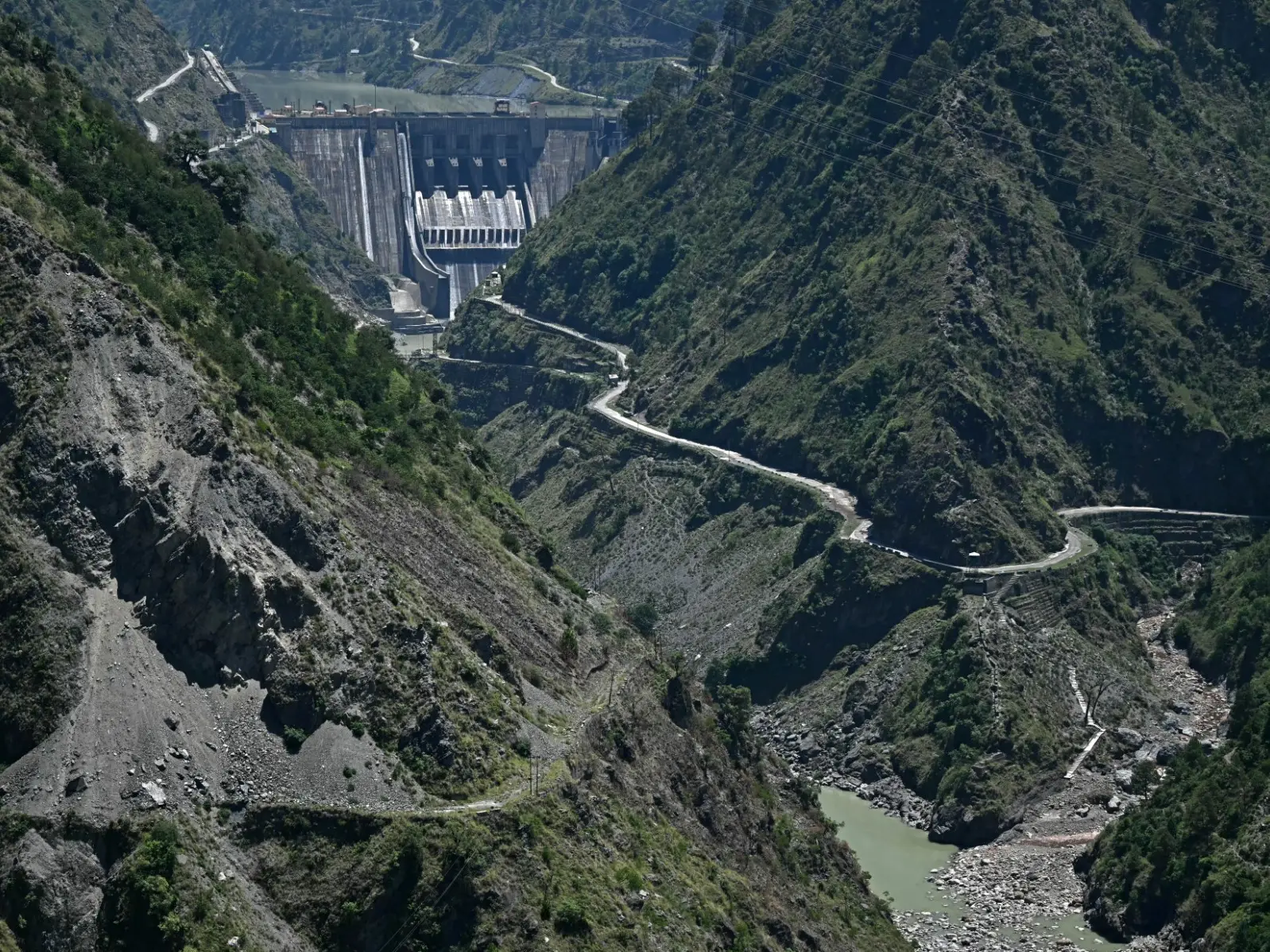
&imwidth=800&imheight=600&format=webp&quality=medium "Chenab-Beas link tunnel: India's ₹2,600 crore project could reshape Indus water politics")
India is accelerating the construction of the Chenab-Beas river link project. The government has issued a notification inviting e-tenders for the Chenab–Beas Link Tunnel Project in May 2026. Estimated at around ₹2,600 crore, the 8.7 km long tunnel is likely to pass through the Great Himalayan Watershed. When it emerges, it will carry water from the Chandra and Bhaga, the upper tributaries of the Chenab river, westwards through a 113-kilometre canal into the Beas basin. The project is likely to generate 4,000 MW of additional domestic hydropower.
The project is a revival of the National River Linking Project (NRLP) to interlink around 30 major rivers, initially conceptualised in 1980 and then championed by former Indian Prime Minister Atal Bihari Vajpayee in 2002 to create a national grid. This tunnel falls under the Himalayan Component of NRLP. It is likely to benefit several northern states, including Punjab, Haryana, Rajasthan, Delhi, and Himachal Pradesh. Most of these cities face severe water shortages. The Union Government wants to complete the project by July 31, 2029.
Also Read: 'Trump's Iran-Contra': New book reveals Trump officials' internal panic over Epstein controversy

What happens to the Indus Water Treaty?
However, the project could have far-reaching geopolitical consequences beyond the economy and energy. The decision comes in the wake of the Indian abeyance of the Indus Water Treaty of 1960 following the Pahalgam terror attack. It has the potential to create another flashpoint between India and Pakistan. The proposed project could push the Indus treaty into further uncertainty.
The Chenab flows in Himachal Pradesh in the names of Chandra and Bhaga. It then flows through Jammu and Kashmir as the Chenab River before reaching the Punjab province in Pakistan, where it merges with the Indus River, which eventually goes to the Arabian Sea. Whereas the Beas River originates in Himachal Pradesh, passes through Kullu, Manali and Mandi, before entering the Punjab and mixing with the Sutlej River. The link aims to transfer 1.9 million acre feet of surplus water from Chenab annually to the Beas basin.
Trending Stories
)
The Early Spring is proof not everyone can talk about their real feelings, and it is perfectly OK
)
UN votes to ‘correct the map’ as India backs fairer world view
)
Nigerian Navy discovers 99,000 litres of suspected stolen, illegally refined products as it intensifies anti-crude oil theft operations
)
Who is Aditi Paudel? 17-year-old becomes Japan's first literacy ambassador
)
Bengaluru: Officials find 40 kg expired chilli at chairman's club
)
Jaishankar rejects trade link to ending Ukraine war
)
Israeli strikes on Lebanon kill three, injure 23 despite truce
)
Alpine glacier was covered with sheep wool sheets to prevent melting. It worked
)
South Korea mulls deploying military assets to Strait of Hormuz
)
World's fifth-largest economy, British army can't afford to train
)
Breaking | Vance takes the podium: First White House briefing since Leavitt's exit
)
Taiwan raises 'concerns' over China's missile test
)
BRICS 2026: $1 trillion sovereign capital set to converge in Delhi for first iBRICS Summit
)
What is Iran's Pickaxe Mountain that Trump has again threatened to bomb?
)
UN votes to correct world map that visually shrank Africa for 450 years
)
Former NewJeans member Danielle launches YouTube channel, hints at new solo journey
)
Bangladesh batter Towhid Hridoy creates history with 350 not out in South Africa
)
Brendan Fraser’s transformation fuels The Mummy 4 excitement as fans welcome back Rick O’Connell
&im=FitAndFill=(700,400))
Krishna Janmashtami 2026: From Dhaniya Panjiri to Makhana Kheer- 5 best sweet dishes perfect for celebrating Lord Krishna’s birth
)
Donald Trump plans to travel to Ireland on Qatari-donated jet amid security concerns
)
Nazi-looted art to return to Jewish heirs
)
Eight killed in Kerala’s Thrissur after car rams into lorry parked on highway
&im=FitAndFill=(700,400))
Why Russian fighter jets use bulky, low-pressure tyres compared to US jets
)
FBI-wanted fraud accused arrested in Jalandhar over $600,000 scam
&im=FitAndFill=(700,400))
Why US tanks weigh over 20 tons more than Russian tanks
&im=FitAndFill=(700,400))
New Friday OTT releases (September 4, 2026): GDN, Dhamaal 4, Jagamae Sangeetham- Watch 6 new movies and TV shows on Netflix, Prime Video and more
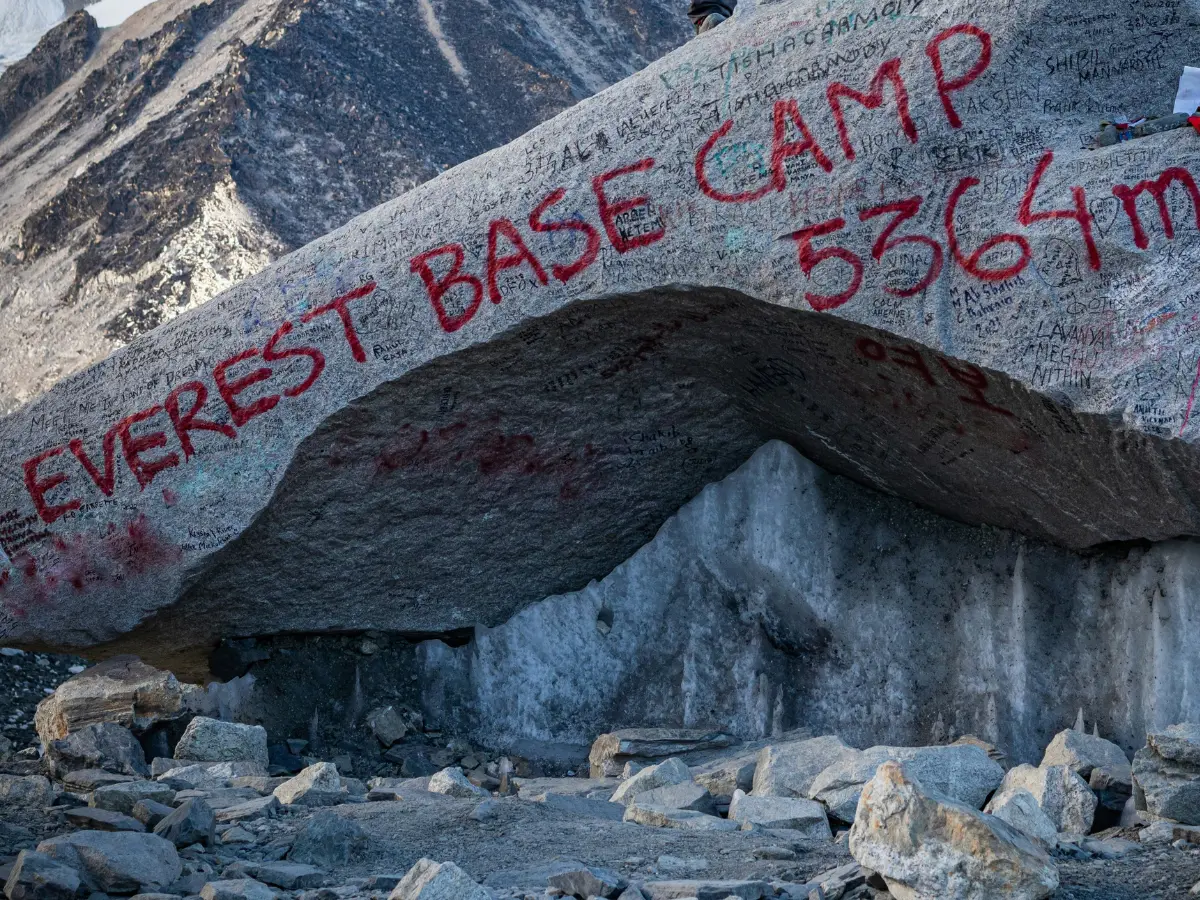)
Killing the Himalayas slowly: Human urine is melting a glacier on Mount Everest
Under the Indus Water Treaty, the Eastern Rivers like Beas, Sutlej and Ravi are allocated to India for unrestricted use. While the Western Rivers like the Jhelum, Chenab and Indus were allocated to Pakistan. The treaty allows India to construct dams in the upstream along the run of the Western rivers for power generation. However, it prohibits interlinking and the transfer of water from one basin to another.
This project shows a change in India's strategic consideration for the Western Rivers; it appears to look beyond the framework of the treaty and give up restraint. New Delhi is treating the upstreams of the Western Rivers as part of its project for the national grid. Islamabad is rattled; it knows and admits that it will have “dangerous implications” in its economy. It poses a heavy risk in agriculture and food security.
The move can be considered one from the playbook of China, just as India sits on the upstream of three rivers, with Pakistan, China is also sitting at the upstream of rivers like the Yarlung Tsangpo in Tibet, which enters India as the Brahmaputra. China has also recently begun the construction of a 60-gigawatt "super-dam" cascade at the Great Bend before it enters Arunachal Pradesh. However, India-China does not have any water sharing agreement, like the Indus Water Treaty; it had an MOU about sharing hydrological data, which China completely abandoned during the 2017 Doklam border standoff, leaving Indian disaster management teams blind to incoming floods. India is now implementing that playbook with Pakistan; it could use the river flow as a strategic deterrence against Pakistan.