

&imwidth=800&imheight=600&format=webp&quality=medium "India and Germany deepen defence ties with new industrial cooperation framework")
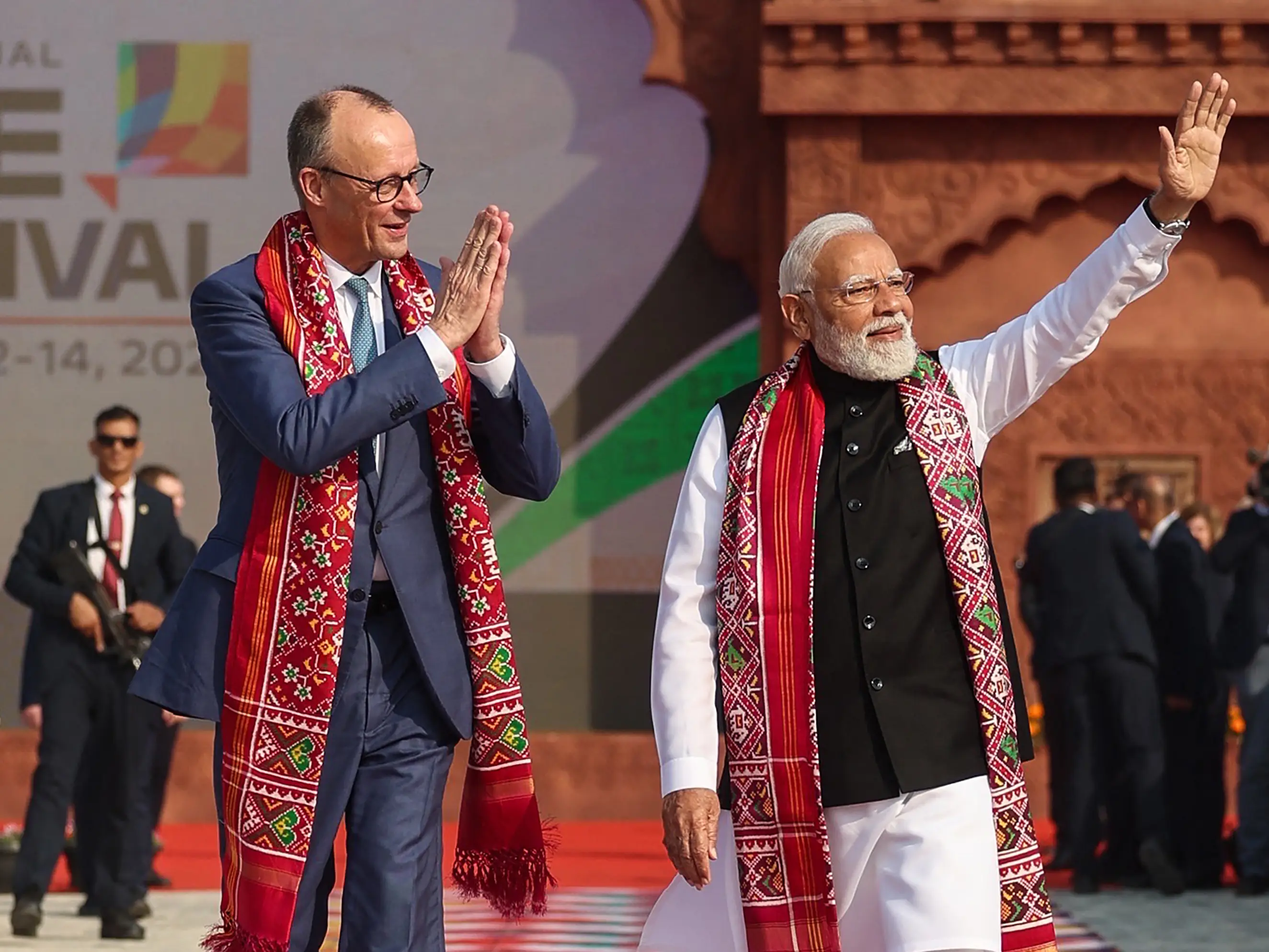
India and Germany's defence partnership took a significant step forward during German Chancellor Friedrich Merz's key visit to India on 12-13 January 2026, marking his first trip to Asia since assuming office.
The visit, coinciding with celebrations of 75 years of diplomatic relations and building on 25 years of the Strategic Partnership, saw Prime Minister Narendra Modi and Chancellor Merz endorse deeper military and industrial ties. The leaders signed a Joint Declaration of Intent on Strengthening the Bilateral Defence Industrial Cooperation, aiming to shift from episodic arms sales to long-term co-development, technology transfer, and co-production.
In their joint statement, PM Modi and Chancellor Merz "endorsed the commitment of both sides to deepen military-to-military cooperation through joint exercises, training and exchanges of senior officials, and noted with satisfaction regular reciprocal port calls by the Naval ships of both countries."
The statement highlighted specific areas of progress: "Both Leaders lauded the continuing cooperation in submarines, obstacle avoidance system for helicopters and Counter Unmanned Aerial Systems (C-UAS)" and "looked forward to enhanced defence industrial collaboration by building a deepened relationship based on shared goals and complementarity of strength, namely skilled workforce and competitive costs from India and high technologies and investment from Germany."
This convergence reflects India's push for strategic autonomy through diversified suppliers. Germany provides access to cutting-edge European technologies without the entanglements of formal alliances, positioning Berlin as a reliable partner amid New Delhi's efforts to reduce reliance on traditional sources.
Trending Stories
A key example is the Helicopter Obstacle Avoidance System (OAS), which addresses critical survivability gaps in Indian rotary-wing aviation. These software-driven, safety-critical systems enable safer low-level, night, and degraded-visibility operations in challenging terrains like the Himalayas.
The technology represents an ideal test case for trust-based transfer, as it is not merely an add-on but integral to mission success. This intent materialised earlier with a landmark agreement between India's Hindustan Aeronautics Limited (HAL) and German firm HENSOLDT at the Dubai Air Show in November 2025.
The deal includes technology transfer, manufacturing rights, and integration of the advanced OAS on Indian helicopter platforms, paving the way for indigenous capability building and potential exports.
The developments signal a maturing partnership, with Germany showing greater openness to defence engagement beyond NATO frameworks.
