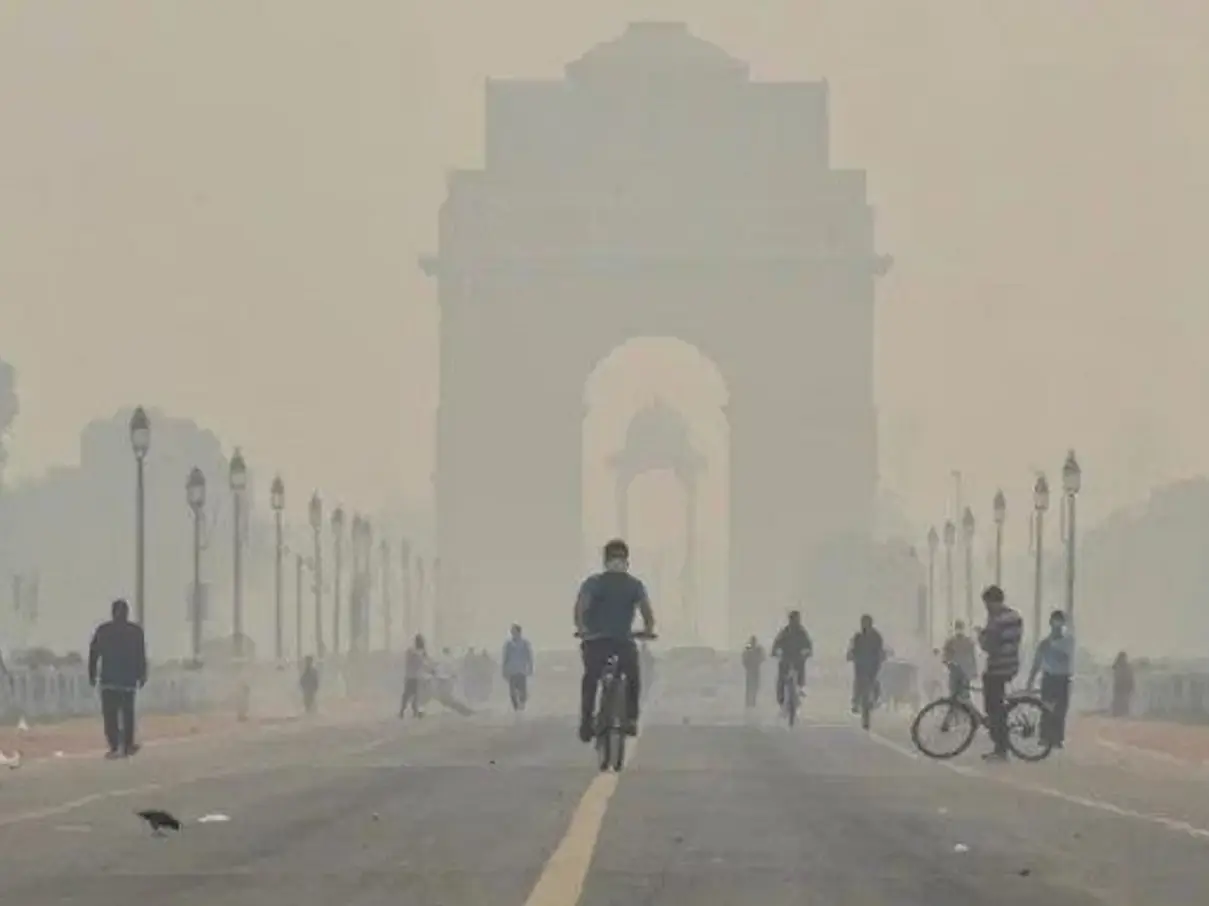
&imwidth=800&imheight=600&format=webp&quality=medium "Delhi chokes as pollution levels rise, AQI breaches 400 in several areas; city enters ‘red zone’")
The air quality in Delhi worsened sharply as pollution levels soared on Saturday, with several areas of the city recording an Air Quality Index (AQI) above 400—a level categorised as ‘severe’. The toxic air and haze pushed the national capital into the ‘red zone’, making it one of the most polluted cities in the country. Data from the Central Pollution Control Board (CPCB) showed that Delhi’s 24-hour average AQI, measured at 4 pm, stood at 361, placing it second among the most polluted cities nationwide. On Friday, the city had recorded an AQI of 322, the highest in the country. According to the CPCB’s Sameer app, which monitors real-time data from the city’s 39 monitoring stations in Delhi, at least 15 stations reported an AQI at or above the 400-mark at 6 pm.
The AQI in Alipur was 417, ITO (408), Punjabi Bagh (404), Nehru Nagar (407), Patparganj (403), Ashok Vihar (402), Sonia Vihar (401), Jahangirpuri (409), Rohini (408), Vivek Vihar (415), Narela (412), Wazirpur (424), Bawana (424), Chandni Chowk (400) and Burari Crossing (420).

The National Capital Region also continued to reel under poor air quality, as Noida recorded an AQI of 354, Greater Noida 336, and Ghaziabad 339, all in the ‘very poor’ category.
PM2.5 and PM10 were the main pollutants on Saturday and contributed to the thick smog blanket. The Decision Support System (DSS) for air quality forecasting estimated that stubble burning accounted for nearly 30 per cent of Delhi’s pollution, while vehicular emissions contributed 15.2 per cent.
Trending Stories
)
'Nothing is more important than...': PM Modi announces BIG decision as Delhi student protest grows
)
Maharashtra Bandh call on July 23: What all you need to know
)
'George Soros playbook': Understanding the foreign funding network around Sonam Wangchuk
&im=FitAndFill=(700,400))
Why US fighter jets use seamless bubble canopies compared to Russian jets
)
Employer pays Rs 4.25 lakh for driver's surgery. What he said to the doctor is an even bigger lesson in kindness
&im=FitAndFill=(700,400))
From 'Jana Nayagan' Vijay to MGR: 12 politicians who released films while serving as chief ministers and ministers
)
Trump blames AI for viral video of mystery objects thrown from White House window, WH says ‘maintenance’. Who's lying?
&im=FitAndFill=(700,400))
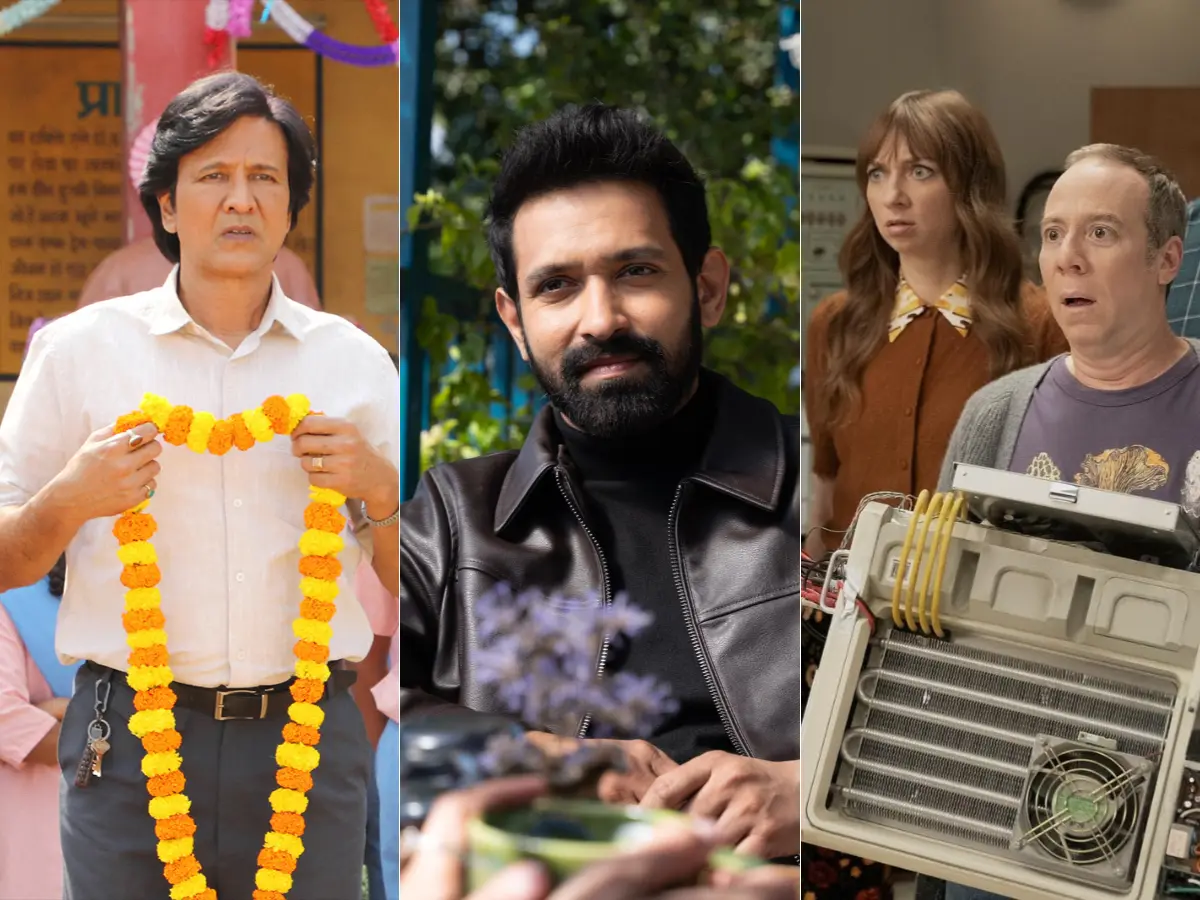
New OTT releases this week (July 20-26, 2026): Musafir Cafe, Adarsh Baal Vidyalaya, 72 Hours- 5 new titles coming on Netflix, Prime Video and more
)
FIFA 2026 | 'I am truly sorry': Argentina's Enzo Fernandez, who get red card in final, reacts to loss
)
Dharmendra Pradhan's daughter deactivates IG, LinkedIn as protesters demand her father's resignation, target her university page
)
Man with babyish face spends Rs 10 lakh on beard transplant to be taken seriously at work
)
IND vs ZIM, 1st T20I: When and where to watch live streaming in India?
)
'Driven and courageous': Salman Khan backs student protests, urges education system reforms without political interference
)
'National mourning in America': Iran's IRGC issues chilling 9/11-style threat to US
)
Foreign funding behind CJP? Delhi HC to hear plea seeking NIA probe into protest amid backlash over police crackdown
&im=FitAndFill=(700,400))
Meet top 5 Indian batters with most T20I runs against Zimbabwe
)
Balen Shah's diplomatic U-turn? Nepal PM to hold one-on-one meetings with India, China envoys
)
ICC ODI Rankings: Joe Root jumps big, India trio close in on No. 1 spot
)
Delhi Police chief gets NSA detention powers but force denies link to CJP protests
)
Dharmendra Pradhan's 1997 paper leak protest surfaces amid calls for resignation
)
Iran flew IRGC men, advisers and military gear to Yemen, bolstered Houthis for Red Sea blockade: Sources
)
Pan Am plane wreckage that remained untraceable for 74 years has finally been found
)
He predicted COVID-19 and 2008 economic crisis, was labeled fearmonger. Now he has another dire warning
)
'Most important foundation': Dharmendra Pradhan's long note on 'school education' amid calls for his resignation
)
Ukrainian drone wrecks irreplaceable Russian bomber 800km inside the country, satellite images show it halved
&im=FitAndFill=(700,400))
Meet top 5 batters with most runs in India vs Zimbabwe T20Is
Satellite imagery indicated 100 incidents of stubble burning in Punjab, 18 in Haryana, and 164 in Uttar Pradesh on Friday.
Forecasts from the Air Quality Early Warning System for Delhi suggest that the city’s air is unlikely to improve soon, with the AQI expected to stay in the ‘very poor’ category in the coming days. Since Diwali, Delhi’s air quality has persistently oscillated between ‘poor’, ‘very poor’, and at times, ‘severe’.
According to CPCB standards, an AQI between 0–50 is considered “good”, 51–100 “satisfactory”, 101–200 “moderate”, 201–300 “poor”, 301–400 “very poor”, and 401–500 “severe”.
But why then is GRAP 3 still not enforced?
Graded Response Action Plan (GRAP) stage 3 has not been enforced yet because the city’s air quality this November is comparatively better than in the same period last year, said the Delhi Pollution Control Committee (DPCC). Officials said that pollution levels have not yet reached the severe threshold that would trigger Stage 3 restrictions.
“Out of the last seven days, six have recorded better air quality than the corresponding days last year. This has been possible because of timely and coordinated action taken across departments,” reported PTI, citing an official.
“Last year, GRAP Stage 3 was imposed on November 13. This time, with support from all departments and the residents of Delhi, we hope to prevent reaching that stage,” the official said.
The officials credited this improvement to timely and coordinated actions like intensified dust control, road cleaning, anti-smog operations, and stricter checks on vehicles and industrial emissions.