
&imwidth=800&imheight=600&format=webp&quality=medium "‘Deserter’-turned-‘trusted asset’ of Pakistan Army, Tahawwur Rana reveals how he helped plot 26/11 Mumbai attacks")
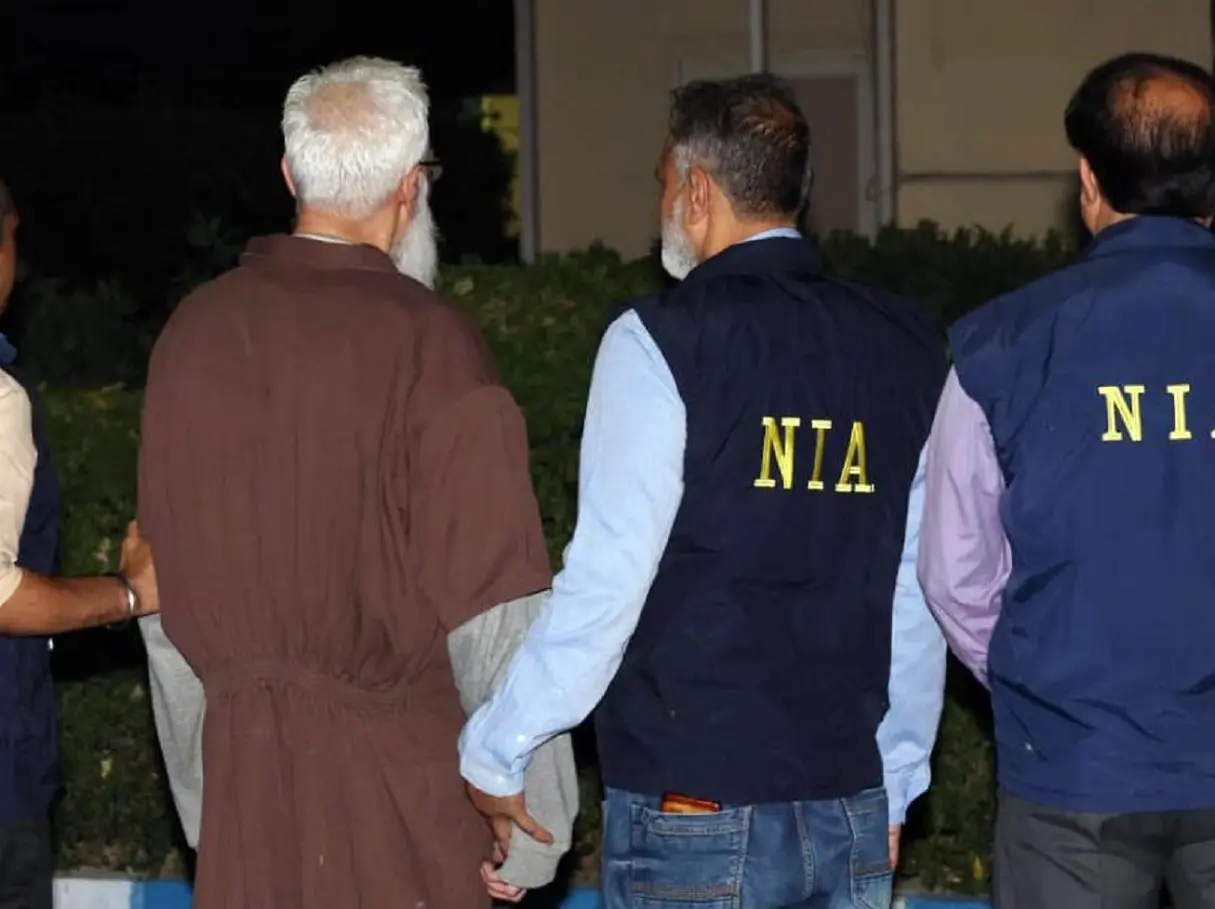
Tahawwur Hussain Rana, a Canadian national and former Pakistan Army captain extradited to India on April 10 for his role in the deadly 26/11 attacks in India’s financial capital, Mumbai, has revealed during questioning in National Investigation Agency (NIA) custody that he was a “trusted agent” of the Pakistani Army and played an active role in planning the 2008 Mumbai terror attacks. Rana has also admitted to knowing Pakistani officials Sajid Mir, Abdul Rehman Pasha, and Major Iqbal, all accused of planning the Mumbai attacks and of having actively coordinated with Lashkar-e-Taiba and the Pakistani spy agency ISI.
Rana told investigators that he inspected places like Chhatrapati Shivaji Maharaj Terminus and believed that the 26/11 attacks were carried out in collaboration with Pakistan’s Inter-Services Intelligence (ISI).
Rana also admitted that he visited India in November 2008 and stayed at a hotel in Mumbai’s Powai area on the 20th and 21st, days before the terror attacks, and left for Beijing via Dubai just before the strike.
Helped David Coleman Headley identify key targets

64-year-old Rana also revealed that he helped David Coleman Headley identify key targets such as the Chhatrapati Shivaji Terminus, said sources in the Mumbai Police crime branch.
Rana, one of the key conspirators of the 26/11 Mumbai attacks, has admitted that he and his childhood friend David Coleman Headley attended many training sessions with the Pakistan-based terror group Lashkar-e-Taiba (LeT).
Rana is lodged in Delhi’s Tihar Jail and has been interrogated by the NIA and the Mumbai Crime Branch.
Trending Stories
)
‘I have a big decision coming up’: Trump says he’s approaching major ‘crossroad’ in Iran war
)
Chiefs tight end Travis Kelce named one of the victims in $35 million ponzi scheme
)
FACT CHECK: Why did PM Modi ask Xi ‘is it okay’ at BRICS Summit? New video reveals...
Mandakini breaks silence on Dawood Ibrahim photo: 'I was not invited by him'
)
Former India player Diana Edulji wants Smriti Mandhana to replace Harman as skipper at the earliest
)
Formula One reveals the 2027 race calendar; Monaco to host sprint race for the first time
&im=FitAndFill=(700,400))
Meet top 5 batters in the latest ICC T20I Rankings
)
All Indian goods to get duty-free access to New Zealand
)
240-million-year-old bizarre 'pig with a tusk' creature creates new dilemma over origin of dinosaurs
)
US House votes 417-3 to pass Ratepayer Protection Act targeting AI data center electricity costs
)
China urges Iran to rein in Houthis after Saudi Arabia’s appeal for help: Report
)
Hong Kong unveils 11 new measures to boost birth rates, offers higher cash bonuses and housing perks
)
Former OpenAI researcher warns of growing risks from Artificial Intelligence
)
Veteran actor Anant Nag honoured with Indian cinema’s highest award
)
Dolly Parton dies at 80: Country legend’s team reveals cause of death
)
Tata Trusts chairman Noel Tata calls Chandrasekaran’s reappointment ‘illegal’, rejects Tata Sons listing
)
Trump seen holding Kennedy Center demolition image after court blocks name plan
)
Fed raises rates for first time in 3 years, Kevin Warsh defies Trump as inflation mounts
&im=FitAndFill=(700,400))
Widow's Bay, Pitt and Hacks: Where to watch these 2026 Emmy winners
)
US drone firm linked to Trump’s sons signs MoU with Pakistan army, gets initial order
)
Daayra movie review: Kareena Kapoor, Prithviraj Sukumaran shine in Meghna Gulzar’s cop-versus-cop crime thriller
)
Pak batter Rizwan's petition against being questioned by cyber crime agency rejected by court
)
Prince William and Kate Middleton take royal titles to Rothesay during Scotland visit
)
Trump gets new power to hit India, China with up to 100% tariffs as US Senate clears Russia sanctions bill
)
‘Imagine 50 AI fighters cornering one manned jet’: India’s mobbing doctrine eyes a new era of air warm
)
Saudi vs Houthis: Riyadh claims to have shot Houthi drone targeting Mecca
)
US Treasury rallies global financial institutions for Op Economic Outcast to isolate Iran
)
Trump’s rare gesture for Xi: US president to personally welcome Chinese leader at airport
)
US fears Iranians launched cyberattacks on oil tankers | Gravitas
)
The Verdict | Hostile to whom? Canada looks to Europe — and Trump threatens tariffs
)
Want to get married within a year? Why 18 lakh people rush to Jaipur for ‘sacred henna’
&im=FitAndFill=(700,400))
Suriya and Jyothika say ‘I do’ again after 20 years! See their dreamy wedding pics
)
Laura Wolvaardt sets new world record for most WT20I runs in a year
)
Mahua Moitra moves UN over alleged exclusion of Muslim officers from Amit Shah events
)
The Early Spring season 2 is happening, but fans have one request - 'don't change the actors'
)
Ukraine plans record $109 bn defence spending, nearly two thirds of budget amid Russia war
)
He further claimed he was a “trusted asset” of the Pakistan Army and had also been sent on a covert mission to Saudi Arabia during the Gulf War on instructions from the Pakistani army.
Rana was declared ‘deserter’ by Pak Army
Rana told investigators that he completed his MBBS from the Army Medical College in Rawalpindi, Pakistan, in 1986 and was commissioned as a Captain doctor in the Pakistani Army in Quetta. He was posted in sensitive regions like Sindh, Balochistan, Bahawalpur, and Siachen-Balotra. During his Siachen posting, Rana developed pulmonary oedema, a condition that causes a fluid buildup in the lungs, leading to absence from duty and was consequently declared a “deserter” by Pakistan Army.
Rana had shared earlier that he agreed to be part of the terror plot because Headley had assured that he would help clean Rana’s records.
Charged alongwith LeT and Harkat-ul-Jihadi Islami operatives
The NIA has charged Rana with conspiring alongside LeT and Harkat-ul-Jihadi Islami (HUJI) operatives—both banned under the Unlawful Activities (Prevention) Act (UAPA)—and other Pakistan-based handlers.
On 26 November, 2008, ten Pakistani terrorists carried out a series of attacks across Mumbai that resulted in the deaths of 166 people, including civilians, foreign nationals, and security personnel.
The terrorists targeted prominent landmarks like the Taj Hotel, the Oberoi Hotel, the Jewish Centre and the Chhatrapati Shivaji Terminus during a nearly 60-hour-long siege.

