'5000 km strike range': How India's Agni-5 missile could trigger fear for Pakistan; Shehbaz Sharif, Asim Munir alarmed

&imwidth=600&imheight=450&format=webp&quality=medium "'5000 km strike range': How India's Agni-5 missile could trigger fear for Pakistan; Shehbaz Sharif, Asim Munir alarmed")
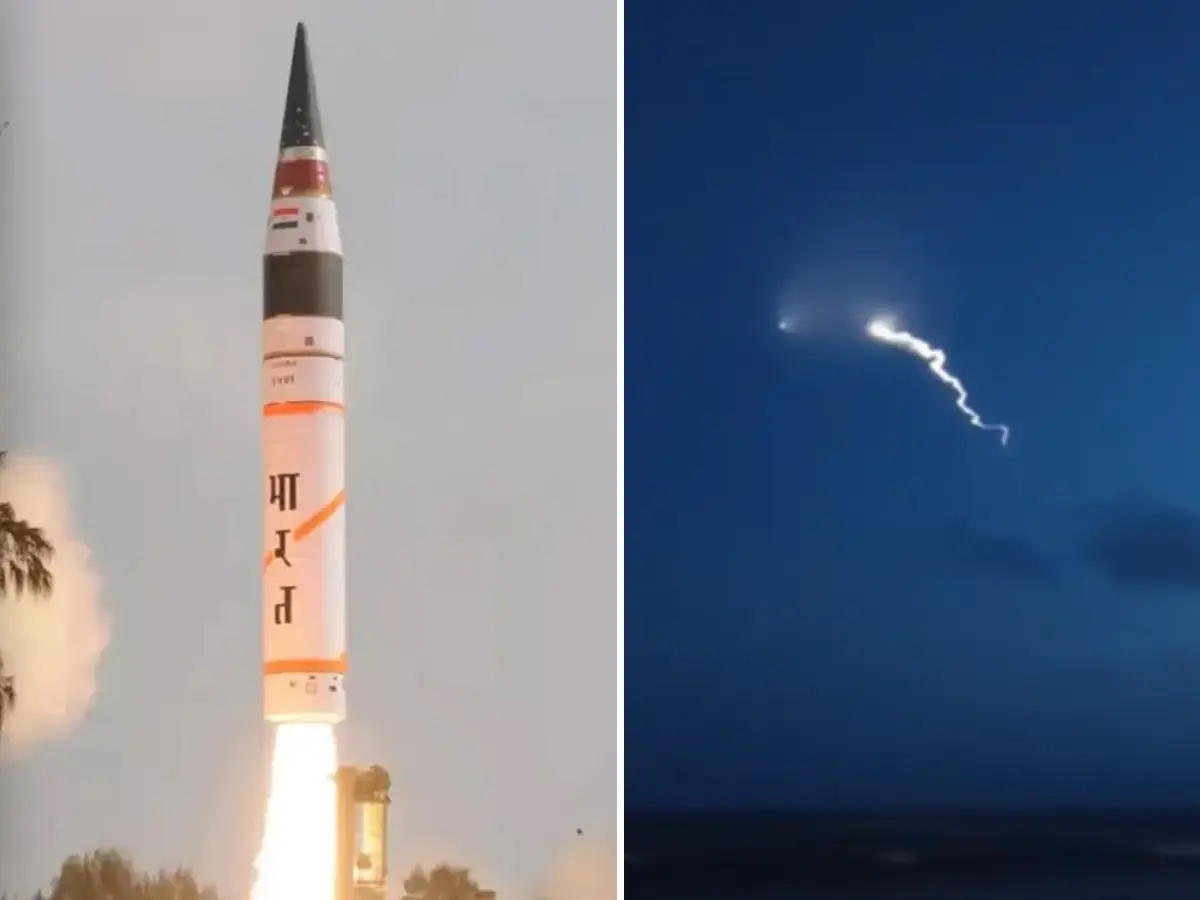
India's Agni-5 intermediate-range ballistic missile Photograph: (X)
India today test-fired Agni-5 ballistic missile, marking a major advancement in India's strategic defence capabilities. However, a Pakistan-based think tank has warned Pakistan prime minister that it can pose "serious risks" to general stability.
India on Wednesday (August 20) test-fired its Agni-5 intermediate-range ballistic missile from the Integrated Test Range, off the Odisha coast, the Ministry of Defence announced in a statement. It marks a major advancement in India's strategic defence capabilities.
The Agni-5 missile is developed by the Defence Research and Development Organisation (DRDO) and is among the most advanced long-range missiles with a range of over 5000 kilometres.
"Intermediate Range Ballistic Missile ‘Agni 5’ was successfully test-fired from the Integrated Test Range, Chandipur in Odisha today. The launch validated all operational and technical parameters," the Ministry of Defence said in a statement.
How does it affect Pakistan?
The launch of the Agni-5 missile can pose a threat to Pakistan. The Strategic Vision Institute (SVI), a Pakistan-based think tank, on Tuesday warned Pakistan Prime Minister Shehbaz Sharif and Army Chief Asim Munir that India's missile programme poses "serious risks" to general stability.
Trending Stories
&imwidth=280&imheight=210&format=webp&quality=medium)
&imwidth=280&imheight=210&format=webp&quality=medium)
&imwidth=280&imheight=210&format=webp&quality=medium)
&imwidth=280&imheight=210&format=webp&quality=medium)
&imwidth=280&imheight=210&format=webp&quality=medium)
&imwidth=280&imheight=210&format=webp&quality=medium)
&imwidth=280&imheight=210&format=webp&quality=medium)
&imwidth=280&imheight=210&format=webp&quality=medium)
&imwidth=280&imheight=210&format=webp&quality=medium)
&imwidth=280&imheight=210&format=webp&quality=medium)
&imwidth=280&imheight=210&format=webp&quality=medium)
&imwidth=280&imheight=210&format=webp&quality=medium)
&imwidth=280&imheight=210&format=webp&quality=medium)
&imwidth=280&imheight=210&format=webp&quality=medium)
&im=FitAndFill=(700,400)&imwidth=280&imheight=210&format=webp&quality=medium)
&imwidth=280&imheight=210&format=webp&quality=medium)
&imwidth=280&imheight=210&format=webp&quality=medium)
&imwidth=280&imheight=210&format=webp&quality=medium)
&imwidth=280&imheight=210&format=webp&quality=medium)
&imwidth=280&imheight=210&format=webp&quality=medium)
&imwidth=280&imheight=210&format=webp&quality=medium)
&imwidth=280&imheight=210&format=webp&quality=medium)
&imwidth=280&imheight=210&format=webp&quality=medium)
&imwidth=280&imheight=210&format=webp&quality=medium)
&imwidth=280&imheight=210&format=webp&quality=medium)
&imwidth=280&imheight=210&format=webp&quality=medium)
&imwidth=280&imheight=210&format=webp&quality=medium)
&imwidth=280&imheight=210&format=webp&quality=medium)
&imwidth=280&imheight=210&format=webp&quality=medium)
&imwidth=280&imheight=210&format=webp&quality=medium)
&imwidth=280&imheight=210&format=webp&quality=medium)
The think tank further noted that India's missile development was boosted after it joined the Missile Technology Control Regime (MTCR) in 2016, which helped India in gaining access to advanced systems.
It warned that India's test of a long-range intercontinental ballistic missile could destabilise the region and carry "serious repercussions" for global security.
"Developments of missiles with ranges of 8,000km and above and possessing nuclear capability are a clear manifestation of power projection globally and hegemonic designs," the SVI noted.
What makes Agni-5 different?
It is equipped with modern navigation, guidance, warhead and propulsion technologies and also boosts India's nuclear deterrence.
Moreover, the missile can carry a nuclear warhead of up to 1.5 tonnes. Built with lightweight composite materials, the missile has better efficiency and reliability.
It is also equipped with Multiple Independently Targetable Re-entry Vehicle (MIRV) technology, which allows a single missile to deliver multiple warheads at different angles.
The Agni-5 missile uses a ring-laser gyroscope-based inertial navigation system (RLG-INS) and a micro-inertial navigation system (MINGS), supported by satellite navigation systems.
