The hidden history of Indian festival Rath Yatra in Puri: Why six chariots were built in ancient times

&imwidth=600&imheight=450&format=webp&quality=medium "The hidden history of Indian festival Rath Yatra in Puri: Why six chariots were built in ancient times")
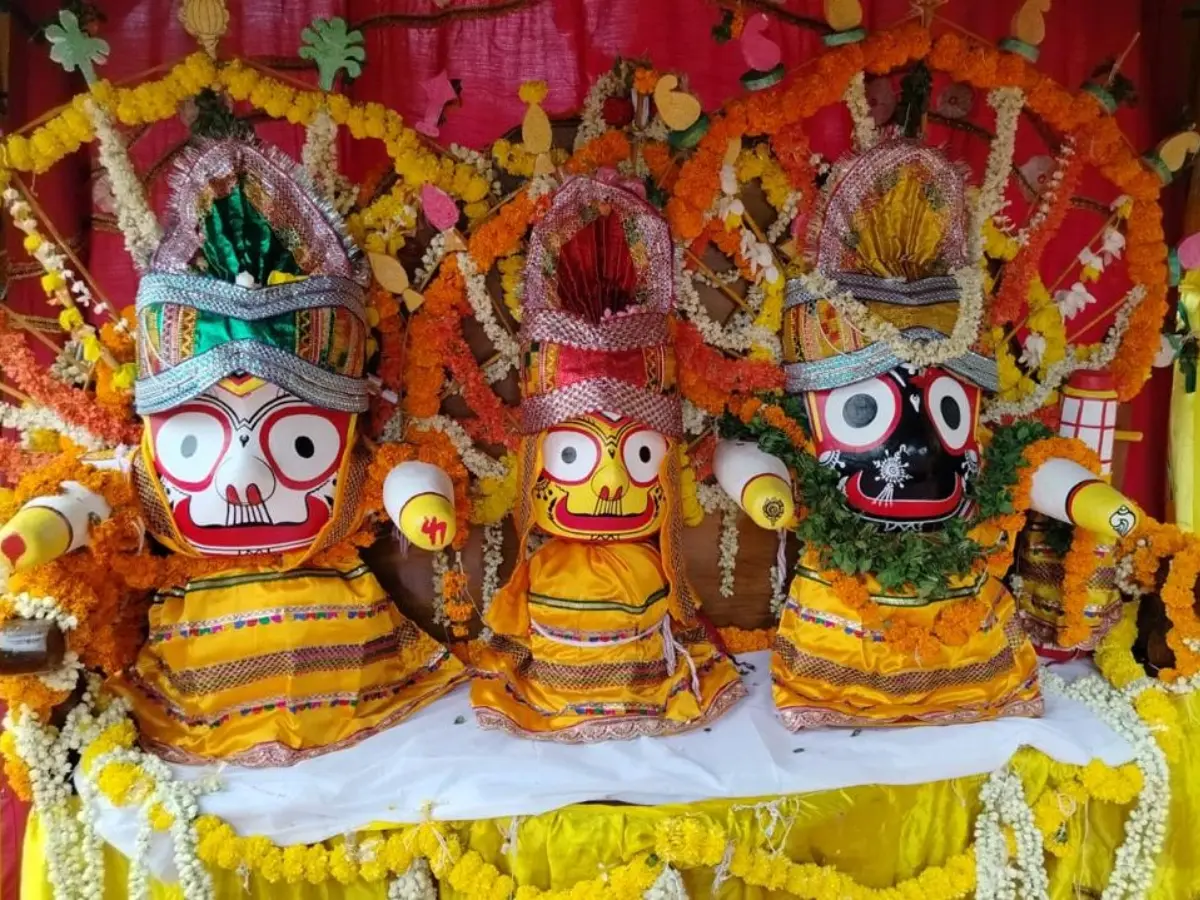
Rath Yatra's hidden legend in Puri Photograph: (WION)
A hidden legend of Rath Yatra in Puri reveals that the festival used to have six chariots instead of three in ancient times. Read to know more.
One of the world-renowned festivals, originating from Puri, a coastal city situated in the eastern Indian state of Odisha, the Jagannath Rath Yatra begins today, marking the start of a grand nine-day chariot festival. Millions of devotees gather to pull the giant wooden chariots of Lord Jagannath, his brother Balabhadra and sister Subhadra as they journey to their aunt's home, the Gundicha temple. But did you know a legend says the Rath Yatra in Puri used to have six chariots instead of three in ancient times? Let's delve in to know more.
What is the legend behind the six chariots during Rath Yatra in Puri?
A legend states that a river named Malini used to flow across the grand road (Bada Danda road, Puri), a 3.5 km stretch through which the chariots are to be pulled, as per several reports. Devotees used three chariots to reach the river bank. They carried the deities across the water and then used three more chariots to reach the Gundicha temple.

Unlike in the present year's Rath Yatra, during ancient times, the pulling of six chariots happened from Srimandir to the riverbank and the other three from the riverbank to the Gundicha temple. Then the deities were taken to the other side of the river through a makeshift bridge. Then the deities were mounted on the three chariots waiting on the other side of the river. These three chariots were pulled to the Gundicha temple.
Trending Stories
)
)
)
&im=FitAndFill=(700,400))
)
)
)
)
)
)
)
)
)
)
)
)
)
)
)
&im=FitAndFill=(700,400))
)
)
)
)
)
)
)
)
)
)
&im=FitAndFill=(700,400))
)
)
)
&im=FitAndFill=(700,400))

Back then, of the nine days, the Holy Trinity’s stay at Gundicha temple was three days only. The remaining six days were spent getting used to the journey. This apart, devotees would face difficulty in pulling six chariots on the sand. One day, Saradha Devi, wife of the then king Gajapati Narasingha Dev, dreamt of Lord Jagannath ordering her to make the Rath Yatra free from any obstacles. After the vision, the mouth of the river Malini was closed, and the river was filled with sand. This closed mouth is now called Banki Muhana, and since then the place has been known as Saradha Setti or Saradha Baali. The devotees then put the holy sand of Saradha Baali on their heads, rub the sand on their entire body, roll in the sand and are fully absorbed with love for Mahaprabhu.
Today, the Malini River has dried up or shifted, and the Grand Road is a continuous 3.5 km stretch. Therefore, starting from the 13th century (during the era of King First Bhanudev), the festival was simplified to use just three massive chariots for the entire journey.
How many wheels are there in the three chariots for every year's Rath Yatra in Puri?
The three sacred chariots of the Rath Yatra have a total of 42 wheels. Each chariot is unique and has a different number of wheels. Lord Jagannath's chariot (Nandighosha) has 16 wheels, Lord Balabhadra's chariot (known as Taladhwaja) has 14 wheels and Devi Subadhra's chariot (Devadalana/Darpadalana) has 12 wheels. The wooden wheels are giant, measuring about seven feet in diameter. Each chariot carries one of the deities and is distinct in height, colour, and number of wheels.

The main Rath Yatra procession took place on July 16, 2026. It is celebrated on the second day (Dwitiya) of the Hindu lunar month of Ashadha. Three gigantic wooden chariots are pulled by thousands of devotees using thick ropes. The largest chariot for Lord Jagannath is about 45 feet tall.
The deities journey from the 12th-century Jagannath Temple to the Gundicha Temple. They stay there for nine days. The festival began on July 16. The return journey where the deities go back to their main home. This will occur on July 24, 2026.

