


India's Akash surface-to-air missile system was developed with an unusual level of direct military involvement, with Indian Army and Air Force personnel working inside DRDO laboratories to shape the weapon's operational capabilities, shared veteran missile scientist Dr Prahlada Rao.
Speaking exclusively on WION Defence Pulse, the Padma Shri awardee, widely regarded as the father of the Akash missile, recalled how the Indian armed forces became closely involved in its development more than four decades ago.
How the Indian Army and Air Force helped build Akash
“When we started the Akash missile system, one thing very new happened,” Dr. Rao recalled. He revealed that the Indian Army and Air Force proposed stationing small teams inside DRDO laboratories to interact directly with scientists during subsystem testing and flight evaluations of the Akash missile.
The arrangement initially made researchers uncomfortable. Missile development involved years of experimentation, including failures and successes, and the scientists were not accustomed to having operational users observe the process so closely. But the military insisted on being involved to ensure the finished system met its requirements.
“We made the Akash missile system like almost custom made to the Indian Army, Indian Air Force because they were literally guiding us,” Rao explained. That involvement shaped critical operational parameters, including reaction time, mobility, ergonomics, single-shot kill probability and performance under monsoon conditions. Rao believes this close cooperation helped build military confidence in Akash and contributed to its performance during Operation Sindoor.
Trending Stories
&imwidth=180&imheight=135&format=webp&quality=medium)
Poland: 19-year-old stabs several at Polish vocational school
&imwidth=180&imheight=135&format=webp&quality=medium)
'Baseless and misconceived': India issues statement after Elon Musk's 'oligarchs' claim over Starlink delay
&imwidth=180&imheight=135&format=webp&quality=medium)
‘Team first and team ahead’: India coach Gambhir pens heartfelt wish for chief selector Ajit Agarkar
&imwidth=180&imheight=135&format=webp&quality=medium)
Trump's naked 23-karat gold statue unveiled near European Parliament
&imwidth=180&imheight=135&format=webp&quality=medium)
Nana Patekar: Remembering a legend of the Indian cinema
&imwidth=180&imheight=135&format=webp&quality=medium)
Captain Smit Machchhar on feet again, walks 10 steps as recovery continues after Flydubai flight attack
&imwidth=180&imheight=135&format=webp&quality=medium)
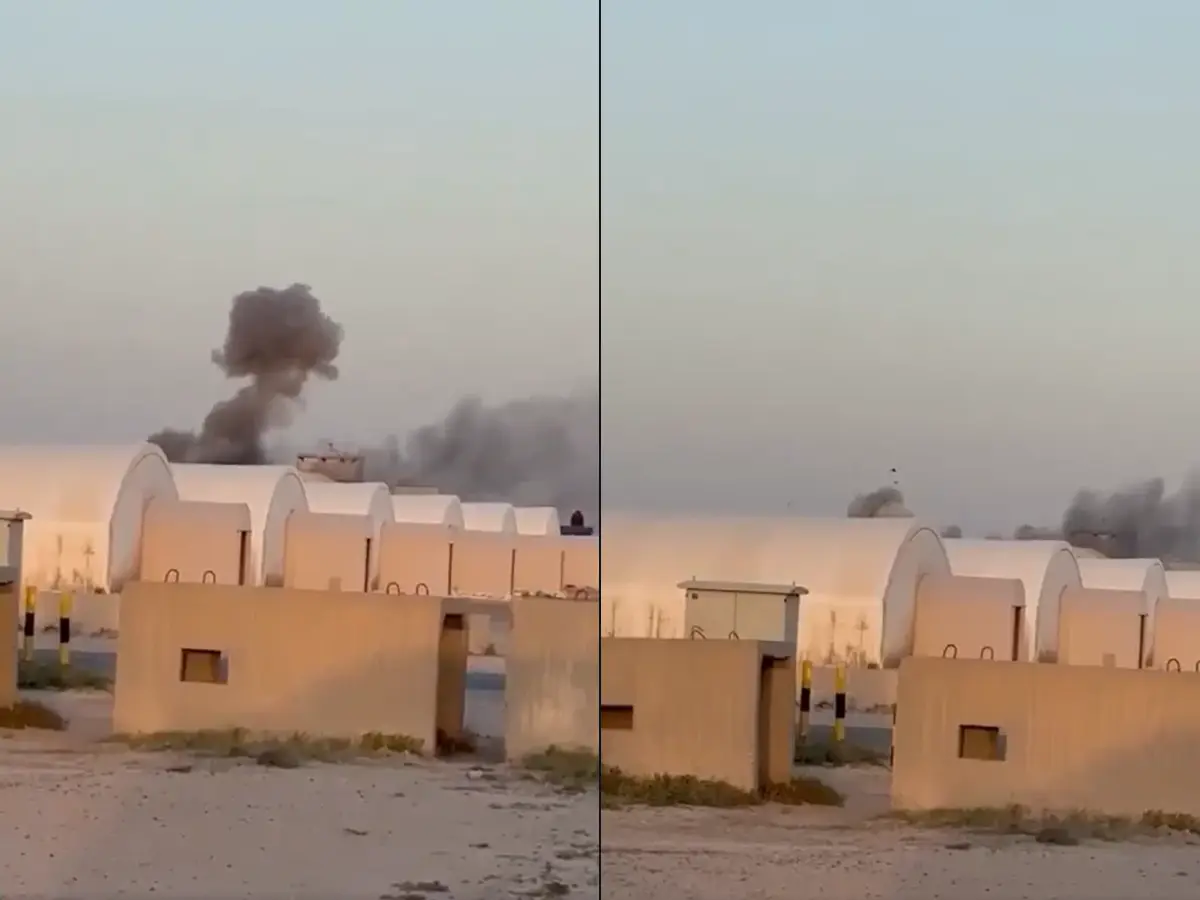
'They came in, they hit us': New videos show Iranian attacks on US Camp Buehring in Kuwait | Watch
&imwidth=180&imheight=135&format=webp&quality=medium)
Ronaldo sends 'a hug' after Messi says he misses 'wearing the blue and white'
&imwidth=180&imheight=135&format=webp&quality=medium)
Trump distances himself from senior political advisers over work for pro-Russian government
&imwidth=180&imheight=135&format=webp&quality=medium)
Narendra Modi Stadium bomb threat declared hoax; India & Australia U19 squads safe
&imwidth=180&imheight=135&format=webp&quality=medium)
US midterms 2026: Why the Latino vote could shape control of Congress
&imwidth=180&imheight=135&format=webp&quality=medium)
BTS agency HYBE announces first-ever Weverse Con Festival in India
&imwidth=180&imheight=135&format=webp&quality=medium)
US Midterms 2026: Barack Obama hits campaign trail to boost Democratic candidates
&imwidth=180&imheight=135&format=webp&quality=medium)
Shia LaBeouf and Mia Goth head for divorce after nearly 10 years
&imwidth=180&imheight=135&format=webp&quality=medium)
Nicolas Maduro, wife likely to face new charges over alleged torture of US citizens: Report
&imwidth=180&imheight=135&format=webp&quality=medium)
Texas man executed by lethal injection; first US execution since botched Christa Pike execution
&imwidth=180&imheight=135&format=webp&quality=medium)
Jon Rahm quits LIV Golf as breakaway tour attempts to relaunch itself
&imwidth=180&imheight=135&format=webp&quality=medium)
Christa Pike wakes after failed execution, asks 'Where am I and who are you?'
&imwidth=180&imheight=135&format=webp&quality=medium)
Christa Pike 'angry' and 'confused' after failed execution; judge orders to preserve evidence
&imwidth=180&imheight=135&format=webp&quality=medium)
Nigerian President Bola Ahmed Tinubu hails Modi’s 25-year leadership milestone, calls for deeper Nigeria-India strategic ties
&im=FitAndFill=(700,400)&imwidth=180&imheight=135&format=webp&quality=medium)
US midterms 2026: 10 leaders and candidates to watch in the battle for Congress
&imwidth=180&imheight=135&format=webp&quality=medium)
Nana Patekar's #MeToo controversy: From Tanushree Dutta’s allegations to court ruling
&imwidth=180&imheight=135&format=webp&quality=medium)
Veteran actor Nana Patekar dies at 75 after suffering cardiac arrest
&imwidth=180&imheight=135&format=webp&quality=medium)
Musk alleges ‘oligarchs’ blocking Starlink in India, here is what we know so far
&imwidth=180&imheight=135&format=webp&quality=medium)
Lightning strikes IndiGo Patna-Lucknow flight at 17,000 feet, damages nose; all 110 safe
&imwidth=180&imheight=135&format=webp&quality=medium)
Mall of America attack: FBI arrests man over alleged ISIS-inspired mass shooting plot with AK-47 and 200 rounds
&imwidth=180&imheight=135&format=webp&quality=medium)
France holds talks with Taliban government amid diplomatic outreach
&imwidth=180&imheight=135&format=webp&quality=medium)
'I should win it': Trump renews Nobel Peace Prize claim ahead of 2026 announcement
&imwidth=180&imheight=135&format=webp&quality=medium)
IndiGo flight struck by lightning at 17,000 feet, nose of Patna-Lucknow flight damaged
&imwidth=180&imheight=135&format=webp&quality=medium)
US readying to strike Iran? Report suggests Trump preparing to put on show of strength ahead of US midterms
&im=FitAndFill=(700,400)&imwidth=180&imheight=135&format=webp&quality=medium)
World’s top vehicle producers: Top 10 countries making the most cars. Check where India stands
&imwidth=180&imheight=135&format=webp&quality=medium)
Trump to honour Elon Musk, Sergey Brin and Jensen Huang with top science honour at White House. Check the full list here
&imwidth=180&imheight=135&format=webp&quality=medium)
'We don't think so': Trump says Russian plague lab worker's death not linked to bio-weapon
&imwidth=180&imheight=135&format=webp&quality=medium)
France protests: How a Gen Z school movement turned into a political war | The Verdict
From India's air defence to international exports
The Akash family has since evolved from an indigenous development programme into an operational air-defence system with overseas customers. Armenia became its first export customer, while India has also announced exports to Tajikistan and Turkmenistan. Rao identified the system's combination of cost-effectiveness, operational performance and established logistics as major attractions for foreign militaries.
He also indicated that additional countries in Southeast Asia, Central Asia and West Asia were showing interest. For prospective customers, he explained, the decision involves more than missile performance. Long-term maintenance, supply-chain reliability and defence relationships are equally important.
Akash-NG brings autonomous interception
Dr. Rao also explained how the Akash missile family has evolved through successive upgrades. According to him, Akash-NG incorporates a smaller, more advanced seeker, reduced weight and greater range. One of its significant improvements is autonomous flight after launch, allowing the missile to seek and engage a target without continuous ground guidance.
This becomes important in mountainous terrain, where missiles may need to negotiate complex geography to intercept low-flying threats. Dr. Rao also highlighted a feature designed to increase missile speed immediately before interception, reducing the target's opportunity to evade.
The next frontier is intelligent air defence
Looking ahead, Dr. Rao predicted that aerial threats would demand faster and more intelligent interception systems. He emphasised the growing importance of artificial intelligence, advanced command-and-control networks and integrated surveillance.
Directed-energy weapons, including lasers and high-power microwaves, could eventually complement conventional missile-based air defence, although he stressed that such systems require exceptionally precise targeting.
The evolution of Akash, he suggested, demonstrates the value of developing military technology with the armed forces involved from the laboratory stage itself. What began as an indigenous missile project has become a broader example of how India's scientists, soldiers and defence manufacturers can jointly build capabilities for both national security and international markets.

