
&imwidth=800&imheight=600&format=webp&quality=medium "Wion's global markets and economic health check for June")
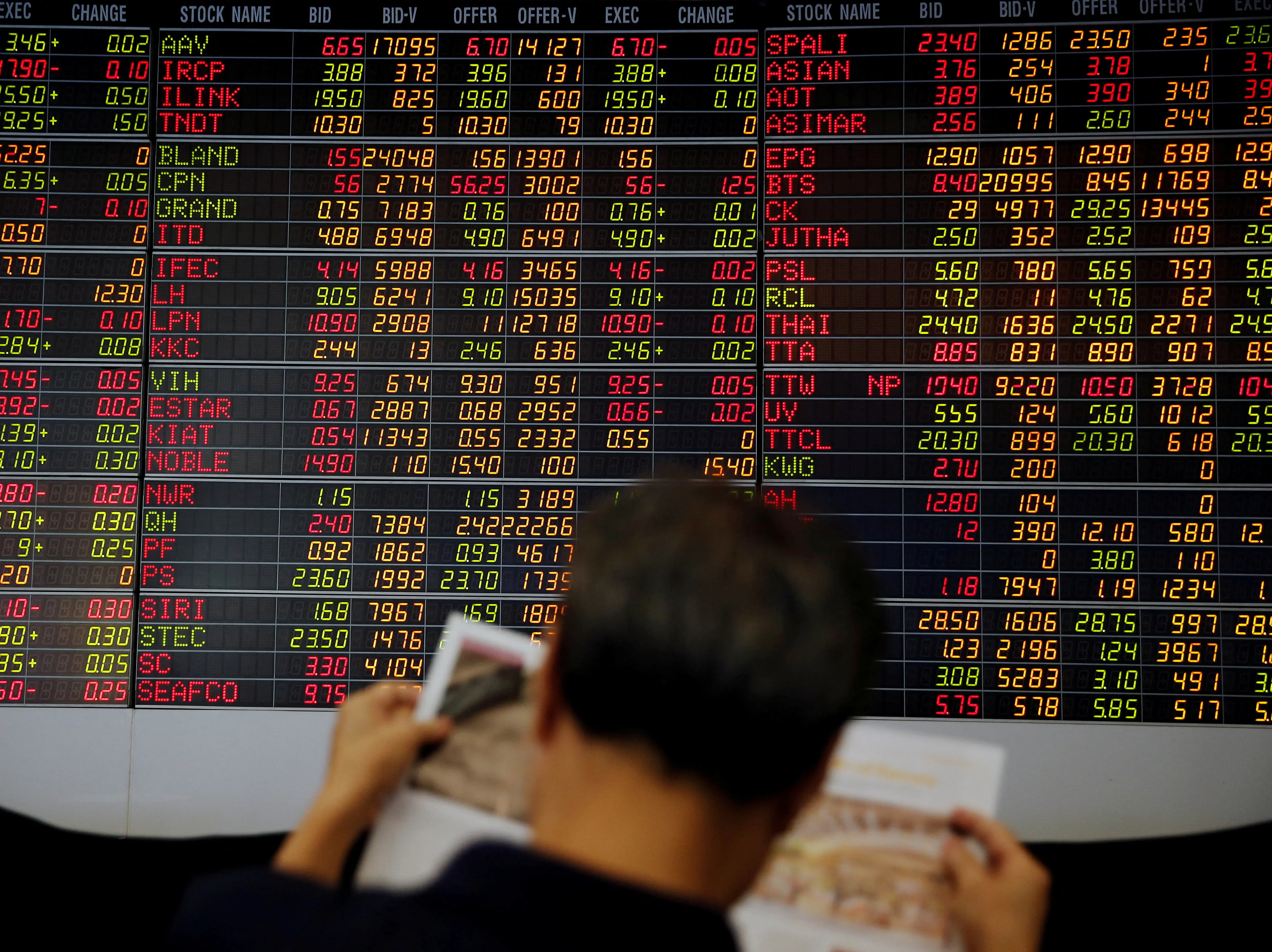
June proved anything but quiet for global markets, with sharp moves in crude, stocks, and currencies amid ongoing trade tensions. From soaring Asian markets to mixed performances in Europe and the Americas, economic outlooks remain cautious as trade wars and geopolitical risks continue shaping investor sentiment worldwide. Let's look at Wion's global markets and economic health check to see what happened during June.
Markets moves in June
The usually quiet month for risk assets was quite the opposite. Crude surged by 6.3 per cent, making it one of the best-performing assets despite some cooling after the 12-day war between Iran and Israel ended.

)
Graphics shows Global Economic Health Photograph: ()
)
Graphics shows Global Economic Health Photograph: ()
)
Graphics shows Global Economic Health Photograph: ()
The volatility, though, was evident from differing bets on US President Donald Trump's tariff headlines almost every other day through the month. Bitcoin gained nearly one per cent, edging towards its all-time high of over 111,000 dollars.
However, gold took a hit on risk-off bets. Bullion was down nearly one per cent last month. The dollar fell sharply by 2.6 per cent as the 'Sell American' treasury trade trend continued to weigh on the currency.
Stock market moves in June
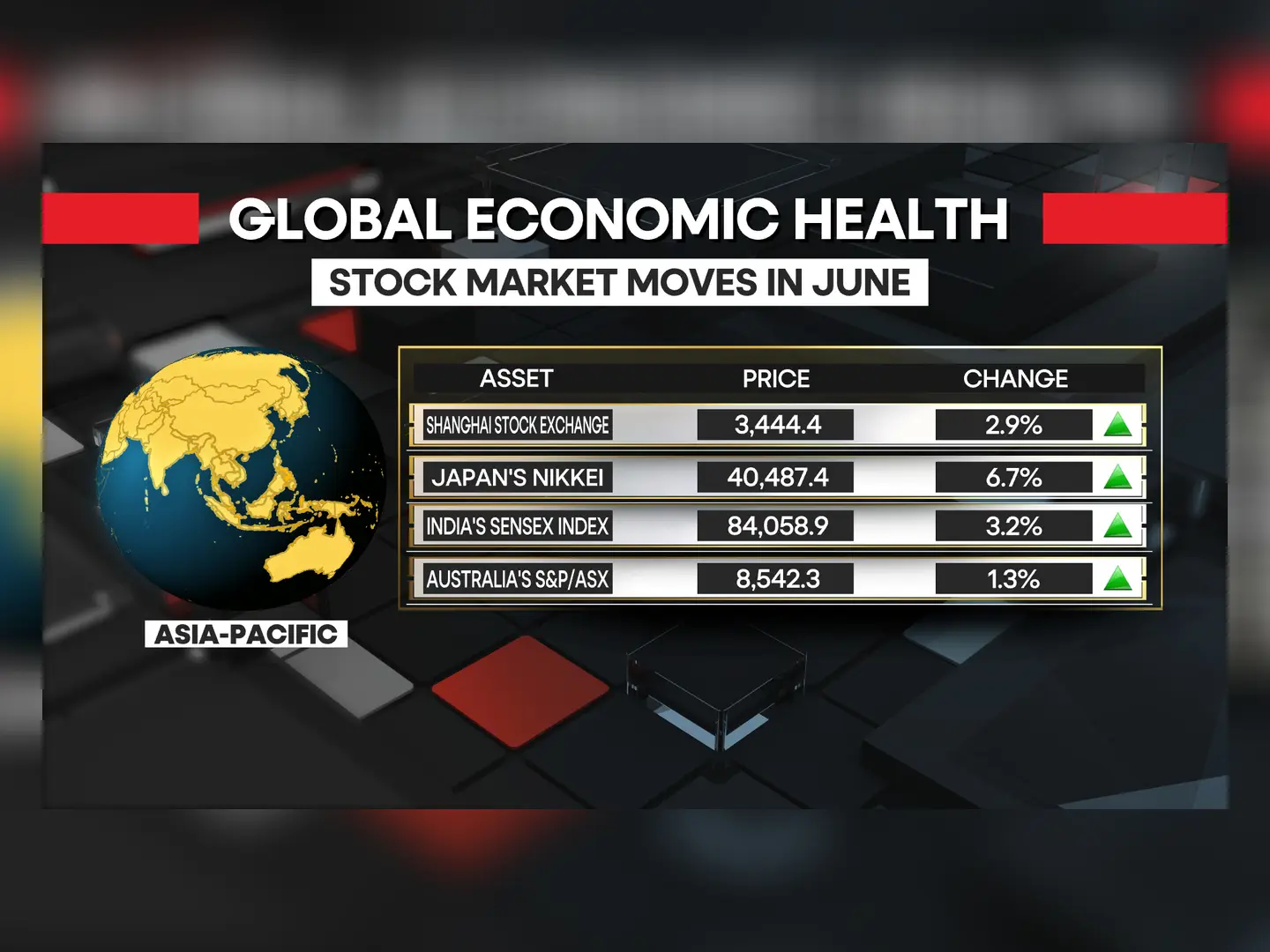
Moving on to Asia-Pacific stock markets. Japan's Nikkei led the gains in Asia, with 6.7 per cent gain, followed by the Indian stock benchmark. A recovery in emerging market stocks was a distinct theme again in June. Indian stocks closed 3.2 per cent in the green, showing signs of a recovery amidst the pull and push in the trade war talks. Indian stocks have been running up, with the defence sector showing the biggest gains after Operation Sindoor. Chinese stocks also gained nearly 3 per cent after a trade truce agreement with the US, easing economic slowdown concerns.
In the Americas, Wall Street extended the gains from May, with benchmarks closing at a fresh record high. The S&P 500 gained 5 per cent to close above 6,200 points for the first time ever. That comes after the benchmark index gained 6 per cent in May, marking its best May since 1990. The tech-heavy Nasdaq surged even more. Nasdaq soared 6.6 per cent, extending the nearly 10 per cent surge in May, driven largely by solid earnings and Nvidia's advance as the top most valued firm in the world. Canadian and Brazilian stocks also ended June with gains.
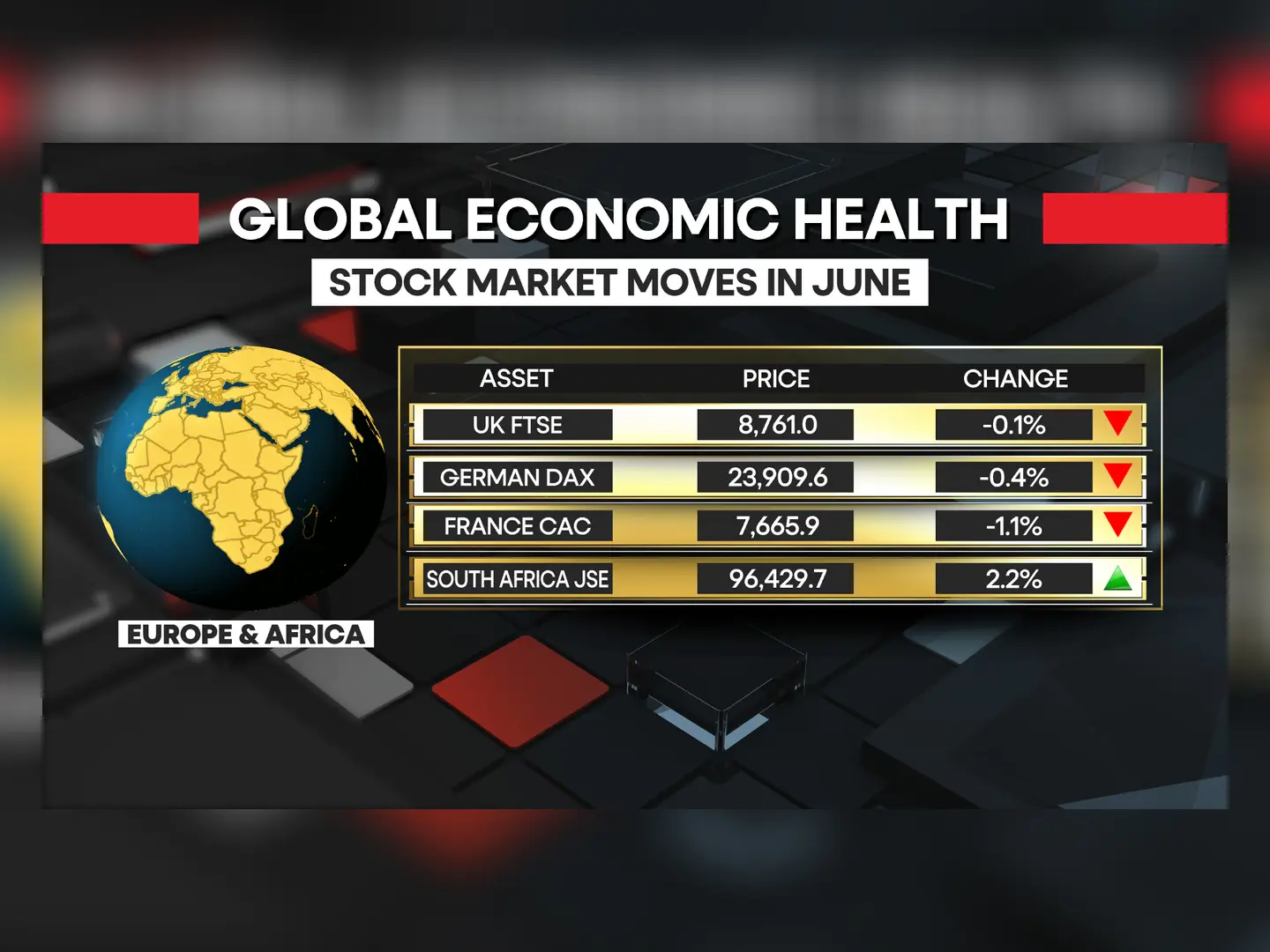
Across the Atlantic, European stocks, though, took a hit on the uncertainty surrounding trade talks with the US; benchmarks across the region closed June in the red. The French CAC led the declines, closing over one per cent lower. Once again led the gains in the region with a gain of 1.3 per cent to extend the 6.7 per cent rally in May.
Trending Stories
)
Three labourers killed as DU student loses control of his car, rams into them on Dwarka Expressway
)
Pentagon revives mandatory testosterone testing for male troops aged 30 and above
)
FACT CHECK: Why did PM Modi ask Xi ‘is it okay’ at BRICS Summit? New video reveals...
)
India seeks to build a full semiconductor supply chain
&im=FitAndFill=(700,400))
From Abhishek Sharma to Sahil Chauhan, 5 batters with fastest T20I hundreds
)
Indian activist-lawyer Prashant Bhushan's post brings focus on ‘conflict of interest’ appointments of ex-govt officials at Reliance, Adani groups
)
Pyongyang dismisses US, western pressure over nuclear programme
)
US And Denmark reach Greenland deal, Trump announces expanded military presence
)
Google’s Gemini AI hacks real systems by guessing passwords during security test
)
Former India player Diana Edulji wants Smriti Mandhana to replace Harman as skipper at the earliest
)
China may have gained access to US's classified F-35 jets; parts meant for repairs diverted to Hong Kong, sparking Pentagon inquiry
)
NASA research plane reaches 61,000 feet over Panama
)
Godfather of AI Geoffrey Hinton gives US lawmakers a one-year warning on AI
)
Shivakumar attends 79th Kalyana Karnataka Utsav in Kalaburagi
)
Trump signs Russia sanctions law: India faces fresh 100% tariff threat over Russian oil
)
Why Ranveer Singh’s Dhurandhar missed India’s Oscar entry; FFI jury member reveals what happened
)
‘Will go to any extent’: Pakistan vows to defend Saudi Arabia amid Houthi attacks
)
The Verdict | When precision fails: US commits war crime in Minab school strike, UN finds
)
Trump signs Russia sanctions bill into law, targets Moscow’s energy sector
&im=FitAndFill=(700,400))
New Friday OTT releases (September 18, 2026): Lust Stories 3, You+Me, Best of the Best- 8 new titles coming on Netflix, Prime Video and more
)
Fast bowler Brydon Carse faces no charges over Derby nightclub incident
)
Flying cars in UAE: Ras Al Khaimah signs deal with Chinese company to test new transport
)
Africa is splitting, and a lot sooner than estimated, giving way to a new ocean
)
'Gangsta' crab shoves knife blade at man and his dog in Florida - Watch
)
Trump bans CNN, MS NOW and Politico from White House over ‘FAKE NEWS’
)
Trump 2.0: Dark days ahead for America’s ‘imperial presidency’
)
Trump's Greenland dream comes true? POTUS announces 'Infinite Life' deal with Denmark, claims permanent US control
)
Laura Wolvaardt sets new world record for most WT20I runs in a year
)
Drone strikes cooling tower at Russia's Kursk Nuclear Plant, IAEA confirms
)
Who is Khalilur Rahman? All you need to know about 81st UN General Assembly President
)
IIT Bombay student dies by suicide, was caught seeking AI help during exams
&im=FitAndFill=(700,400))
Meet top 5 bowlers in latest ICC T20I rankings
)
Indian Cinema bets big on mythology, brings ancient stories to modern audiences
)
Ukraine plans record $109 bn defence spending, nearly two thirds of budget amid Russia war
)
Russia holds first parliamentary elections since the beginning of the Ukraine war
&im=FitAndFill=(700,400))
Meet top 5 Indian batters with fastest T20I centuries
UK's FTSE ended the month with marginal losses, and the German DAX closed June 0.4 per cent lower. However, the South African stock index added 2.2 per cent in addition to the 3 per cent rise in May, keeping the narrative of emerging market rebound intact.
Global economic outlook
Now, let's turn our attention to the overall economic outlook. Let's look at the Asia-Pacific region.
)
Graphics shows Global Economic Health Photograph: ()
)
Graphics shows Global Economic Health Photograph: ()
)
Graphics shows Global Economic Health Photograph: ()
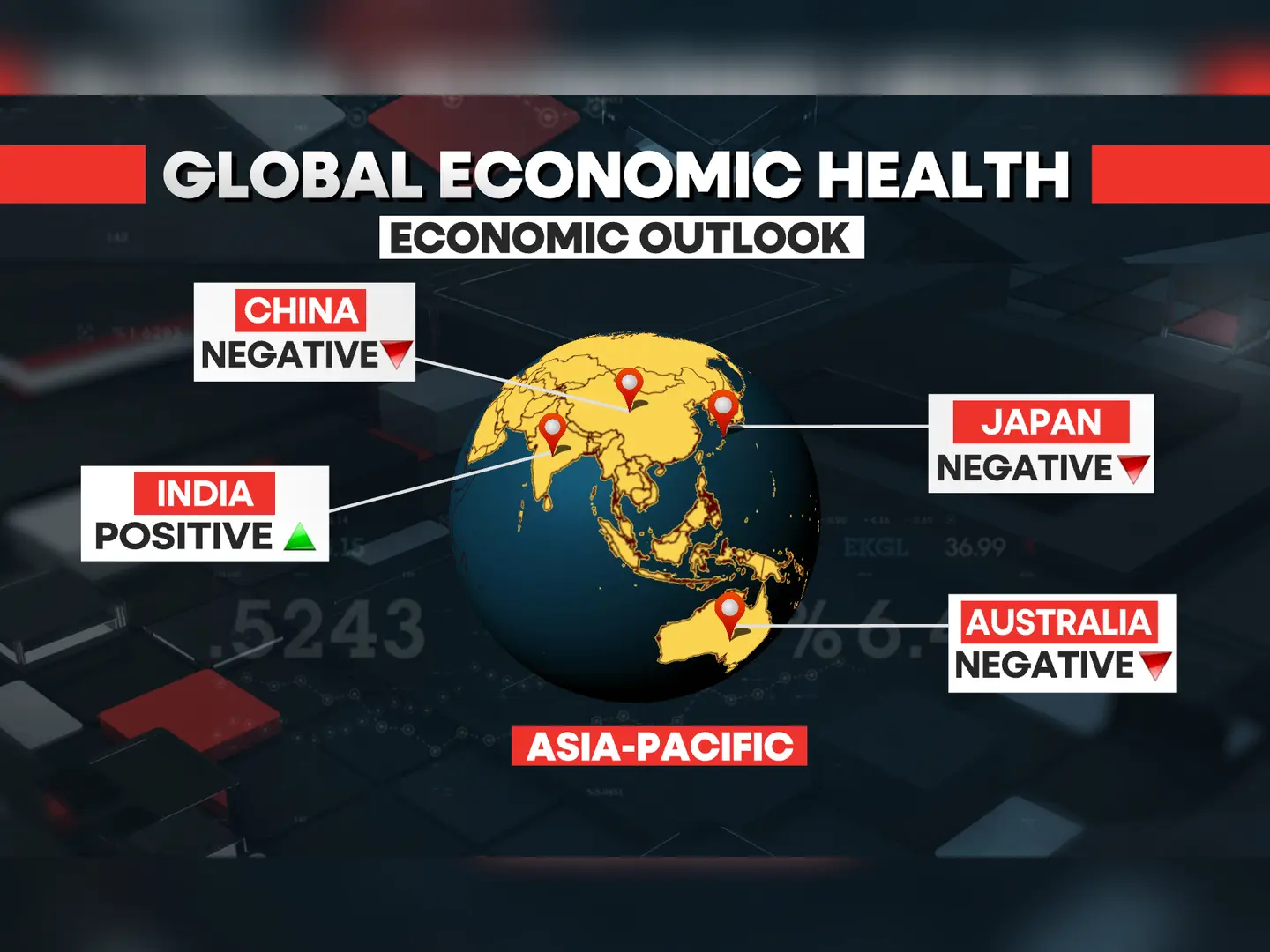
Trump's trade war worries have weighed on the outlook for global economies. However, India is still expected to be the fastest-growing major economy in the world, with bets of a significant slowdown easing. The Reserve Bank of India's jumbo rate cut is widely expected to increase consumer demand and, in turn, boost economic growth.
The outlook for the rest of Asia, though, remained negative for China, as the outlook is still mired in doubts from the recession in its real estate crisis. However, the latest trade truce with the US are good signs for the economy, as reflecting in a rebound in manufacturing activity. However, the economic outlook for Japan and Australia mirrored worries from Trump's trade war.
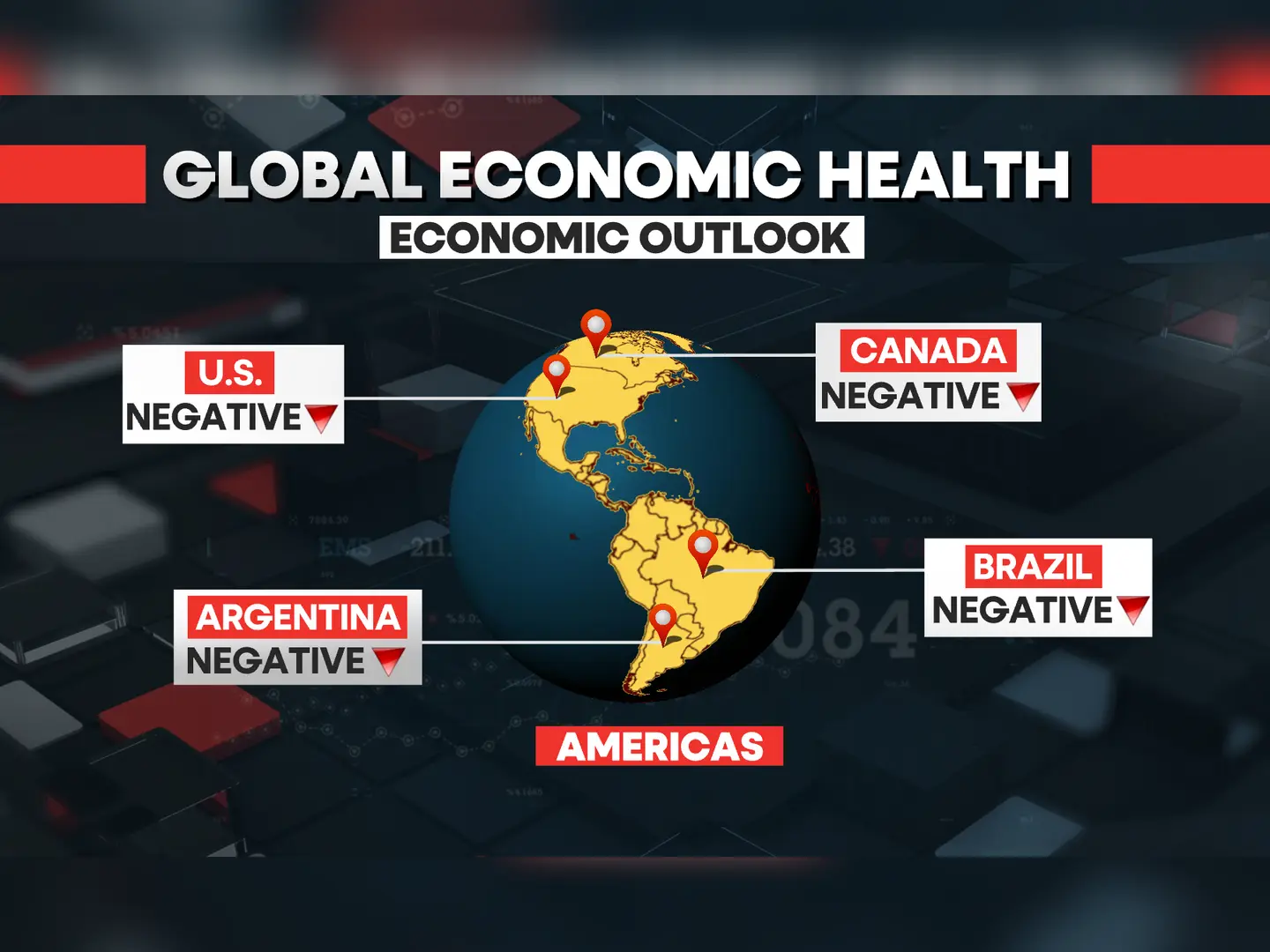
In the Americas, the economic outlook for the US, Canada, Brazil and Argentina shows trade tariffs are likely to hurt economic growth. For the US economy, stagflation bets are still weighing on sentiment and the outlook. JPMorgan still sees a 30 per cent chance of a US recession this year. The economic activity expectations for Canada, Brazil and Argentina were also cut.
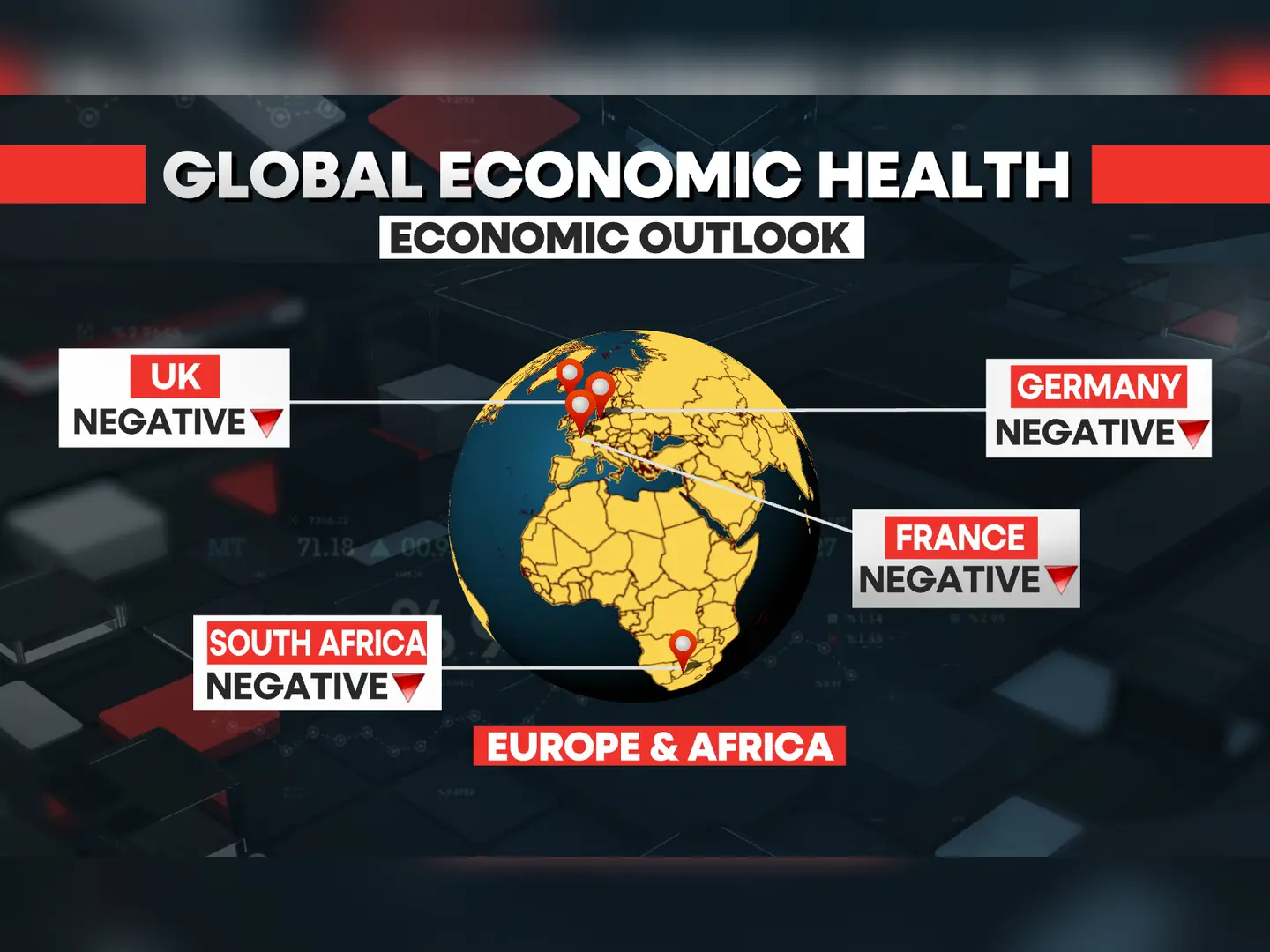
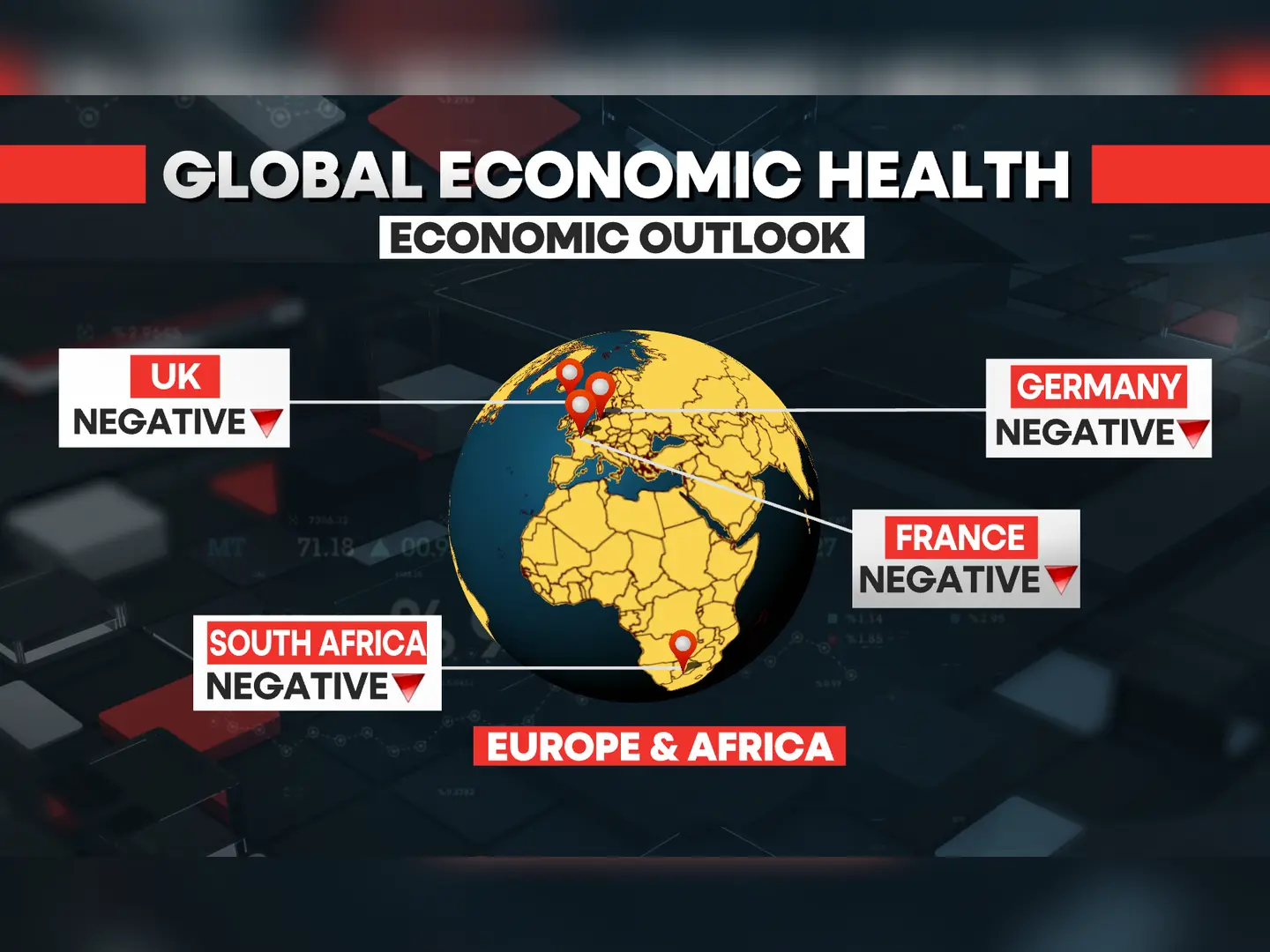
On the other side of the Atlantic, the negative outlook seems to be more widespread. The expectations show the clouds are darkening again for the UK and other European economies. Trade war worries continue to cloud the outlook for the region. The story wasn't very different for African economies, where the outlook remains negative.
